
Maine’s Data Center Moratorium Reveals Who Actually Pays When Infrastructure Planning Fails
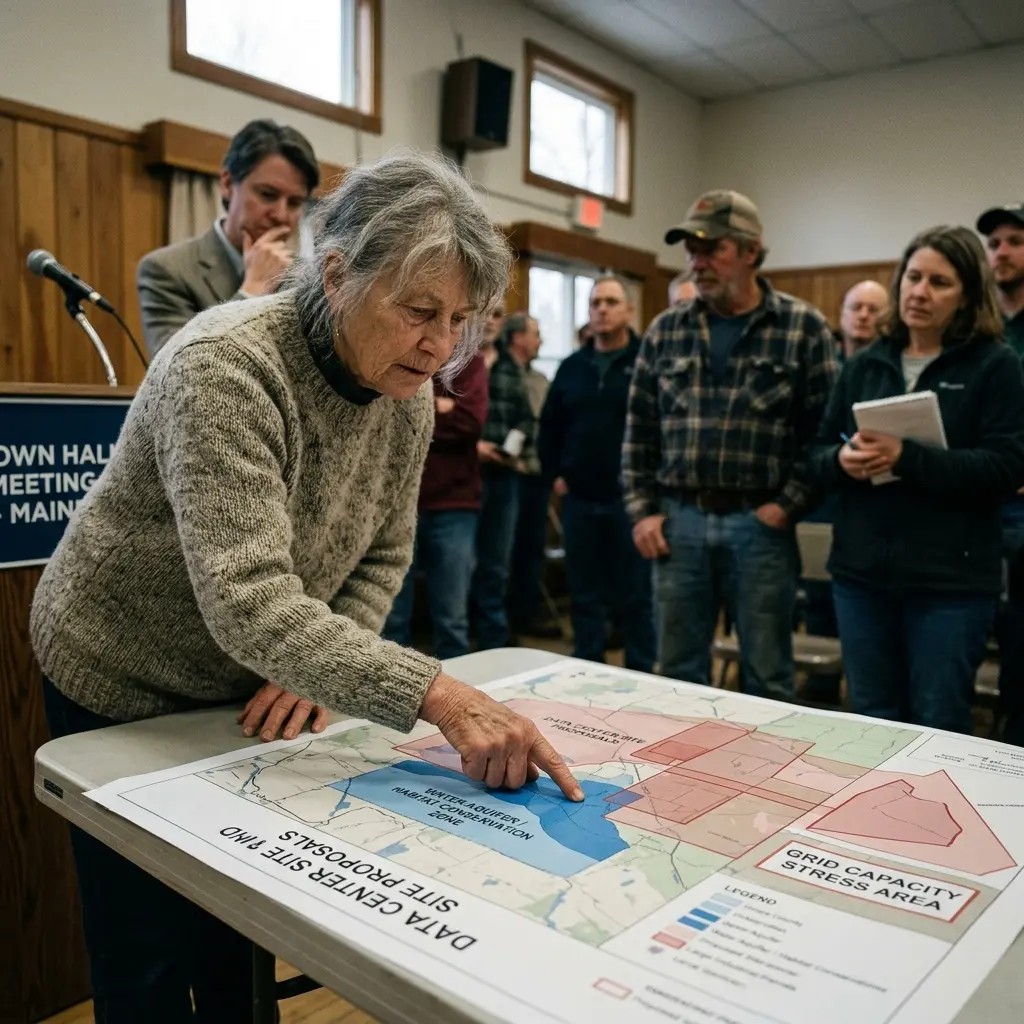
Maine just became the first state to hit pause on large data centers. LD 307 blocks approvals for facilities needing more than 20 megawatts until fall 2027.
Most coverage frames this as environmental activists versus tech companies. That misses the real story.
I work with data centers. I’ve built industrial facilities across multiple sectors. This moratorium isn’t about stopping progress—it’s what happens when infrastructure planning collides with reality and someone finally asks: who’s actually paying for this?
The Problem Nobody Wanted to Plan For
Data centers in the U.S. consumed 176 terawatt-hours of electricity in 2023. That’s 4.4% of total U.S. electricity consumption.
By 2028, that figure could hit 580 TWh—potentially 12% of everything we use.
The number of data centers exploded from 1,000 facilities in 2018 to over 5,400 by March 2025. We quadrupled capacity in seven years while the grid stayed mostly the same.
Here’s what gets me: this was predictable.
AI demand didn’t sneak up on anyone. The infrastructure requirements were clear years ago. But nobody wanted to spend money preparing the grid, securing sustainable water sources, or planning for community impact.
Instead, we got reactive chaos.
Tax Incentives Trump Feasibility Every Time
When I talk to clients about data center locations, the conversation rarely starts with: “Where can we build this sustainably?”
It starts with: “Which governor is offering the best tax deal?”
Location decisions get driven by incentives, not feasibility. You end up with facilities in water-stressed regions because the tax break looked good on a spreadsheet.
Roughly two-thirds of data centers built since 2022 landed in water-stressed regions—including hot, dry climates like Arizona.
In Newton County, Georgia, a Meta facility uses 500,000 gallons of water per day. That’s 10% of the entire county’s water consumption. New permits in the same county would more than double what the whole county currently uses.
Nobody asked if the infrastructure could handle it. They asked if the tax incentive made the deal pencil out.
The Infrastructure That Should Exist But Doesn’t
There’s a solution sitting right there: build data centers near coastlines, use seawater for cooling, add desalination plants, and power everything with solar.
No freshwater drain. No grid strain. Self-sufficient systems in uninhabited areas.
But here’s the problem: these facilities cost a fortune because of GPU expenses. The last thing anyone wants to spend money on is desalination plants, off-grid batteries, and solar arrays.
They’ll drop billions on processing power but balk at the infrastructure to run it sustainably.
That tells you everything about how these decisions get made.
The Race to the Bottom Compounds Everything
I’ve watched this play out across industrial construction for years. The industry has a “race to the bottom” problem.
Everyone optimizes for winning bids rather than long-term system performance.
What gets cut first? Environmental studies. Feasibility assessments. The invisible infrastructure that determines whether a facility actually works as designed.
In my world, that’s weatherseals, fixings, air barriers—the stuff nobody sees but everyone depends on. In data centers, it’s proper noise mitigation, sustainable water systems, and grid capacity planning.
You can install sheets on a flat surface and call it done. But the details determine whether that system performs for 5 years or 25.
The construction industry rewards cutting corners in the short term. Quality operators who refuse to compromise lose bids to companies willing to skip the hard parts.
Who Carries the Pain
When a data center gets built fast and cheap, the costs don’t disappear. They just get transferred to people who didn’t choose this and won’t get compensated.
Local residents pay first.
They deal with sleep disruption from constant low-frequency hum. Health effects like stress, headaches, and fatigue. Property values drop. Quality of life tanks.
In Granbury, Texas, residents near a crypto mining facility reported excruciating migraines, nausea, panic attacks, and hospital visits. The facility sits less than 100 yards from a mobile home park.
In Chandler, Arizona, people in Brittany Heights have complained for years about constant low-frequency hum causing headaches, vertigo, and sleep problems.
Northern Virginia—the world’s biggest data center hub—has hundreds of facilities near homes. Residents report continuous noise above 60 dB, ringing ears, and chronic sleep disturbance.
That noise isn’t mysterious. It’s cooling fans, chillers, diesel generators, and gas turbines running 24/7. Low-frequency sound that travels far and goes through walls.
Studies show noise above 65 decibels increases stress and blood pressure. Long-term exposure disrupts sleep and creates anxiety. Some residents report stronger effects, though those are still being studied.
The Invisible Mental Cost
Living with constant noise isn’t just annoying. It creates low-level chronic stress that shows up as irritability, reduced focus, and worse family life.
That doesn’t appear on any balance sheet. But it’s very real.
The grid pays next.
In Virginia, data centers now consume more than 1 in 4 kilowatt-hours of the state’s electricity. In the PJM power grid region, data centers contributed to an 833% increase in capacity charges for 2025-2026.
That translates to higher bills for everyone on the grid—not because they’re using more power, but because data centers are straining infrastructure that wasn’t designed for this load.
Future operators pay last.
When you skip the invisible infrastructure, facilities fail prematurely. Reactive repairs cost more than proactive planning—both in immediate dollars and long-term operational headaches.
The Noise Problem Is Engineerable
Here’s the thing about the noise issue: it’s absolutely engineerable.
You can design facilities with proper acoustic barriers, strategic placement away from residential areas, and advanced cooling systems that reduce decibel output.
But it costs money. And it takes time. And in an industry optimizing for speed and initial cost, those solutions get deprioritized.
It’s not the builder’s problem. By the time residents start complaining, the facility is operational and the construction company is long gone.
The pain gets carried by people who had no say in the decision.
Too Many Generals, Not Enough Soldiers
I’ve seen this pattern across industrial construction: decisions get made by people who’ve never installed the systems they’re approving.
You end up with too many generals and not enough soldiers.
The U.S. electrical grid was built 50 to 70 years ago. Components are nearing or exceeding their intended life cycle. This infrastructure wasn’t designed for hyperscale data centers consuming hundreds of megawatts.
Expanding transmission and substation capacity takes 5 to 10 years—driven by permitting, environmental reviews, and construction delays.
But data center companies want rapid deployment to meet surging demand.
That gap between infrastructure reality and business urgency creates the crisis we’re seeing now.
In July 2024, a voltage fluctuation in northern Virginia triggered the simultaneous disconnection of 60 data centers. The resulting 1,500-megawatt power surplus forced emergency adjustments to prevent cascading outages.
That’s what happens when you layer massive new demand onto aging infrastructure without planning for integration.
Community Backlash Is Growing
Maine isn’t alone. Community protests are halting billions in data center projects nationwide.
Tract withdrew two Arizona projects worth $14 billion after opponents raised concerns about building height, noise pollution, and resource strain.
A $1.5 billion proposal in Peculiar, Missouri got blocked. A $1.3 billion project in Chesterton, Indiana was canceled due to resident concerns.
People are realizing these facilities get approved in deals cut in secret. Local communities have little to no say in what gets built near them.
The backlash isn’t about being anti-technology. It’s about being pro-planning.
What This Signals for Industrial Construction
Maine’s moratorium is a warning shot for every sector building large industrial facilities.
The days of prioritizing tax incentives over feasibility are ending. Communities are pushing back. Regulators are catching up.
This isn’t just about data centers. It’s about warehouses, manufacturing facilities, logistics hubs—any large-scale industrial construction that impacts local resources and quality of life.
The tension between urgency and sustainability is intensifying. You can’t keep externalizing costs onto communities and infrastructure that weren’t designed for the load.
Reactive responses always cost more than proactive planning.
Building sustainable infrastructure from the start costs money. But rebuilding after failures, fighting legal battles, and dealing with community opposition costs more—in dollars, time, and reputation.
The Invisible Infrastructure Determines Everything
I’ve built my career understanding that the invisible stuff matters most.
Anyone can install sheets on a flat surface. The details—the weatherseals, fixings, air barriers—determine whether that system performs as designed or fails prematurely.
The same principle applies to data centers and every industrial facility.
You can build fast and cheap by skipping environmental studies, ignoring community impact, and assuming the grid will handle the load.
But eventually, reality shows up.
Water runs out. Noise makes people sick. The grid can’t handle the demand. Bills go up. Communities push back.
Maine’s moratorium is what happens when infrastructure planning meets reality and someone finally asks the question that should have been asked years ago:
Who’s actually paying for this?
The answer is: people who didn’t choose it and won’t benefit from it.
That’s not sustainable. And more states are starting to realize it.
To upload drawings, specs and plans please go to the form on our contact page.
Get in Touch