


Commercial Skylights and Roof Lights in San Antonio and Austin

Translucent panels, curb-mounted skylights and smoke vents, replaced, added or closed up within your roof project.

Skylights and translucent panels

Skylights that let light in and keep water out

Skylights bring daylight into warehouses, workshops and factories, but they age faster than the roof around them. Translucent panels yellow, turn brittle and crack, and the joints between skylight and roof are common leak points. Total Cladding and Roofing replaces and installs skylights as part of commercial and industrial roof projects in San Antonio and Austin: translucent panels in a metal roof retrofit or a new R-panel roof, curb-mounted skylights in a TPO roof, daylight panels with insulated metal panel roofs, and closing up openings that are no longer wanted.

Roof lights are best dealt with when the roof itself is being renewed, and we do not take them on as a separate visit. Panels that have yellowed, cracked or become brittle are replaced when the roof is retrofitted, recovered or re-roofed, and before a coating goes on, because skylight panels are not coated with the roof.

Ask about skylights in your roof project or call (210) 775-0995.
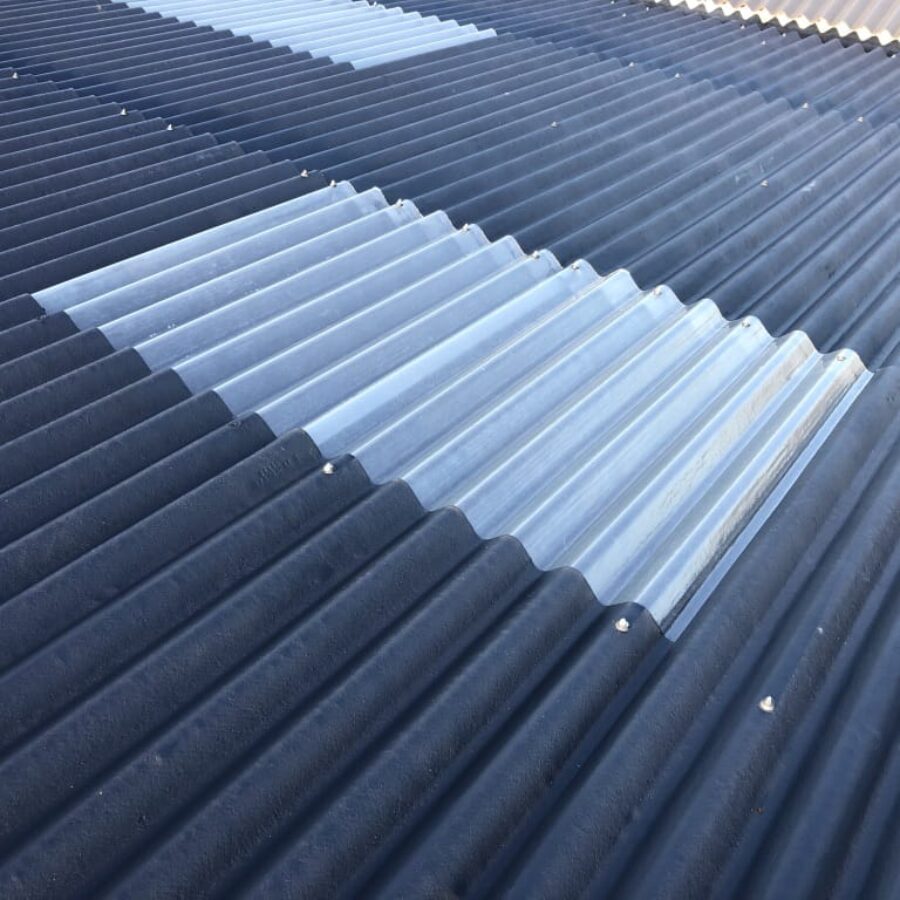
Translucent skylight panels in a profiled metal roof

Skylights on commercial roofs

Most commercial skylights fall into four types.

In-plane translucent panels

Fiberglass or polycarbonate sheets made in the same profile as the metal roof panels, such as R-panel, PBR or corrugated, and fixed in place of a metal sheet.

Curb-mounted skylights

Domed or flat units on a raised curb, flashed into the roof, common on flat roofs. Single, double and insulated versions are made.

Insulated daylighting panels

Multi-layer translucent panels that let light in while limiting heat gain and loss, used where the building is cooled or heated.

Smoke vents and roof hatches

Openings for smoke venting or roof access, which need the same flashing and maintenance as skylights.

Why skylights leak and fail

Sun damage:

years of UV make fiberglass yellow and brittle, and the surface can wear back until glass fibers are exposed. Light transmission falls and the panel cracks more easily.

Cracks and hail damage:

brittle panels crack under hail, foot traffic and thermal movement.

Laps and fasteners:

a translucent panel expands differently from the steel beside it, which works the fasteners and side laps loose over time.

Curb flashings:

on flat roofs, most skylight leaks are at the curb flashing rather than the skylight itself.

Condensation:

single-layer panels are cold in winter and can drip condensation that looks like a leak.

Replacing translucent panels in a metal roof

A replacement panel has to match the roof profile, length and lap arrangement so it nests with the metal sheets on each side. The laps are sealed with tape sealant, and the panel is fixed with the fasteners and spacing its manufacturer specifies; overtightened or misplaced screws are a common cause of cracking.

When a metal roof is being coated, skylights are replaced first and the protective coating is then taken up to them, not over them. On a retrofit, the new roof sits on sub-purlins above the old one, so each daylight opening needs a matching panel in both roofs, or the old opening is closed and a new skylight set in the new roof only. When the roof is being replaced, the new skylights are chosen with the new roof panels. Insulated translucent panels are an option where the building is heated or cooled. See metal roof restoration and metal roof replacement.

Replacing curb-mounted skylights

On a low-slope roof, the skylight unit, its curb and the membrane flashing work together. A failed dome or lens can sometimes be replaced on its existing curb while the roof is renewed, and a rotten or low curb is rebuilt so the flashing can run high enough above the roof surface. When a roof is replaced or recovered with TPO, the new roof is thicker, so curbs often need raising to keep the flashing height. See TPO roofing.

Skylights and fall protection

Skylights and translucent panels will not carry a person’s weight, and falls through them cause serious injuries every year. Federal workplace rules require employers to protect workers from falling through skylights, using screens, covers, guardrails or fall arrest. Fixed skylight screens are a lasting way to protect anyone who goes onto the roof, including maintenance staff and other contractors. During our work, skylights near work areas are treated as openings and protected.

Light and heat in a Central Texas summer

More skylight area brings in more light and also more heat. Clear or high-transmission panels can make a space hotter in summer and add glare, while diffusing and insulated panels spread light more evenly and limit heat gain. Manufacturers publish light transmission and solar heat gain figures for their panels, which makes it possible to choose a panel for the light the space needs without overheating it.

Fiberglass or polycarbonate

Most in-plane panels are fiberglass-reinforced plastic or polycarbonate.

  • Fiberglass panels are lower in cost and made in most metal roof profiles. A UV-resistant surface film or coating slows weathering, and heavier panels with better surface protection last longer in strong sun.
  • Polycarbonate panels have much higher impact strength, which helps against hail and dropped tools, and are made with a UV-protected outer surface. They expand more with heat, so their fixing details matter.

Both types lose light transmission and strength with age, which is why the age and condition of existing panels matter as much as the material.

Hail and skylights in San Antonio and Austin

Skylights are often the first thing on a San Antonio or Austin roof to break when spring hail comes through. Aged fiberglass panels crack or hole under hail that leaves the surrounding steel only dented, and the damage may not be noticed until the next rain. When skylights are renewed in a retrofit or re-roof, polycarbonate panels and fixed skylight screens both reduce that risk, and screens also protect people working on the roof.

Daylight and lighting

Evenly spaced, diffusing panels light a space more usefully than a few large clear ones. When skylights are replaced, it is worth looking at where daylight is actually needed below, since racking, mezzanines and new equipment can leave old skylights lighting the wrong places.

Maintenance

Skylights need cleaning to keep their light transmission, and their fasteners, laps, screens and curb flashings checked by your maintenance team. Cracks, crazing, yellowing and fibers showing at the surface are signs a panel is reaching the end of its life, and a reason to plan its replacement with the next roof project.

Closing up unused openings

Skylights over areas that no longer need daylight, or that leak repeatedly, can be removed and the opening filled with a metal panel matching the roof. On a low-slope roof, the curb is removed or capped and the deck made good before the TPO goes over it. Fewer, better-placed skylights can be a sensible part of a retrofit or re-roof.

Replacing skylights above a working building

Changing a skylight opens a hole in the roof for a short time, directly over the space below. Each panel or unit is removed and replaced in one visit, so the opening is closed the same day, and the area underneath is protected or cleared while the work is done. Broken pieces of old fiberglass and dust are contained rather than dropped into the building. Work is timed around production, stock and the weather, and we agree the sequence with your site contact before starting.

What affects the cost

The number and type of skylights, the panel or unit chosen, the roof profile, curb work, access and height, protection needed below, and the size of the roof project they are part of all affect the price.

Plan roof lights with your roof project

Contact TCR about the roof project you are planning, with the property address and the number and type of skylights if you know them. We check every skylight during the roof survey and set out which to replace, which to add and which to close up.

Frequently asked questions

Commercial Roof-light Installation And Replacement FAQs

Do you replace skylights on their own?

We replace and install skylights as part of a roof project: a metal roof retrofit, a TPO roof or recover, an R-panel re-roof or an insulated metal panel roof. A skylight that leaks is often a sign the roof around it is due for the same decision.

Could the water be condensation?

Yes. Moisture can form when indoor air reaches a cold surface. Leak timing and conditions help distinguish condensation from rainwater entry.

Can a new translucent sheet match the old roof?

It needs a compatible profile and connection, not just the same width. Older products may require further identification before ordering.

Can a person stand on an old skylight?

Do not assume it can carry a person. Skylights need appropriate access and fall protection arrangements for inspection and work.

Do skylight curbs need raising for a TPO recover?

Often. A recover adds insulation and membrane on top of the old roof, so a low curb loses flashing height. We raise or rebuild curbs where needed so the TPO flashing runs high enough above the new roof surface.

Will clearer skylights make the space hotter?

They may change solar gain as well as daylight. Unit selection and glazed area need to suit the building's thermal and lighting requirements.

Can an unused opening be closed permanently?

Yes, with a suitable detail that restores support, insulation and weather protection. A loose cover does not replace a complete roof connection.

What happens to skylights when a metal roof is retrofitted?

Each daylight opening is either carried through both roofs with lined-up translucent panels, or closed in the old roof with a new skylight set only in the new one. Some owners close the openings altogether. We agree which to keep before the retrofit is priced.

What affects the price?

Height, access, unit size, profile, quantity and the condition of the curb all affect the work, along with the size of the roof project the skylights are part of.

What photos should I send?

Photos taken from a safe spot, never from the skylight itself, showing the units and the roof around them. Include the address, the roof project you are planning and roughly how many skylights there are.

UK refurbishment experience, a Texas office

Refurbishment specialists

Our business grew through roof and cladding refurbishment in the UK. That experience shapes the work we now offer from our Texas office.

Repair what can be retained

We investigate the roof problem and explain what can be repaired, restored or replaced, so you can decide how to invest in the building.

Roofing and cladding together

We can coordinate roof, insulation, wall panel and drainage work, including the connections where separate repairs can leave problems behind.

A plan for your working building

We agree access, work areas and protection with your site team, including any restrictions needed while the roof is opened.

Roofing and cladding systems

Roofing systems and materials for Texas facilities

Rustoleum Logo
Sika Logo
Kingspan Logo
Morin Logo
American WeatherStar Logo
GAF Logo
TAMKO Logo
PAC-CLAD Logo
1

Tell us about the building

Start with the address and the roof or cladding problem. Photographs are helpful if you already have them.

2

Arrange a site visit

We review the affected areas and discuss how you use the building and what you want the work to achieve.

3

Review the quotation

Your quotation explains the proposed repairs or refurbishment, the areas included and the price.

4

Agree the work plan

We discuss timing, access, deliveries and protection with your site contact before work begins.

5

Complete the work

We carry out the agreed work and discuss any changes needed if opening the roof reveals additional damage.

6

Handover

We review the completed work and provide the care information and documents included in your project.