Commercial Roof Coating Contractors for San Antonio and Austin

For existing metal roofs and cladding on warehouses, workshops, retail and industrial buildings: surface preparation, rust treatment and a new coating system.

Coatings for existing commercial metal roofs

We are commercial roof coating contractors for existing metal roofs and wall cladding in San Antonio and Austin. The work covers restoration coatings, corrosion protection and cut-edge treatment for warehouses, workshops, retail units and industrial buildings. Our focus is refurbishment: keeping sound metal in service and stopping the corrosion and worn finishes that let water into your building.

Start with your roof type. A metal roof on a workshop or warehouse is a coating candidate while the steel is still sound. A flat membrane roof over a shop or office needs a different answer, covered below. We explain the work needed before coating and plan access around your staff, customers, stock and equipment.

Roofing contractors

Metal roof coating

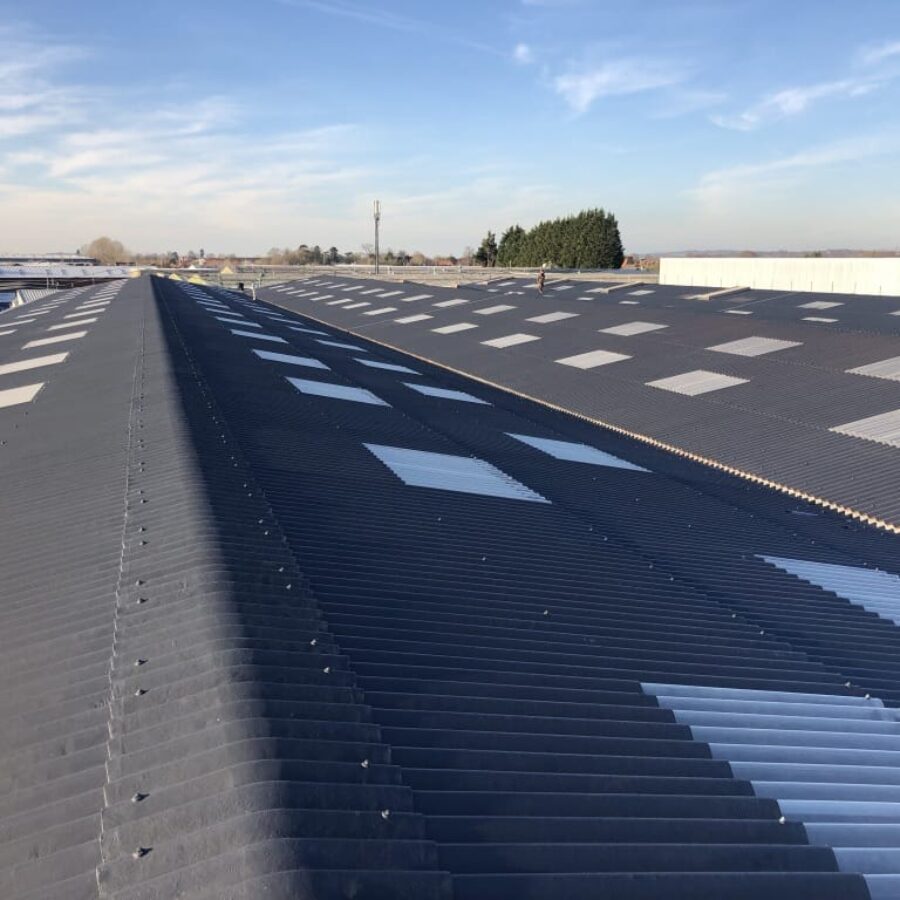
For metal panels with a worn finish, surface corrosion or failed details, the scope starts with fasteners, seams, flashings and any panels that need replacing. Once the roof is sound and prepared, we apply a coating system made for metal. Read about our metal roof coating service.

Flat and low-slope membrane roofs

Our coating work is for metal roofs and cladding. On a flat or low-slope membrane roof that has reached the end of its life, we survey the seams, outlets, flashings and insulation, then recommend a TPO recover over the existing roof or a full tear-off and replacement. Wet insulation is usually what decides between them. See TPO roofing in San Antonio and Austin.

Silicone, acrylic or urethane?

Silicone is one coating option for a compatible, prepared metal roof, alongside acrylic and urethane systems. We choose the chemistry from the existing finish, the roof slope and drainage, and the details involved. We are a certified installer for American WeatherStar and Sika, and we apply each system the way its manufacturer sets it out.

What belongs in a coating proposal?

Roof condition

Identify the existing roof, previous coatings, leaks, corrosion and any areas needing further investigation.

Preparation and detail work

Define the failed details to fix, the panels to replace, cleaning, rust treatment and any adhesion testing or primer requirements.

Coating application

Specify compatible materials, treatment of details, application rates and the conditions needed for curing.

Access and aftercare

Agree access, protection for occupied areas and inspections or maintenance after the work.

Work directly with a refurbishment contractor

This service is for existing business premises, including workshops, storage buildings, retail units and industrial properties. Tell us who is responsible for roof work and who will approve the project. If you lease the premises, involve the owner or landlord where their agreement is needed.

When broader restoration is needed

Some metal roofs need replacement panels, new fasteners or flashing work as well as a coating. Our metal roof restoration service brings that work into one scope. When panels are perforated across the roof or the purlins are corroding, a coating is the wrong answer: a metal roof retrofit over the existing roof is the right one.

Planning around business operations

Explain your opening hours, deliveries, customer routes and sensitive equipment. Cleaning, panel replacement and detail work can require temporary restrictions. We discuss these arrangements when defining the project rather than promising that every job will cause no disruption.

What affects the price?

Roof area, height, access, preparation, failed details and the existing coating all affect cost. A useful comparison separates metal and detail work, coating specification and exclusions. The cheapest application price may leave essential preparation outside the scope.

Talk to our team

Discuss a coating for your existing roof

Bulverde, where we are based, is a short run down US 281 to San Antonio, typically about 30 minutes, and roughly an hour and 20 minutes from central Austin. Read about commercial roof coatings in San Antonio and commercial roof coatings in Austin, then discuss your commercial roof coating with us. Include the building address, roof type if known, approximate area, current problems and photos you can obtain safely. Tell us your preferred timing so we can discuss the next steps toward a proposal.

Discuss My Roof Coating

Frequently asked questions

Commercial Roof Coatings FAQs

Can any commercial roof be coated?

No. We coat metal roofs and wall cladding whose steel is still sound, once moisture and failed details are dealt with. A worn flat membrane roof is a different job: there we recommend a TPO recover over the existing roof or a full TPO replacement.

Will a coating fix holes or loose panels?

No. A coating protects metal; it does not replace it. Perforated panels are replaced and loose fasteners are tightened or upsized before any coating goes on. If holes run across most of the roof, a metal roof retrofit is the better answer.

Can a new coating go over an old coating?

Only where the old finish is suitable to remain. Adhesion, contamination and compatibility checks help establish the preparation required.

Is silicone always better than acrylic?

No. Silicone copes well with UV and standing water, but once it is on, any future recoat normally has to be silicone as well. Acrylic recoats easily and suits roofs that drain freely. We choose from the existing finish, roof slope and drainage, not from a product label.

Does ponding-water resistance mean drainage can be ignored?

No. A coating does not increase drain capacity or correct the roof's fall. Persistent standing water still needs investigation.

Why do two coating quotes differ so much?

Preparation, panel replacement, fastener work, primer, detail reinforcement and finished thickness can vary a great deal between quotes. Compare those items, with quantities, as well as the roof area and the product name.

Can the coating be applied in any weather?

No. Roof temperature, surface moisture, rain and curing conditions must fall within the selected product's limits.

Are you certified for the coating systems you install?

Yes. We are a certified installer for American WeatherStar and Sika, and we follow each manufacturer's preparation, primer, detail and thickness requirements for the system we specify. Our recommendations come from more than 20 years of commercial roofing experience.

When is a retrofit better than a coating?

When the steel has holed through over much of the roof, the purlins have started to corrode, or water has soaked the insulation. A coating cannot put back lost steel or dry out insulation, so we recommend a metal roof retrofit: new sub-framing and a new roof installed over the old one without a tear-off.

What information is useful before a coating survey?

The address, known roof material, existing coating name and current defects. Old product records and photographs help if available.

UK refurbishment experience, a Texas office

Refurbishment specialists

Our business grew through roof and cladding refurbishment in the UK. That experience shapes the work we now offer from our Texas office.

Repair what can be retained

We investigate the roof problem and explain what can be repaired, restored or replaced, so you can decide how to invest in the building.

Roofing and cladding together

We can coordinate roof, insulation, wall panel and drainage work, including the connections where separate repairs can leave problems behind.

A plan for your working building

We agree access, work areas and protection with your site team, including any restrictions needed while the roof is opened.

Roofing and cladding systems

Roofing systems and materials for Texas facilities

Rustoleum Logo
Sika Logo
Kingspan Logo
Morin Logo
American WeatherStar Logo
GAF Logo
TAMKO Logo
PAC-CLAD Logo
1

Tell us about the building

Start with the address and the roof or cladding problem. Photographs are helpful if you already have them.

2

Arrange a site visit

We review the affected areas and discuss how you use the building and what you want the work to achieve.

3

Review the quotation

Your quotation explains the proposed repairs or refurbishment, the areas included and the price.

4

Agree the work plan

We discuss timing, access, deliveries and protection with your site contact before work begins.

5

Complete the work

We carry out the agreed work and discuss any changes needed if opening the roof reveals additional damage.

6

Handover

We review the completed work and provide the care information and documents included in your project.