Metal Roof and Cladding Coatings in San Antonio and Austin

Rust, cut-edge and restoration coatings for commercial metal

Commercial protective coatings

Metal roof coatings for San Antonio and Austin buildings

We apply protective coatings to commercial and industrial metal roofs and cladding in San Antonio and Austin. A restoration coating system treats rust, seals cut edges, laps and fasteners, and puts a new protective finish over metal that is still sound. Done properly, it renews the weather surface of a worn metal roof without a tear-off.

We are certified to install American WeatherStar roof coating systems and Sika roofing systems, and we bring 20+ years of commercial roofing experience to the question that matters most: is this roof a coating candidate at all? A coating protects good metal. It does not replace lost steel, and we will not sell you one on a roof that needs more.

Bulverde, where our office is, sits about 30 minutes from central San Antonio and about an hour and 20 minutes from central Austin on a typical drive. Read about commercial roof coatings in San Antonio and commercial roof coatings in Austin, or see all five services on our pages for commercial roofing in San Antonio and commercial roofing in Austin.
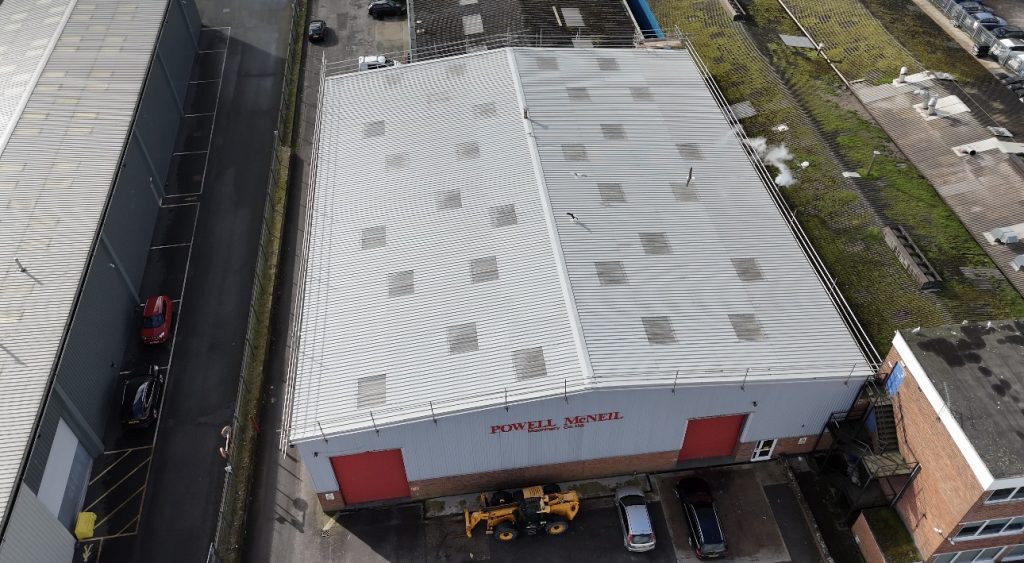

Aerial view of profiled metal roofing on an industrial unit
Industrial metal roof from our roof-over project archive.

Is your metal roof a coating candidate?

Surface condition and remaining metal are two different questions. A faded, chalky finish often sits on perfectly sound steel. Deep rust may have eaten through an edge or around a fastener. We assess both across the whole roof, because a new topcoat does not restore the thickness or strength of steel that has gone.

We check the panel field, sheet ends, laps, fasteners, flashings and roof-to-wall junctions, because each ages at its own rate. A roof with sound panels and a handful of perforated panels is still a good coating candidate: we replace the bad panels first, then coat. The proposal shows which panels stay, which are replaced and what the coating covers.

If perforation is widespread, the insulation below is wet or the supports are weakened, a coating is the wrong answer. We will recommend a metal roof retrofit or R-panel roof replacement instead. On a flat membrane roof, the real question is a TPO recover or replacement, not a metal coating.

Rust, cut edges and fasteners

Cut-edge corrosion starts at the exposed ends of panels, where the factory coating stops and the steel is open to water. On a metal roof it shows first at the eave and the end laps, as peeling paint and rust creeping up the panel. We clean it back, treat it and seal the edge with a compatible system before the field coating goes on.

Surface rust, pitting and holes each need different treatment. Light rust on sound metal is cleaned and primed. Pitted metal is treated and assessed. Holes and badly weakened edges get new metal before anything is coated. We map each condition on the roof so the scope is clear to everyone.

Fasteners and sealing washers often give out in the Central Texas sun before the panels do. Daily heat cycles loosen them and UV hardens the washers. We tighten loose fasteners where the hole is still sound, replace stripped ones with oversized fasteners, then seal them with the system’s detail products. A coating over a loose fastener simply cracks around it.

Existing finishes, preparation and adhesion

A coating is only as good as its bond. We identify what is on the roof now: factory paint, bare metal, an older coating or patches from earlier work. Each needs its own cleaning, removal and primer, and product records or old specifications help us confirm what we are dealing with.

Loose, peeling or chalking material comes off. We clean the roof to the coating manufacturer’s requirements, then run adhesion tests on trial areas to prove the proposed system bonds to what remains. A primer serves its specified purpose; it does not glue failing paint back down.

Where a roof carries a mix of retained finish, bare metal, sealants and earlier patches, the specification says how each area is treated before the field coat goes on. That level of detail is the difference between a coating that stays bonded and one that peels.

The four stages of a protective coating project

Surface preparation

Cleaning, removal of loose corrosion, chalking and failing finish, and adhesion tests on trial areas. We price preparation as work in its own right, with the areas identified, because it decides whether the coating bonds.

Metal and detail treatment

Replacement of perforated panels, rust treatment at cut edges and laps, and oversized fasteners where old ones have stripped their holes. Seams, penetrations and flashings are sealed with the system’s detail products before the field coat.

Primer

The primer the system specifies for each substrate. Bare metal, treated rust and retained paint can need different primers, and we apply each one where it belongs so the finish bonds across the whole roof.

Field coating

The specified roof or wall coating applied to the required coverage and dry film thickness, within the product’s temperature and curing limits. We check thickness during application, because color alone does not prove coverage.

Roofs and walls need different coatings

Roofs hold water and face the sun all day. Walls shed water quickly and see less direct UV. Roof slope, laps, drainage and rooftop equipment shape the roof specification, while orientation, openings and base details shape the wall. A product made for one is not automatically right for the other.

We coat roofs and wall cladding together when both need it, with a separate specification for each and a shared detail at the eave. Where wall panels are too damaged to keep, we replace them before the coating goes on.

If a wall needs new panels rather than a coating, our R-panel roofing and wall cladding service covers it. We tie every recommendation to the actual condition of each roof area and elevation.

Choosing a system for Central Texas heat, UV and rain

Long summers, intense UV and sudden heavy rain are what a coating faces in San Antonio and Austin. Silicone, acrylic and other systems each handle that exposure differently, with their own preparation, application and recoat requirements. We choose the complete system for the roof, not a generic coating label.

Ponding water needs attention before coating. A coating does not change a roof’s fall or add drainage capacity, so we look at where water sits and why, and include gutter, outlet or detail work in the scope where it is needed.

A white or reflective finish reduces the solar heat the roof surface absorbs. What that means inside depends on insulation, ventilation and how the building is used, so we do not quote energy savings. If insulation is the real problem, compare a coating with a retrofit roof with new insulation or with insulated metal panels.

Access, weather and occupied buildings

Coating work happens above a working building. We plan for wash water, odors and overspray near air intakes, stock, parked vehicles and neighbors, and we choose application methods that suit the site. Sensitive areas and working-hour limits are agreed before we start.

Roof access and wall access use different equipment and work areas. We agree loading routes, doors and parking with your site team and keep them clear. On larger roofs we sequence the sections so the business always knows which areas are affected.

Every coating has limits for surface temperature, moisture, rain and cure time. Central Texas summers push roof surfaces past some products’ limits by midday, so we schedule application around those windows rather than the calendar.

Comparing coating quotes

Compare the preparation and metal work as carefully as the coated area. A quote for a clean, sound roof is a different job from one with rust treatment, sheet replacement and fastener work. Ask for the quantities, the primer, the detail treatment and the field coating to be named.

Coverage and dry film thickness matter as much as the product name. Two quotes for the same coating can describe very different amounts of material. Check which roof areas, elevations, flashings and penetrations are included, and how extra damage found during preparation will be handled.

After the work, keep the product data and scope with your building records. Keep gutters and drains clear, and tell anyone adding new equipment that the roof is coated so they use compatible materials. When you are ready for a quote, use the project inquiry form or phone (210) 775-0995.

Talk to our team

Discuss a metal roof or cladding coating in San Antonio or Austin

Call (210) 775-0995 or send the building address, photographs and any existing coating information through the project inquiry form. Tell us which roof areas or walls you want to protect and any access limits around the business.

Discuss a coating project

Frequently asked questions

Metal Roof and Cladding Coatings in San Antonio and Austin FAQs

Do you coat commercial metal roofs and wall cladding?

Yes. We apply protective coating systems to commercial and industrial metal roofs and cladding in San Antonio and Austin. Every project includes the preparation, rust and cut-edge treatment, fastener work and primer the system needs, not just the topcoat.

Are you metal roof coating contractors near me in San Antonio?

Yes. We work from Bulverde, just north of San Antonio, on warehouses, industrial buildings and retail centers across the city and out along I-10 toward Seguin. Every coating proposal starts with a survey of the roof.

Is there a commercial roof coating company near me in Austin?

Yes. Our Bulverde office covers the whole Austin area, from manufacturing and flex buildings around Pflugerville and Round Rock to distribution space along I-35. We survey the roof, test the existing finish and recommend a coating only where the metal is sound.

Are you a certified coating installer?

Yes. We are certified to install American WeatherStar and Sika systems. We choose the system for the roof's metal, existing finish, slope and drainage, and apply it to the manufacturer's preparation and application requirements.

Can rusted metal panels be coated?

Sound metal with surface rust can be cleaned, treated, primed and coated. Deeply pitted or perforated panels need replacing first. We map the rust across the roof so you can see which panels stay, which are replaced and what the coating covers.

What is cut-edge corrosion treatment?

It treats rust at the exposed ends and laps of metal panels, where the factory coating stops. We clean the edge back, treat the rust, seal the edge with a compatible system and replace any metal too far gone to keep.

Can a new coating go over an old one?

Only when the old finish is sound and compatible. We clean the roof, remove loose material and run adhesion tests on trial areas. Those tests decide whether the old finish stays, needs a primer or has to come off.

Is silicone always the right coating for a metal roof?

No. The substrate, existing finish, drainage, exposure and future recoating all affect the choice. We compare complete systems, including preparation, primer and detail treatment, and recommend the one that suits your roof.

Does a coating strengthen a damaged roof?

No. A coating protects sound, prepared metal. Perforated panels, weakened supports and wet insulation need replacement work or a different route, such as a retrofit or panel replacement. We tell you that before we price a coating.

What should we send with a coating inquiry?

Send the address, the building use and the roof or wall areas you want coated. Photographs, any existing coating names or product records, and access or working-hour limits all help. Call (210) 775-0995 or write to us through the contact form.

UK refurbishment experience, a Texas office

Metal roof retrofit

A new metal roof above a suitable existing covering, with subframing, insulation and details considered together.

TPO roofing

New TPO roof systems, TPO roof replacement and TPO recover for warehouses, retail, offices and industrial buildings.

R-panel and insulated panels

R-panel roofing and wall cladding, and insulated metal panels for roofs and walls on new builds and refurbishments.

Protective metal coatings

Preparation, rust and cut-edge treatment, and compatible protective finishes for metal roofs and cladding.

Roofing and cladding systems

Roofing systems and materials for Texas facilities

Rustoleum Logo
Sika Logo
Kingspan Logo
Morin Logo
American WeatherStar Logo
GAF Logo
TAMKO Logo
PAC-CLAD Logo
1

Tell us about the building

Start with the address and the roof or cladding problem. Photographs are helpful if you already have them.

2

Arrange a site visit

We review the affected areas and discuss how you use the building and what you want the work to achieve.

3

Review the quotation

Your quotation explains the proposed metal roof or cladding work, the areas included and the price.

4

Agree the work plan

We discuss timing, access, deliveries and protection with your site contact before work begins.

5

Complete the work

We carry out the agreed work and discuss any changes needed if opening the roof reveals additional damage.

6

Handover

We review the completed work and provide the care information and documents included in your project.