
External Cladding for Commercial Buildings in San Antonio and Austin

External Cladding for Commercial Buildings in San Antonio and Austin

The walls of a commercial or industrial building do more than set its appearance. In San Antonio and Austin they face long hot summers, intense UV, spring hail and sudden heavy rain, and the weak points are nearly always the joints, openings and base details rather than the sheets themselves. External cladding systems keep the weather out, carry the insulation and give a building one clean, consistent face.

At Total Cladding and Roofing, we install external cladding in San Antonio and Austin on warehouses, retail centers, manufacturing plants and office buildings. The work is mainly R-panel roof and wall cladding and insulated metal panels, on new buildings and on reclads of existing ones. The business grew in the UK by refurbishing commercial and industrial roofs and cladding, and we bring the same whole-system approach to every wall: panels, insulation, connections and weather details designed together.
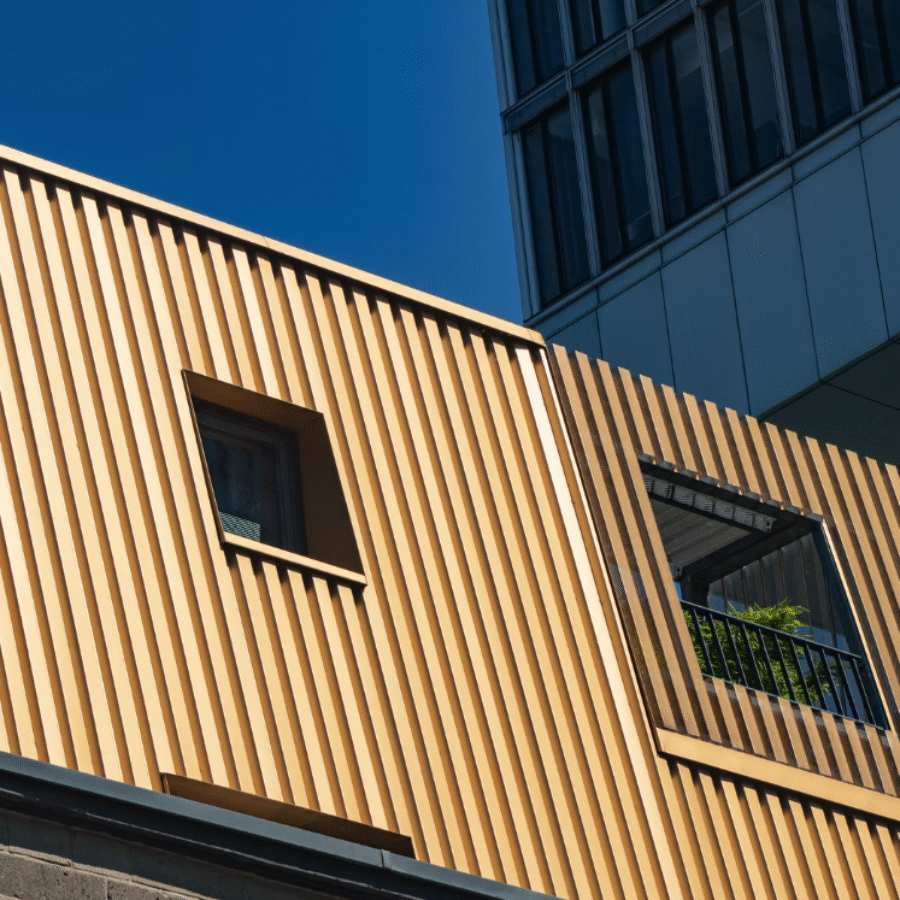

Metal wall cladding around building windows

Benefits of External Cladding

Structure and Attachment

Panel span, girt spacing and fastening are set for the building and its design wind loads.

Insulation

Insulated metal panels put a continuous insulated layer in the wall, which matters for any space that is cooled through a long, hot summer.

Moisture Protection

Correct laps, closures and base flashings keep driven rain out, and good vapor detailing keeps condensation off the inner face.

Improved Appearance

A new wall in a chosen profile and color changes how a tired building looks from the road.

Low Maintenance

Metal cladding needs little beyond a periodic check of fasteners, sealant and cut edges, and a coating once the finish starts to chalk.

Reclad, Not Rebuild

A sound frame with failing sheets is a recladding job, not a reason to replace the building.

Types of Cladding Systems We Install

The external cladding systems we install:

Insulated Metal Panels (IMP)

Steel skins on a rigid insulating core; we are a certified installer for Kingspan and AWIP.

Rainscreen Cladding Systems

A ventilated cavity behind the face panel drains and dries any water that gets past it; see insulated wall and rainscreen systems.

Profiled Cladding Panels

Exposed-fastener R-panel and PBR profiles for large industrial walls, including our own specification R-panel systems.

Architectural Façade Systems

Concealed-fastener metal wall panels, including Morin profiles, for office and retail frontages.

A documented sequence

Our Cladding Installation Process

  1. Consultation & Design – We agree what the new wall must do: keep weather out, add insulation, change the look, or all three.

  2. Site Assessment – We check the frame, girts, base and existing sheets, and record every opening, penetration and joint.

  3. System Selection – We recommend R-panel, insulated panels or a coating, and say plainly when the existing sheets are worth keeping.

  4. Installation – Our crews install to the manufacturer’s details, in work areas and at times agreed with your site team.

  5. Final Inspection – We walk the finished walls for fasteners, laps, flashings and sealant before handover.


Why San Antonio and Austin Businesses Choose Us

Commercial & Industrial Focus

Specialists in large-scale building systems.

Details First

Water gets in at joints, openings and base flashings far more often than through a sheet, so those details are part of every cladding scope we price.

Experience

The company is led by Tom Swainson, a veteran commercial roofer with more than 20 years of commercial roofing experience.

Occupied Buildings

We agree access, work areas, phasing and protection with your site team so the building keeps working.

Roof and Wall Together

We coordinate roof, insulation, wall panel and drainage work, so the roof-to-wall junction is designed once.

Industries We Serve

We install external cladding on:

  • Warehouses & Distribution Centers

  • Retail & Shopping Centers

  • Manufacturing Facilities

  • Healthcare Buildings

  • Office Complexes

  • Schools & Universities

  • Government & Public Institutions


Areas We Serve in San Antonio and Austin

We work from our office in Bulverde, a typical 30-minute drive from central San Antonio and about an hour and 20 minutes from central Austin. We clad commercial and industrial buildings in:

  • San Antonio, from the I-35 and I-10 corridors to the Loop 410 and Loop 1604 business districts

  • Austin, including the I-35 and SH 130 corridors


Discuss Your Project

Frequently asked questions

External Cladding Installation And Replacement FAQs

Will a coating stop water getting through a wall?

Only if the water is coming through the face of the sheets. Most wall leaks start at a flashing, a lap, an opening or the base, so we find the entry point first and then decide between a coating, new trims or a reclad.

How does rainscreen cladding differ from ordinary siding?

Ordinary siding is the weather line itself. A rainscreen puts an outer panel in front of a drained, ventilated gap, so the sealed layer on the backing wall stays out of the sun and rain, and any water that passes the face drains away.

Should we reclad over the old wall or strip it first?

Recladding over the old sheets on new girts keeps the building closed and avoids disposal, and it suits walls whose frame and base are sound. We strip first when the old sheets are badly corroded, when trapped moisture behind them has to be dealt with, or when openings need a flush new line.

Which is right for our walls: R-panel or insulated metal panels?

R-panel suits warehouses, shops and industrial units where the wall only has to keep the weather out, or where insulation sits behind it. Insulated metal panels suit cooled, conditioned or cold-storage space, because the insulation, weather skin and interior face arrive as one panel.

When is a coating enough instead of new cladding?

When the sheets are still sound and the problem is a chalked finish, surface rust or corrosion at cut edges and laps. A restoration coating with rust and cut-edge treatment renews a sound wall. Holed, badly dented or loose sheets need new panels instead.

Can external cladding be done while the building stays in use?

Yes. Before work starts we settle routes, work zones and protection with the people who run the building, and we plan each day so any wall we open is closed up again before the crew leaves.

What affects the cost of new cladding?

Wall height and access, the panel type and gauge, the number of doors, windows and louvers, how much old material comes off, and whether girts or base angles need replacing. A survey pins those down before we price.

Do you coordinate cladding with roof work?

Yes. Where a metal roof retrofit, a TPO recover or new gutters are planned, we detail the roof-to-wall junction, trims and drainage once, so the wall and roof work as one envelope rather than two separate jobs.

Which manufacturers' wall panels do you install?

We are a certified installer for Kingspan, AWIP, MBCI and Morin, and we also install our own specification R-panel systems. Data sheets for many of the panels are in our Technical Library.

How do we get a cladding quotation?

Send the address, approximate wall areas and any drawings or photos, and say whether the concern is water getting in, damage or a planned reclad. Our office is in Bulverde, about 30 minutes from central San Antonio and an hour and 20 minutes from central Austin; call (210) 775-0995.

UK refurbishment experience, a Texas office

Refurbishment specialists

Our business grew through roof and cladding refurbishment in the UK. That experience shapes the work we now offer from our Texas office.

Repair what can be retained

We investigate the roof problem and explain what can be repaired, restored or replaced, so you can decide how to invest in the building.

Roofing and cladding together

We can coordinate roof, insulation, wall panel and drainage work, including the connections where separate repairs can leave problems behind.

A plan for your working building

We agree access, work areas and protection with your site team, including any restrictions needed while the roof is opened.

Roofing and cladding systems

Roofing systems and materials for Texas facilities

Rustoleum Logo
Sika Logo
Kingspan Logo
Morin Logo
American WeatherStar Logo
GAF Logo
TAMKO Logo
PAC-CLAD Logo
1

Tell us about the building

Start with the address and the roof or cladding problem. Photographs are helpful if you already have them.

2

Arrange a site visit

We review the affected areas and discuss how you use the building and what you want the work to achieve.

3

Review the quotation

Your quotation explains the proposed repairs or refurbishment, the areas included and the price.

4

Agree the work plan

We discuss timing, access, deliveries and protection with your site contact before work begins.

5

Complete the work

We carry out the agreed work and discuss any changes needed if opening the roof reveals additional damage.

6

Handover

We review the completed work and provide the care information and documents included in your project.