Commercial Roof Repair Services in Texas

Defined repairs for commercial roof and water-entry conditions, with clear limits and professional coordination where structural issues are suspected.

Request a Repair Review

Commercial roof leak and repair scopes

Correct the defect—and understand the condition behind it

A commercial roof repair should correct a defined defect and address the condition that allowed it to develop. Covering a symptom without confirming the material, water path, substrate, movement, drainage, or adjacent details can leave the original problem in place.

Total Cladding and Roofing investigates and develops repair scopes for commercial and industrial roofs in Texas. Work is qualified by roof type, access, condition, safety, facility operations, and the information available. When observed damage may involve the roof deck, framing, load path, or regulated design, TCR identifies the need for a licensed engineer or other responsible professional rather than representing contractor observations as structural certification.

Emergency Roof Repair

Repair begins with a defined condition

Interior water does not always appear directly below the exterior entry point. Water can travel along deck flutes, insulation, framing, curbs, walls, or earlier roof layers. A repair visit may therefore begin with leak history, interior observations, roof plans, weather timing, and prior work before the visible roof detail is opened or treated.

For a documented condition review before pricing, use our commercial roof inspection service.

Urgent stabilization and permanent repair are different scopes

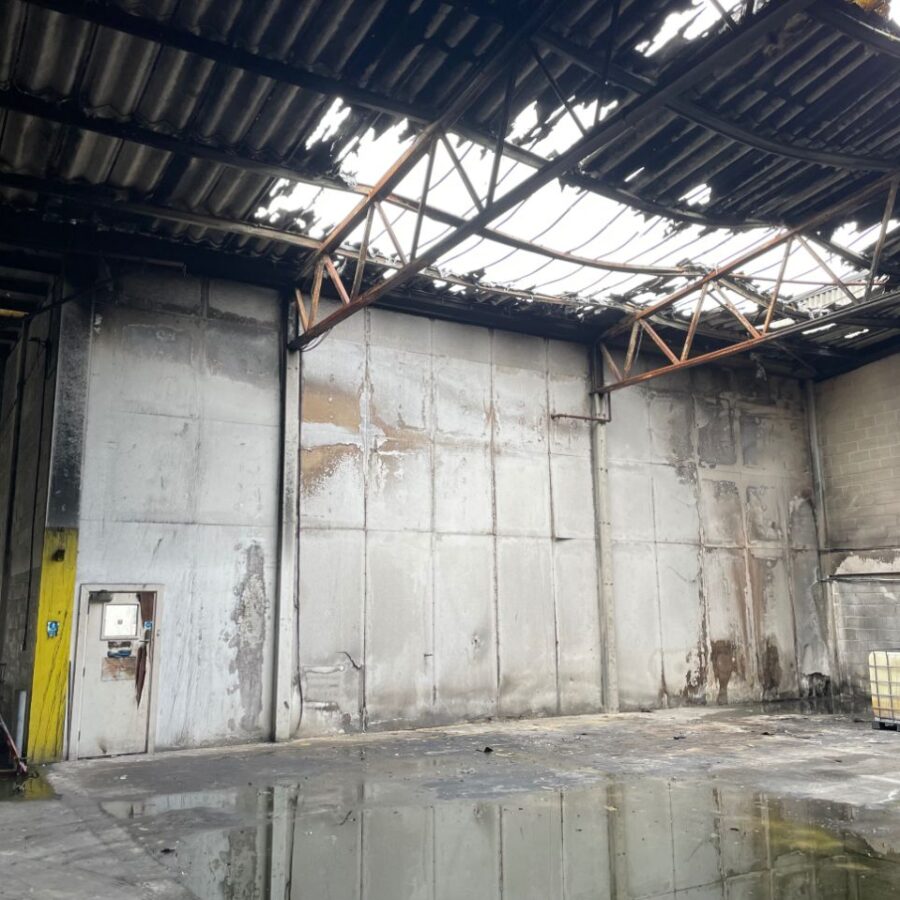
After active water entry or storm damage, the immediate priorities are life safety, protecting the occupied space where feasible, preventing additional exposure, and documenting conditions. A temporary patch, cover, drain clearance, or controlled dry-in may reduce near-term risk, but it is not automatically the permanent repair.

The permanent scope should follow when the roof material, substrate condition, compatible repair method, perimeter or penetration details, and required code or manufacturer steps have been established. TCR confirms whether an urgent request is within the practical service area and scope for that event; no universal response time is promised.

Commercial roof conditions that may be repairable

Membrane seams, flashings, and punctures

Localized TPO, PVC, EPDM, modified bitumen, or built-up roof defects may include open seams, membrane damage, failed terminations, deteriorated flashing, punctures, or isolated surfacing loss. Repair products and methods must match the existing material and condition; one sealant or patch is not compatible with every roof.

Metal fasteners, laps, sealants, and corrosion

Exposed-fastener metal roofs can develop backed-out or failed fasteners, washer deterioration, panel-lap leakage, penetration failures, loose closures, coating breakdown, and corrosion. Standing-seam systems introduce clip, seam, panel-end, penetration, and thermal-movement considerations. Localized work is appropriate only when the surrounding panels and support conditions can accept the repair.

Curbs, penetrations, edges, and transitions

Equipment curbs, pipes, skylights, expansion joints, parapets, copings, roof-to-wall transitions, edge metal, and changes between roof systems frequently require coordinated detailing. The responsible scope may include roofing work plus mechanical, electrical, wall, glazing, or other trade involvement.

Drainage and water-management details

Blocked or damaged drains, gutters, scuppers, downspouts, crickets, and overflow paths can contribute to ponding or water entry. Clearing debris may be maintenance; changing drainage capacity, slope, or structural loading can require design input and code review.

Deck or framing concerns

Soft areas, deflection, corrosion, deterioration, openings, damaged deck, or suspected framing distress require controlled access and clear responsibility. Roofing may need to be removed and temporarily protected so a qualified professional can assess concealed conditions. TCR can coordinate the roofing scope around that process, but does not imply licensed structural engineering or certification.

A documented sequence

How a defined repair scope is developed

  1. Confirm the concern: record leak timing, affected spaces, known roof system, previous repairs, storm history, and operational constraints.
  2. Inspect the relevant area: review the roof surface, details, drainage, adjacent walls or equipment, and interior evidence where accessible.
  3. Identify unanswered questions: decide whether test cuts, moisture investigation, adhesion or pullout testing, manufacturer input, or engineering is needed before the permanent scope.
  4. Define preparation and repair: state removal, cleaning, drying, priming, compatible materials, reinforcement, fastening, welding, sealant, coating, or replacement details as applicable.
  5. Plan protection and access: establish work zones, interior protection, equipment coordination, weather limits, daily watertightness, and tenant or production communication.
  6. Document completion: record repaired locations, photographs, remaining observations, maintenance needs, and any closeout information included in the agreed scope.

When a localized repair is not enough

Repair is most defensible when the defect is limited, the surrounding assembly remains serviceable, materials are compatible, and the cause can be addressed. A broader decision is warranted when there is widespread wet insulation, repeated failure across many areas, extensive corrosion, brittle or incompatible material, deteriorated decking, inadequate drainage, or project goals that localized work cannot meet.

In those situations, the responsible comparison may include restoration, recover, partial replacement, or full replacement. Our commercial roofing services hub outlines the differences.

Repairing low-slope and TPO roofs

A thermoplastic membrane repair commonly depends on confirming the membrane, cleaning and preparing the surface, removing incompatible prior materials, and producing sound heat-welded details where applicable. Wet or damaged insulation and deck conditions must be addressed rather than sealed below new material. Review the commercial TPO roofing guide for assembly, attachment, and recover considerations.

Coordinating work around active operations

Commercial repairs often occur above people, inventory, production, customers, or sensitive equipment. The method may need to control noise, odor, dust, hot work, falling-object exposure, temporary openings, and water risk. Work hours, escorts, loading, rooftop-equipment shutdowns, interior access, and daily communication should be agreed before work begins.

See commercial roofing by facility type for warehouse, manufacturing, retail, office, education, public-building, and sensitive-occupancy planning topics.

What a useful repair proposal should state

  • Roof area and observed condition being addressed
  • Investigation completed and assumptions that still affect price or method
  • Preparation, removal, repair materials, application or attachment, and detail limits
  • Interior protection, access, weather, phasing, and owner responsibilities
  • Related work by mechanical, electrical, structural, hazardous-material, or other specialists
  • Excluded conditions and the change process if concealed damage is found
  • Inspection points, photographs, cleanup, and closeout deliverables
  • Product or workmanship warranty terms only when specifically included and supported

Storm and insurance documentation boundaries

TCR can document contractor observations and prepare roofing repair or replacement scopes. It does not decide coverage, value a claim on behalf of the policyholder, or provide public-adjuster or legal services. Owners should coordinate coverage questions with their insurer, licensed adjuster, or legal adviser.

Some repairs and reroofing in designated Texas coastal areas may be subject to the Texas Department of Insurance Windstorm Inspection Program. A TCR inspection does not replace an inspection by TDI or an appointed Texas licensed professional engineer. Confirm current requirements through the TDI windstorm inspection process before construction.

Start with the property information

Request a commercial roof repair review

To discuss a defined leak, damaged detail, metal-roof condition, or storm concern, contact Total Cladding and Roofing. Share the property address, affected area, timing, photographs, known roof information, and operating constraints. For San Antonio context, visit our commercial roofing services in San Antonio page.

Request a Repair Review

Frequently asked questions

Commercial Roof Repairs FAQs

When should a property team consider commercial roof repairs?

Consider commercial roof repairs when the decision involves open seams, damaged flashings, punctures, failed terminations, localized corrosion, drainage defects, or recurring water entry. The first step is to confirm the existing assembly, the extent of the condition, and what the building must continue doing during the work.

What does the initial site review for commercial roof repairs cover?

The review should document the affected roof area and surrounding assembly, visible defects, adjacent details, drainage, penetrations, previous work, access, and relevant conditions inside the building. It should also identify areas that cannot be confirmed visually.

What information helps produce a useful commercial roof repairs quote?

Provide the address, building use, known system, drawings or specifications, photographs, leak and repair history, warranty records, access rules, operating restrictions, desired timing, and the decision the quote needs to support.

Can commercial roof repairs be planned around an occupied facility?

Often, but the work plan must reflect people, inventory, production, tenants, air intakes, noise, odor, access routes, weather exposure, shutdown windows, and daily handback requirements. Those constraints should be priced and scheduled rather than assumed.

How is a limited repair separated from a wider scope?

The decision depends on the extent of defects, surrounding material condition, concealed moisture, substrate or deck condition, recurring history, compatibility, and the owner's objectives. A localized symptom should not be treated as the entire diagnosis.

When might testing be needed before commercial roof repairs?

Testing may be appropriate when moisture, adhesion, attachment, material identity, concealed layers, structural condition, or compatibility could change the recommendation. The method and locations should be tied to a specific unanswered question.

How are penetrations, drainage, edges, and adjoining construction handled?

They should be included in the same scope review as the main work area. Water can enter or move through curbs, walls, gutters, drains, edges, equipment, and transitions, so treating only the visible field may leave the cause unresolved.

What should a commercial roof repairs proposal clearly include?

Look for defined work areas, preparation, removals, repairs, materials, quantities or allowances, details, access, temporary protection, responsibilities, exclusions, inspection points, schedule assumptions, and closeout requirements.

Which completion records should the property team request?

Useful records can include dated photographs, repaired locations, product information, test or inspection results included in the scope, change records, punch-list completion, maintenance guidance, and warranty documents applicable to the completed work.

How should owners compare quotes for commercial roof repairs?

Compare the same roof areas, preparation, repairs, assembly components, details, access, protection, allowances, exclusions, schedule, inspections, and closeout. A lower total may reflect a different scope rather than a better price for the same work.

We offer our services throughout Texas, with project scope and scheduling confirmed for each facility

Trained and Certified Team

Our technicians are fully trained in advanced coating systems, ensuring your roof is protected with the latest application techniques.

Professional From Start to Finish

We treat every project with care, precision, and respect—delivering clean, efficient service with minimal disruption to your business.

Premium Coating Systems

We only use trusted, industrial-grade coating products tested for performance in Texas heat, UV, and storms—no cheap shortcuts.

Detailed Roof Assessments

Our expert assessors provide honest evaluations, thermal photos (if available), and clear proposals—so you know exactly what your roof needs.

Trusted in Texas

Trusted across Texas for high-performance roof coatings, weatherproofing, and energy-efficient building protection

Rustoleum Logo
Sika Logo
Kingspan Logo
Morin Logo
American WeatherStar Logo
GAF Logo
TAMKO Logo
PAC-CLAD Logo
1

Get in touch

Take the first step to improving your building by contacting our professional team.

2

Arrange a site visit

Book a site visit with our team and we can fully assess your needs and listen to your requirements.

3

Receive your quote

We’ll then present you with a quote for all the work proposed so that you can see our recommendations and prices.

4

Plan your project

Work with our professional team to plan your project to meet your requirements.

5

Begin your project

Once approved, the work can begin to bring your roof or cladding up to standard.

6

Final Handover

Once your new roof or cladding is complete, we will do a final handover to bring the project to a close.