


Commercial Standing Seam Metal Roofing in San Antonio and Austin

Commercial Standing Seam Metal Roofing in San Antonio and Austin

Standing-seam metal roofing joins its panels at raised seams, held down by clips suited to the selected system. Roof slope, supports and panel movement decide how it goes on. Total Cladding and Roofing installs commercial standing seam roofs in San Antonio and Austin, including new standing seam roofs built over an existing roof through our metal roof retrofit service. Our pages on metal roof retrofit in San Antonio and metal roof retrofit in Austin explain how that works in each city.

The Technical Library holds the data sheets for products used in this work, including Pw-R SR2 Field-Assembled, Rail-Based System (All Weather Insulated Panels), Fasteel Standing Seam Panels, Sem-Lok Metal Roofing (Gibraltar Building Products), KingSeam (Kingspan), Standing Seam Vent (Marco Industries) and 138T (McElroy Metal).
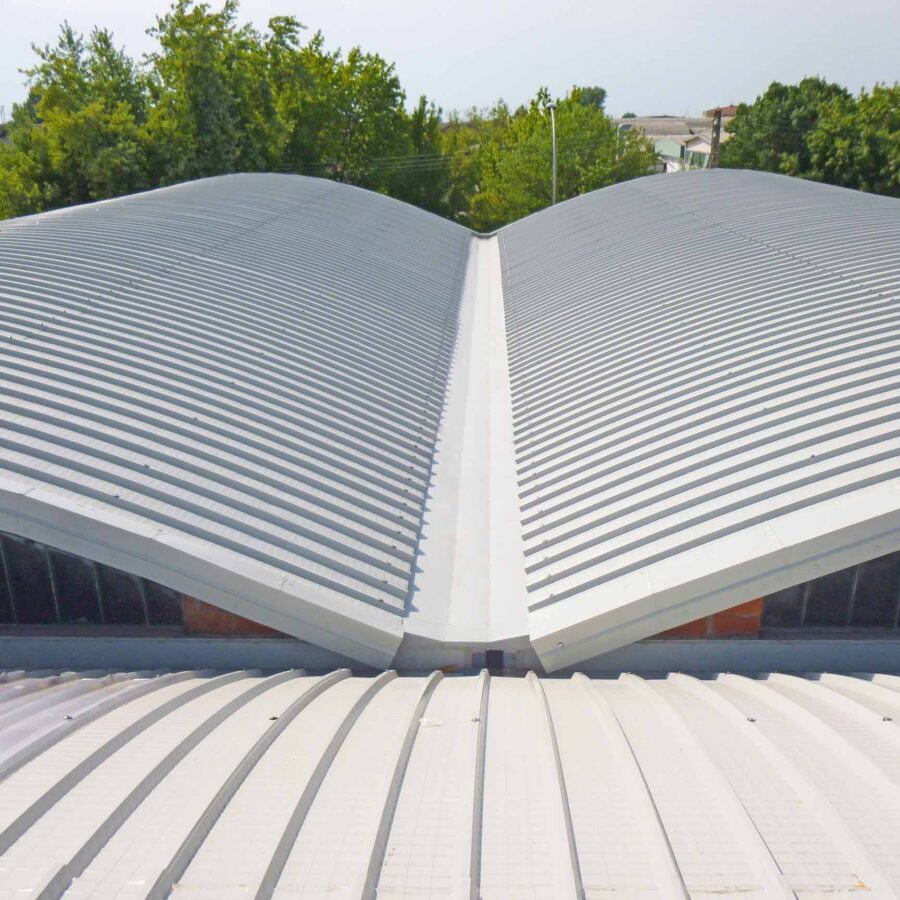

Metal roofing with ridge flashings and skylight panels

What is Standing Seam Metal Roofing?

Standing seam roofing uses metal panels that run from ridge to eave and lock together at raised seams.

Unlike traditional exposed-fastener metal roofs, standing seam systems conceal the fasteners beneath the panel seams, helping to provide:

  • Enhanced weather resistance
  • Improved waterproofing
  • Reduced maintenance requirements
  • Better thermal movement performance
  • No exposed fasteners to back out

Clip type, panel width and seam height are chosen for the roof slope, the purlin spacing and the wind exposure.

Why Choose Standing Seam Metal Roofing?

Built for Hot Summers, Hail and Heavy Rain

Standing seam metal roofing is built to withstand:

  • Long, hot summers
  • UV exposure
  • High winds
  • Heavy rainfall
  • Spring hail
  • Thermal expansion and contraction

How well a roof holds up depends on the panel gauge, the finish, the clips and the details at every edge and opening.

Weather Protection

The raised seam design and concealed fastening system help protect against:

  • Water penetration
  • Wind uplift
  • Fastener failures
  • Roof leaks
  • Weather-related deterioration

Each of these still depends on correct clip spacing, seaming and flashing details.

Reflective Finishes and Heat

Reflective metal roofing systems help:

  • Reduce heat absorption
  • Reduce HVAC demand
  • Improve indoor comfort

A light, reflective finish matters under intense Central Texas sun, and it works alongside the insulation under the panels, not instead of it.

Low Maintenance Requirements

Because fasteners are hidden and protected from direct weather exposure, standing seam systems generally require less maintenance than traditional metal roofing systems.

Why Choose Total Cladding and Roofing?

  • More Than 20 Years of Commercial Roofing – Standing seam, R-panel and insulated panel roofs on commercial and industrial buildings.
  • Certified Installer – Certified to install MBCI, Morin and Kingspan metal roof systems.
  • Local Climate – Clips, gauge and finish chosen for heat, UV, hail and heavy rain.
  • Occupied Buildings – Access, work areas, phasing and protection agreed with your site team.
  • San Antonio and Austin – Commercial and industrial roofs across both metro areas from our Bulverde office.

We coordinate the roof, insulation, wall panel and drainage work together, so the details meet where they should.

Standing Seam Metal Roofs for Commercial and Industrial Buildings

Standing Seam Systems for San Antonio and Austin Facilities

We install standing seam metal roofs on warehouses, distribution centers, manufacturing plants, retail buildings and offices in San Antonio and Austin, as new roofs, as retrofits over a worn-out roof and as full replacements.

If you have been searching for commercial metal roofers near me from a warehouse in New Braunfels or a plant in Round Rock, we bring more than 20 years of commercial roofing experience and specify each roof for long Central Texas summers, intense UV, spring hail and sudden heavy rain.

Standing seam suits a commercial roof that has to shed water with little routine attention. Concealed clips keep the fasteners out of the weather, and the clean seam lines suit offices and retail buildings as well as warehouses and manufacturing plants.

Our Standing Seam Metal Roofing Services in San Antonio and Austin

Our standing seam work covers:

Standing Seam Roof Installation

Professional installation for:

  • Commercial Buildings
  • Industrial Facilities
  • Warehouses
  • Manufacturing Plants
  • Retail Properties
  • Educational Facilities

Standing Seam Roof Replacement

When the old roof or its supports are too far gone to build over, we tear off and install a new standing seam roof. Where the existing roof can stay, a retrofit over it is usually the better answer.

Leaks at Seams, Laps and Openings

Repeated leaks usually mean the roof needs a bigger decision than another patch. We survey the roof and recommend a retrofit, a protective coating or a replacement when we find:

  • Leaks at seams, end laps and penetrations
  • Hail-dented panels
  • Wind-lifted panels or trim
  • Flashing failures
  • Rust at laps and cut edges
  • Fatigued sealant at trim and curbs

Standing Seam Roof Restoration

When the panels are sound but the finish has chalked or rust has started at laps and cut edges, a restoration coating protects the roof without replacing it. See our protective coatings for metal roofs.

Standing Seam Roof Retrofit

On a sound structure, we usually build the new standing seam roof over the old one: sub-purlins fixed through to the existing purlins, an insulation upgrade in the new cavity, and no tear-off.

Benefits of Standing Seam Metal Roofing

Standing seam roofing offers:

  • Raised seams that shed water well
  • Clips that allow thermal movement
  • Concealed fastening systems
  • Low maintenance requirements
  • Modern architectural appearance

It suits commercial and industrial buildings where the roof is on show or the slope allows long panel runs.

Buildings We Roof in San Antonio and Austin

Our standing seam roofing services support:

  • Warehouses & distribution centers
  • Manufacturing Facilities
  • Commercial Offices
  • Retail Buildings
  • Educational Buildings
  • Healthcare Facilities
  • Government Properties
  • Industrial Plants
  • Multi-Site Property Portfolios

Every roofing solution is tailored to the building’s operational requirements and environmental conditions.

Standing Seam Roofing vs Traditional Metal Roofing

Standing Seam vs Exposed Fastener Metal Roofing

  • Standing seam systems conceal fasteners.
  • Exposed fastener roofs require more routine maintenance.
  • Standing seam systems put fewer holes through the weather surface.

Standing Seam vs Flat Roofing Systems

  • Standing seam roofs provide excellent water shedding performance.
  • Flat roofing systems may be more suitable for certain commercial applications.
  • Both offer excellent protection when properly designed and installed.

The right roofing system depends on your building design, operational needs and long-term goals. Where exposed fasteners are acceptable, our R-panel roofing is a simpler option; where the roof has to stay low-slope, a TPO roof is.

Standing Seam Metal Roofing Contractors for San Antonio and Austin

Total Cladding and Roofing works from Bulverde, a typical 30-minute drive from central San Antonio and about an hour and 20 minutes from central Austin. We survey the existing roof, check the structure and slope, and recommend the standing seam profile, clip and finish that suit the building.

Whether the answer is a new standing seam roof, a retrofit over the old one, a restoration coating or a full replacement, we will tell you plainly which option suits the building and why.

Talk to our team

Contact Total Cladding and Roofing

Planning a commercial standing seam roof in San Antonio or Austin?

Call (210) 775-0995 or send us the project details to arrange a roof survey.

Tell us the address, the roof area and what is happening with the existing roof, and we will set out the next step toward a retrofit, replacement or new-roof proposal.

Discuss Your Project

Frequently asked questions

Standing-seam Metal Roofing FAQs

How is standing seam different from exposed-fastener roofing?

Standing-seam systems use raised panel joints and generally concealed attachments. Exposed-fastener systems fix through the panel surface.

Can every standing-seam panel be used on a low-slope roof?

No. Minimum slope and other requirements differ by profile and system. Selection must match the actual roof geometry.

Why does panel movement matter?

Metal changes length with temperature. Clips and details must allow the movement intended by the selected system rather than restraining the panels.

What should we do about a standing seam roof that keeps leaking?

Find the cause first. We survey the seams, clips, end laps, curbs and trim. If the panels are sound and the trouble is worn sealant or a tired finish, a protective coating system can restore them; if the roof is past that, we recommend a metal roof retrofit over it or a full replacement.

Can I use an ordinary clamp for solar equipment?

A clamp must be compatible with the seam and the designed load. Visual fit alone does not establish suitability.

Can standing seam replace an R-panel roof?

Often, as a retrofit. New sub-purlins fixed over the R-panel roof give the standing seam clips a fresh attachment line and leave room for new insulation. We check slope, supports and flashing changes first, because standing seam is not always a direct swap for an exposed-fastener roof.

Which standing seam systems do you install?

Our certifications cover MBCI, Morin and Kingspan systems. The Technical Library holds data sheets for standing seam panels from several manufacturers, and we choose the profile, clip type and gauge for each roof's slope, span and exposure.

What affects installation cost?

Panel lengths, roof geometry, material, clips, seaming, access, lifting and the number of openings all matter.

Can new equipment create leaks?

Yes, if attachments or openings disturb panel movement or weathering details. Coordinate equipment changes before cutting or fastening to the roof.

What do you need to review a standing seam project in San Antonio or Austin?

The address, roof area, known panel profile and whether you are planning a new roof, a retrofit over the old one or a replacement. Drawings and photos help. Call (210) 775-0995 or send the details through our contact page.

UK refurbishment experience, a Texas office

Refurbishment specialists

Our business grew through roof and cladding refurbishment in the UK. That experience shapes the work we now offer from our Texas office.

Repair what can be retained

We investigate the roof problem and explain what can be repaired, restored or replaced, so you can decide how to invest in the building.

Roofing and cladding together

We can coordinate roof, insulation, wall panel and drainage work, including the connections where separate repairs can leave problems behind.

A plan for your working building

We agree access, work areas and protection with your site team, including any restrictions needed while the roof is opened.

Roofing and cladding systems

Roofing systems and materials for Texas facilities

Rustoleum Logo
Sika Logo
Kingspan Logo
Morin Logo
American WeatherStar Logo
GAF Logo
TAMKO Logo
PAC-CLAD Logo
1

Tell us about the building

Start with the address and the roof or cladding problem. Photographs are helpful if you already have them.

2

Arrange a site visit

We review the affected areas and discuss how you use the building and what you want the work to achieve.

3

Review the quotation

Your quotation explains the proposed repairs or refurbishment, the areas included and the price.

4

Agree the work plan

We discuss timing, access, deliveries and protection with your site contact before work begins.

5

Complete the work

We carry out the agreed work and discuss any changes needed if opening the roof reveals additional damage.

6

Handover

We review the completed work and provide the care information and documents included in your project.