Flat Roofing Systems Texas

Repairs, restoration and replacement for existing flat and low-slope commercial roofs.

Help with your existing flat roof

We repair, refurbish and replace flat and low-slope commercial roofs. If yours is leaking or deteriorating, we start by identifying the covering and the condition of the layers beneath it.

TPO, PVC, EPDM and asphalt roofs need different materials and repair details. We explain which options fit your building and how they connect to its insulation, drainage and rooftop equipment.

The Technical Library holds the data sheets for products used in this work, including Foam-Gard (American WeatherStar), Drive-Lock Reglet (Hickman Edge Systems), Acrylic Reinforced Coating System BUR Capsheet (Metacrylics), 2-Piece Counterflashing (Metal-Era), PAC-Shield Roof and Wall Insulation (PAC-CLAD | Petersen) and Alumi-Flash (Portals Plus).
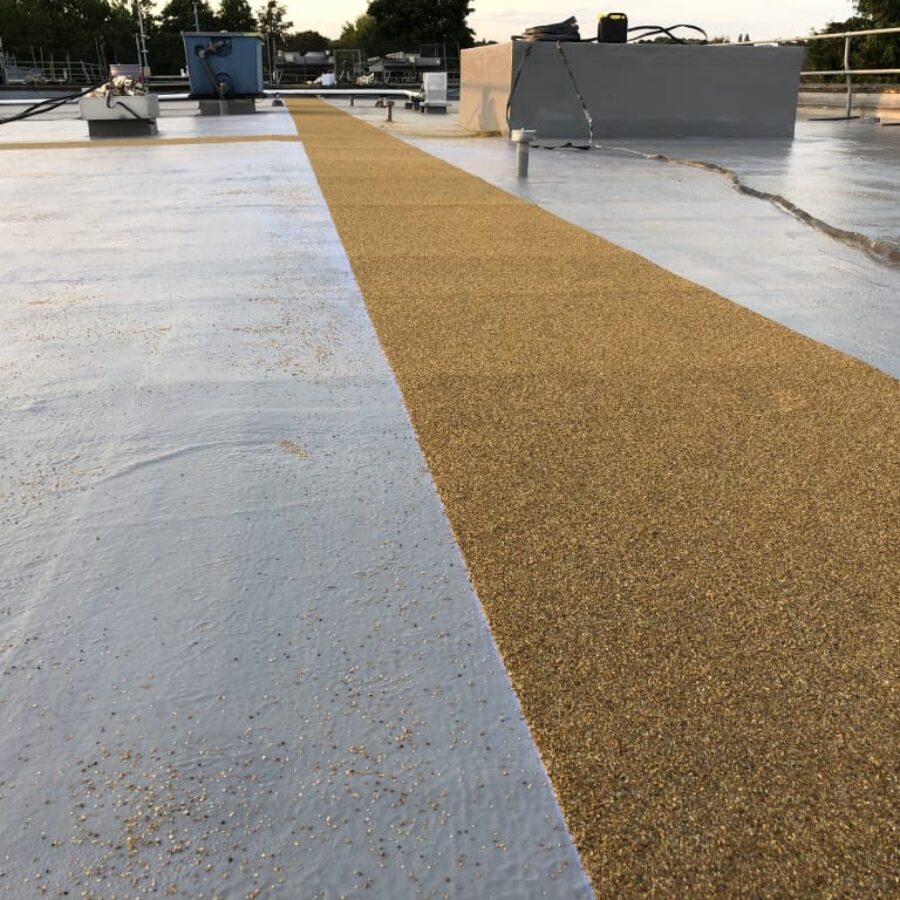

Flat roof with coated details and a marked access walkway

Find the cause of the leak

Water may enter at a seam, a damaged area or a flashing around equipment. It can travel before appearing indoors. We review the surrounding roof and drainage as well as the point above the visible stain.

Repairing the roof you already have

A sound membrane with a local defect may be repairable. The patch, sealant and preparation need to suit the existing material. If water has reached the insulation below, opening and replacing the affected layers may be part of the repair.

Restoration, recover or replacement?

Restoration repairs and protects an existing roof. Recover adds a new covering over layers that can remain. Replacement removes deteriorated roofing and gives access to the materials below. We compare these against the actual roof condition, rather than choosing from the surface appearance alone.

Flat roofing systems

The system must suit the building and the work being proposed.

TPO and PVC

Thermoplastic membranes with welded seams and flashings. We assess the existing roof and the details needed for repair or installation.

EPDM

A rubber membrane used on low-slope roofs. Seams, flashings and preparation need materials compatible with the selected EPDM system.

Modified bitumen and built-up roofing

Asphalt-based roof systems. Repairs and replacement need to account for the existing layers, surfacing and any trapped moisture.

Liquid-applied waterproofing

A continuous treatment over a prepared, repaired roof. Surface condition and adhesion determine whether this is a practical restoration option.

Drainage is part of the roof work

Blocked outlets, low areas and poor connections at drains can keep water on the roof. A new covering does not automatically correct these problems. We identify the drainage work needed alongside the proposed repair or replacement.

Insulation and concealed moisture

The top surface may look repairable while materials below are wet. Where moisture is suspected, further investigation helps establish what can stay and what needs removing. A replacement can also provide an opportunity to improve insulation.

Connections around rooftop equipment

Curbs, pipes and access routes need to work with the new roof height and details. We coordinate equipment alterations with the appropriate contractor and include the associated roofing connections in the plan.

Working above occupied premises

We agree access and the work areas with your site contact. Stock, people and equipment below roof openings may need temporary protection or separation, and any restrictions are discussed before that area starts.

Talk to our team

Discuss your flat roof

Contact our Texas office with the property address and what is happening at the roof. Any photographs or previous repair information are helpful.

Discuss Your Project

Frequently asked questions

Commercial Flat Roofing Systems FAQs

Is a flat roof completely level?

A low-slope roof needs drainage. Its falls and outlets must work with the selected roofing assembly.

How do TPO, PVC and EPDM differ?

TPO and PVC use thermoplastic sheets with welded seams. EPDM is rubber roofing with its own compatible seam and repair methods.

Is one membrane best for every commercial building?

No. Substrate, exposure, attachment, equipment and building use affect the choice alongside cost and maintenance.

Can a membrane be installed over an old roof?

Sometimes, after checking retained layers, moisture, attachment and the details needed at edges and equipment.

Does a new membrane fix poor drainage?

Not automatically. Falls, outlets and persistent standing water need review as part of the proposed work.

Can wet insulation stay beneath new roofing?

Its condition and extent need assessment. Enclosing unresolved moisture is not a substitute for correcting it.

What is a cover board?

A board used in some assemblies above insulation and below the membrane. Its need and specification depend on the selected roof system.

Can low-slope roofs be repaired locally?

Often, where the material is identified and surrounding roofing remains sound enough to accept a compatible repair.

What affects replacement pricing?

Removal, insulation, attachment, roof height, access and work at details affect the total beyond membrane area.

How do I compare roofing proposals?

Compare the complete assembly and included repairs, removal and details. A membrane name or thickness alone does not describe equivalent work.

UK refurbishment experience, a Texas office

Refurbishment specialists

Our business grew through roof and cladding refurbishment in the UK. That experience shapes the work we now offer from our Texas office.

Repair what can be retained

We investigate the roof problem and explain what can be repaired, restored or replaced, so you can decide how to invest in the building.

Roofing and cladding together

We can coordinate roof, insulation, wall panel and drainage work, including the connections where separate repairs can leave problems behind.

A plan for your working building

We agree access, work areas and protection with your site team, including any restrictions needed while the roof is opened.

Roofing and cladding systems

Roofing systems and materials for Texas facilities

Rustoleum Logo
Sika Logo
Kingspan Logo
Morin Logo
American WeatherStar Logo
GAF Logo
TAMKO Logo
PAC-CLAD Logo
1

Tell us about the building

Start with the address and the roof or cladding problem. Photographs are helpful if you already have them.

2

Arrange a site visit

We review the affected areas and discuss how you use the building and what you want the work to achieve.

3

Review the quotation

Your quotation explains the proposed repairs or refurbishment, the areas included and the price.

4

Agree the work plan

We discuss timing, access, deliveries and protection with your site contact before work begins.

5

Complete the work

We carry out the agreed work and discuss any changes needed if opening the roof reveals additional damage.

6

Handover

We review the completed work and provide the care information and documents included in your project.