
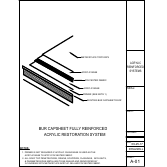
Acrylic Reinforced Coating System BUR Capsheet
- Manufacturer
- Metacrylics
- Product
- Acrylic Reinforced Coating System BUR Capsheet
- Status
- Current
- Market
- United States
- Last verified
- September 20, 2026
Overview
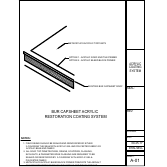
Acrylic Reinforced Coating System BUR Capsheet is a Metacrylics assembly for built-up roofing with a cap sheet. The drawing is sheet A-01, titled BUR Capsheet Fully Reinforced Acrylic Restoration System, dated 09-25-17. The finish chemistry is acrylic.
The spec book lists Smooth Surface BUR/Modified Capsheet as systems of 10 to 30 years on pages 11 to 14, and Tar & Gravel as systems of 15 to 30 years on pages 15 to 17.
System layers
From the existing BUR cap sheet roof upward, the drawing shows a primer, an acrylic base coat, polyester fabric, a second acrylic base coat and Metacrylics topcoats. Per note 1, the primer is omitted when Acrylic Clear Base serves as the acrylic base that receives the polyester fabric. Note 2 states that rooftop penetrations, drains, scuppers, flashings, skylights and perimeter edge metal are sealed and reinforced by 3-coursing with Acrylic Gel and polyester fabric.
The website lists the acrylic system for BUR and modified cap sheet as a prepared surface, Acrylic Clear Base or a specified primer, polyester fabric (T272), an acrylic base coat and an acrylic top coat. The silicone alternative uses Roof & Tile Primer or Bleed Blocker Primer, Silicone Gel at details and High Solids Silicone.
Data sheets and technical documents
Current manufacturer system specifications, application guidelines and component data sheets matched to this assembly.
Current files
Archived files
No older reviewed revisions are archived for this product yet.
Acrylic Bleed Blocker Primer
Acrylic Bleed Blocker Primer is an all-acrylic primer that provides resistance to asphalt staining and improves adhesion to the roof substrate. Asphalt substrates can bleed through acrylic and silicone coatings, and the primer is a water-based means of blocking that bleed-through. Its listed substrates include aged built-up asphalt, modified bitumen, metal and concrete.
Application is a minimum of 4 dry mil thickness, about 1 gallon per square, over unaged asphalt substrates. Two coats of 8 dry mil each may be necessary on unaged asphalt. The wet coating sometimes discolors immediately on aged asphalt, and this water-soluble discoloration disappears after a few rainfalls.
It can be applied by spray, brush or roller and cleans up with soap and water. The primer is intended for industrial use by properly trained professional applicators.
Base coat and fabric
The Acrylic Gray Base coat goes on at 2 to 3 gallons per 100 sq. ft. before the fabric and 2 gallons per 100 sq. ft. after it, for 4 to 5 gallons in total and 24 to 48 hours of drying time. It is rated Class A under ASTM E-108 and UL Standard 790. Its chemical resistance results show no effect from 1 percent sodium hydroxide, diesel, 1 percent hydrochloric acid and salt, and some softening and spotting from gasoline.
T272 is the fabric named on the website's BUR page. It is a soft stitchbonded polyester that conforms to embedded gravel, irregular and smooth roof surfaces. The 10 square roll is 10.0 squares net applied with a 3 inch single-ply overlap.
Topcoat and gel
The Extreme Performance Plus Acrylic White topcoat is sprayed as two 1.5 gallon coats per 100 sq. ft., with 12 to 24 hours between coats. Its listed surfaces include BUR asphalt, tar and gravel, granulated cap sheet and rolled roofing. Solar reflectance is 0.90, thermal emittance 0.88 and SRI 114.
Acrylic Gel is used at blisters, field seams, drains, scuppers, copings, splits, cracks and fishmouths. It weighs 11.5 pounds per gallon and carries ICC-ES Report No. 4785.
Spec book systems and rates
The spec book gives four rate tables for coating over a BUR or modified cap sheet roof. One square is 100 sq. ft. Each begins with a pressure wash, and a note on every table says that where the existing roof has no granules, Bleed Blocker Primer must be used at 1 gallon per square. Parapet walls, flashings and HVAC ducting are coated with the base and the white.
10-year system
- Clear Base or Roof & Tile Primer: 1 gallon per square
- Acrylic White: 3 gallons per square, in two coats of 1.5 gallons
- 6 inch Stitchbond fabric with Clear Base at seams; Acrylic Gel and fabric as needed
- Cure time for the primer coat: 4 to 12 hours; 24 to 48 hours between white coats
15-year system
- Clear Acrylic Base: 3 gallons per square (2 gallons under the fabric, 1 gallon over it)
- Acrylic White: 3.5 gallons per square, in two coats of 1.75 gallons
- Stitchbond fabric: 1 square per square
- Cure time: 24 to 48 hours after the base; at least 24 hours between white coats
20-year system
- Clear Acrylic Base: 4 gallons per square (2 gallons under the fabric, 2 gallons over it)
- Acrylic White: 4 gallons per square, in two coats of 2 gallons
- Stitchbond fabric: 1 square per square
- Cure time: 24 to 48 hours after the base; at least 24 hours between white coats
30-year system
- Clear Acrylic Base: 6 gallons per square, applied in layers of 2 gallons around two layers of fabric
- Acrylic White: 7 gallons per square, in four coats of 1.75 gallons
- Stitchbond fabric: 2 squares per square
- 5-course penetration detail; 48 hours of cure after the fabric layers, at least 24 hours between white coats
Penetration and edge details
The detail sequences in the spec book cover features common on built-up roofs. Pitch pockets are filled with gel, 3-coursed over the top and down to the base at least 3 inches onto the roof, and gel runs 10 inches along the penetration leaving the pocket. Wood blocks are lifted, the area is coated with gel or acrylic base and white, and the block is replaced when dry. Wood sleepers under HVAC units are lifted and a 1-ply or granulated slip sheet is laid beneath, or the area is coated and reinforced with fabric where the sleepers cannot be moved. Parapet coping is washed and primed, with black primer on rust, then 3-coursed with gel and fabric over joints and screws and coated with the white topcoat.
Cap sheet roof conditions
The website lists these concerns on BUR and modified cap sheet roofs: asphalt oil bleed-through and discoloration; blisters, open laps, splits or loose granules; and alligatoring around details and transitions. Preparation steps are to repair blisters, splits and loose laps, clean and dry the asphaltic surface and apply Bleed Blocker before base or top coats. The coating is applied over roofs of the kind covered under low-slope roof assemblies.
Related products
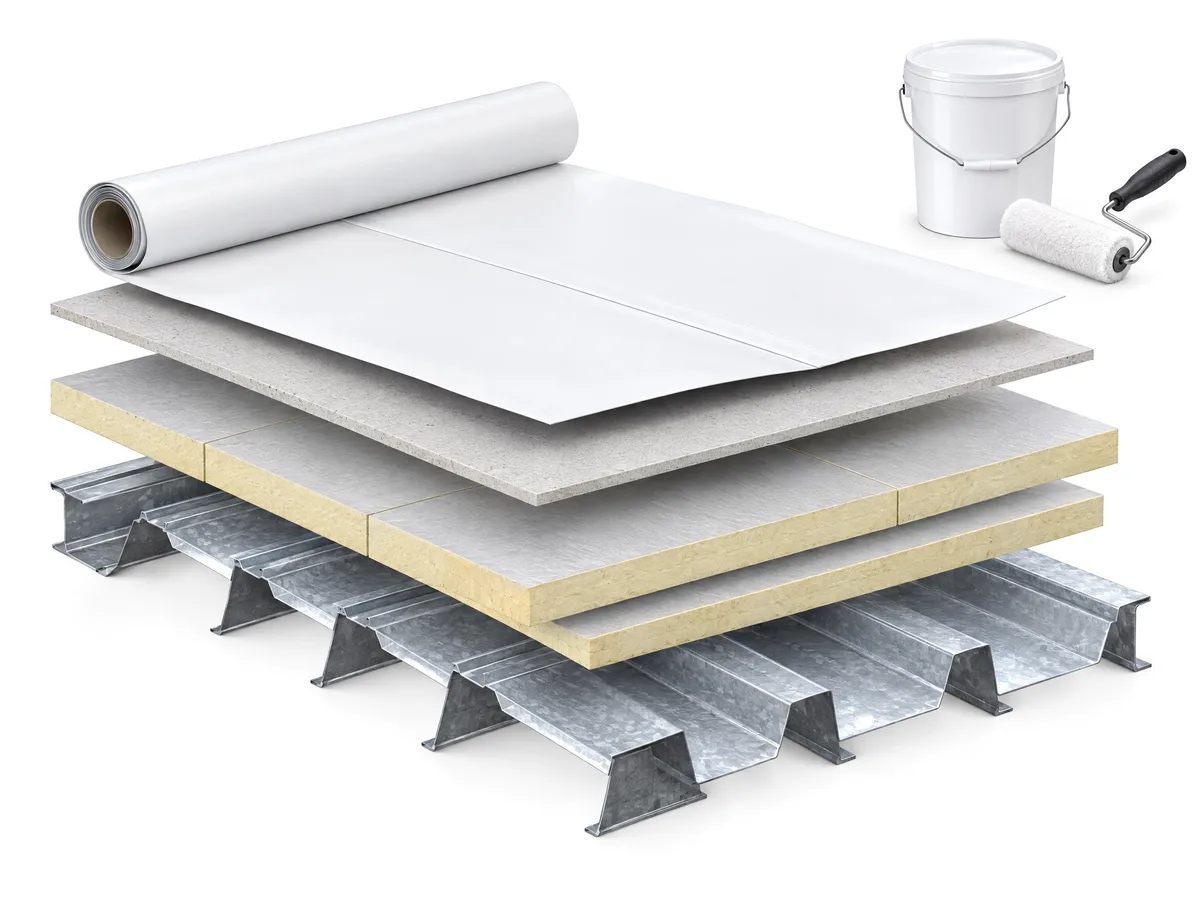 Illustration
SM-12-3G-3E — Acrylic-surfaced reinforced roof system
RubberGard MAX
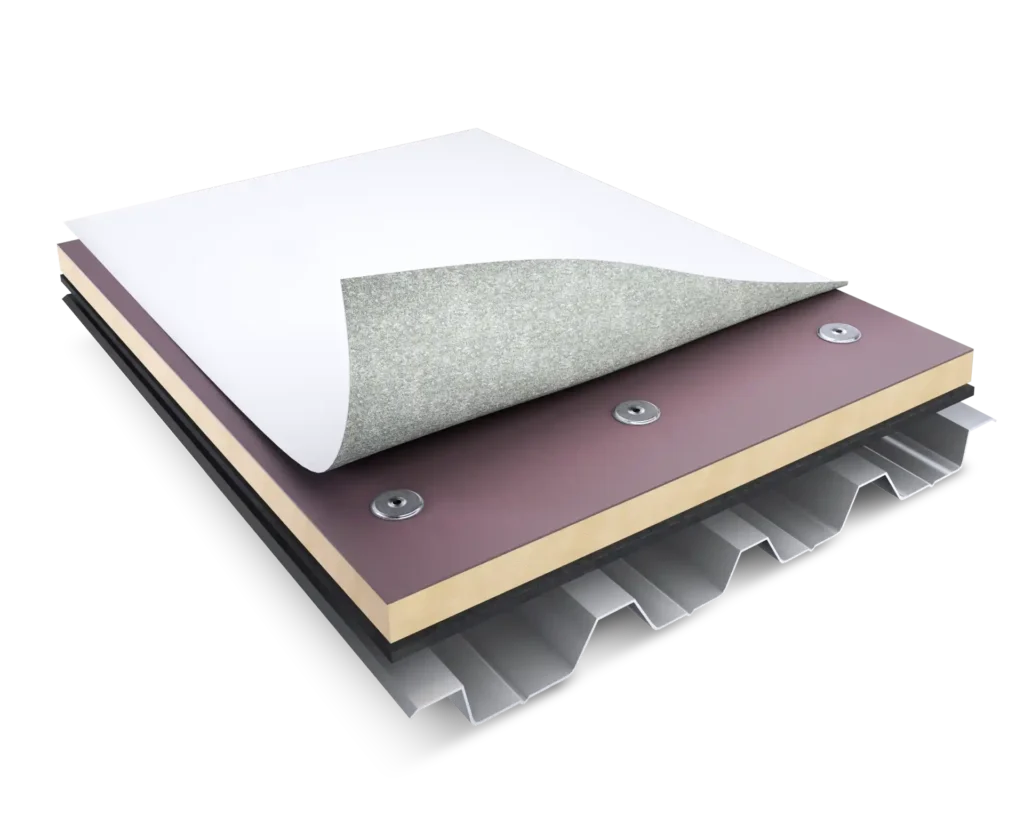
Duro-Fleece PVC Membrane
Met-A-Sil
Acrylic Roof Restoration Coating System BUR Capsheet
Acrylic Roof Restoration Coating System Re-Coat Over Acrylic Coated Surface
Contribution history
Published changes remain in this permanent record. Corrections create a new entry instead of deleting earlier history.
- September 21, 2026 at 8:48 amLibrary Record
Acrylic Reinforced Coating System BUR Capsheet — initial source record
Created the system record and matched the current manufacturer system specification, application guidance and component data sheets.
By Tom · Verified Primary Source
Sources: Official Metacrylics Acrylic Reinforced Coating System BUR Capsheet system page