
Commercial Roofing Manufacturers and Systems

Coatings, membranes, metal panels, insulated panels and wall cladding: what each system is and where it fits on an existing building.

Total Cladding and Roofing

Find the roofing or cladding system for your project

The right roof or wall system for an existing commercial building starts with what is already there: the roof type, its condition, the structure under it, the slope, and how the building is used. A sound roof may only need repairs and a coating. A worn-out one may need a new membrane, new metal panels or insulated panels. This page explains the main systems used on Texas commercial and industrial buildings and where each fits, with links to a page on each system and to manufacturers’ product records in our Technical Library.

If you do not know what is on your roof, or whether it is worth keeping, a condition inspection is the place to start.

Industrial & Commercial Roofing

Coatings and liquid-applied roofing

Coatings and liquid-applied systems are rolled or sprayed onto a prepared existing roof, often with reinforcing fabric at seams and details, to form a new waterproof surface without removing the roof. They are used over metal, single-ply, modified bitumen, built-up and spray foam roofs, as long as the existing roof is dry and sound.

A coating cannot fix wet insulation, holed metal or a membrane that has come loose, so the decision depends on the roof’s condition. See metal roof coatings, liquid-applied roofing and acrylic or silicone, and manufacturers such as American WeatherStar, Sika and Western Colloid in the library.

Acrylic

systems are water-based and reflective, and suit roofs that drain well.

Silicone

systems resist sun and standing water and keep their reflectivity, but later recoats are normally silicone too.

Polyurethane and hybrid

systems are tougher against traffic and impact.

Single-ply membrane roofs

Single-ply membranes are large sheets of synthetic roofing laid over insulation on a flat or low-slope deck. The three main types differ mainly in how their seams are made and what they resist.

A membrane can be mechanically fastened, fully adhered or ballasted, and the insulation, cover board and attachment are chosen together to meet the building’s wind loads and fire and hail requirements. Manufacturers such as GAF, Elevate and Duro-Last publish their membranes and accessories in the library. Compare them on the flat roofing systems page.

TPO

is the most common choice on newer buildings: white, reflective, with heat-welded seams.

PVC

also has heat-welded seams and resists grease and many chemicals, which suits restaurant exhausts and some industrial roofs.

EPDM

is a rubber membrane with taped or glued seams, flexible and long-established.

Modified bitumen and built-up roofing

Asphalt-based roofs build up waterproofing in several layers. Modified bitumen uses factory-made sheets, often with a mineral granule surface, laid by torch, hot asphalt, cold adhesive or self-adhesion. Built-up roofing alternates felts and asphalt and is often finished with gravel. Their multiple layers give redundancy, and many older Texas buildings still have them. When they age, they are often candidates for repair and a coating, provided the layers are dry and well bonded.

Metal roof and wall panels

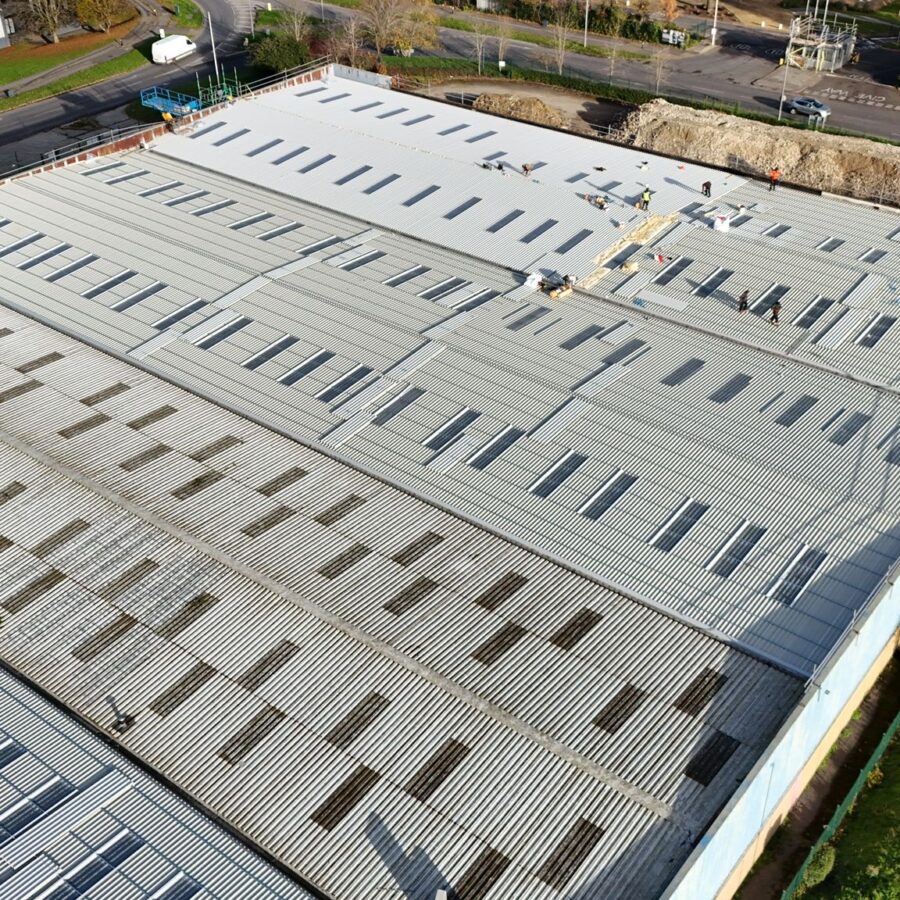
Metal panels cover most metal buildings and many warehouses and workshops.

  • Exposed-fastener panels such as R-panel and PBR are screwed through to the purlins. They are economical and quick to install, and their screws and laps are the parts that need maintaining. See metal roof replacement.
  • Standing seam panels are held by concealed clips with the seam raised above the water line. Mechanically seamed versions work on very low slopes, and the clips let long panels move with temperature.

Panels come in different gauges, coatings and colors. The library holds panel ranges from manufacturers including PAC-CLAD, McElroy Metal, MBCI and Berridge.

Insulated metal panels

Insulated metal panels combine two metal skins with a rigid insulating core in one factory-made panel, giving the weather surface, insulation and interior finish together. They suit roof replacements where insulation also needs improving, and cold stores and other temperature-controlled buildings. See insulated metal panel roofing, and Kingspan, Metl-Span and All Weather Insulated Panels in the library.

Insulation within a metal building

Not every metal building needs insulated panels. A single-skin metal roof can be insulated with a liner system that supports a thicker layer of insulation between and over the purlins, with thermal blocks to cut heat loss at the supports. A built-up assembly adds an inner liner sheet, spacers and insulation under a new outer roof. See liner systems such as Simple Saver, built-up insulated metal roof and wall systems and roof insulation upgrades.

Wall cladding and rainscreen

Walls can be refurbished or reclad with metal panels, insulated wall panels or rainscreen systems. A rainscreen fixes an outer panel on rails with a ventilated cavity behind it, so the wall behind stays dry. Panels include fiber cement from Swisspearl, EQUITONE and Nichiha, aluminum composite from ALUCOBOND, compact laminate from Trespa and metal panels from Dri-Design. See insulated wall and rainscreen systems and metal wall panels.

Cool roofs and energy

In Texas, a roof’s color affects the building below as much as its insulation. White membranes and reflective coatings stay much cooler in the sun than dark roofs, which reduces heat passing into the building and the load on its cooling. Reflectance and emittance values for many products are published through the Cool Roof Rating Council. See cool roof systems and roof insulation upgrades.

Roofs ready for solar

A roof that will carry solar panels needs to last as long as the panels, carry their weight and wind loads, and have attachment points that do not become leak points. Standing seam roofs accept clamp-on attachments without holes through the panel, and membranes and insulated panels have their own mounting details. Replacing or restoring the roof before solar goes on avoids paying to remove and refit the array later. See solar-ready roof systems.

Choosing a system for an existing building

The product name matters less than whether the system suits the building. The main questions are:

  • what the existing roof or wall is, and how much of it is sound and dry;
  • the structure, its spans and the extra load it can carry;
  • the roof slope and how it drains;
  • what the building is used for, and the temperature and humidity inside;
  • the energy code and any insurer requirements, such as FM Approvals for the assembly;
  • wind and hail exposure for the location;
  • how much disruption the business can accept while the work is done.

Comparing complete proposals, including the repairs each one needs before the new system goes on, gives a truer picture than comparing product prices.

Manufacturers and product records

The Technical Library holds product records and technical documents for 45 roofing and cladding manufacturers, written from their own data sheets, specifications and installation guides. It is a quick way to check what a specified product is, find its data sheet, or identify the product already on a building.

Talk to our team

Discuss a specified system or an unknown roof

Contact TCR with the property address, your concern and any product or drawing information you have. We can discuss which systems suit the building, or start with an inspection if the existing roof is unknown.

Discuss Your Project

Frequently asked questions

Commercial Roofing Manufacturer And System Selection FAQs

Can you help before we know which roofing service we need?

Yes. Describe the property and concern. A condition review can help determine whether the next step is repair, restoration or a larger project.

Does an old commercial roof always need replacement?

No. Condition, moisture and the extent of defects matter more than age alone.

Do you work on metal and low-slope roofs?

Yes. The existing system is identified so repair products, connections and replacement options can be assessed appropriately.

How is restoration different from replacement?

Restoration retains a suitable roof after repairs and treatment. Replacement removes existing roofing to install a new assembly.

Can a new roof be installed over the old one?

Sometimes, as a recover. Retained layers, moisture, structural capacity, attachment and clearances need assessment first.

Can our business stay open during roof work?

Often, but access, protection and interruptions depend on the work and the use of the space below.

Why can similar-sized roofs have different prices?

Removal, height, access, insulation, roof details and concealed damage can change the work substantially.

Can you quote from drawings?

Yes, where they define the work adequately. Existing buildings may still need a site review to confirm dimensions and condition.

Can the work be coordinated with our other contractors?

Roofing can be planned alongside equipment and building work. Share the relevant drawings and schedule before roof details are finalized.

What is the first step?

Send the address and current roof concern or planned project. State whether you need an inspection, initial budget or defined installation quotation.

UK refurbishment experience, a Texas office

Refurbishment specialists

Our business grew through roof and cladding refurbishment in the UK. That experience shapes the work we now offer from our Texas office.

Repair what can be retained

We investigate the roof problem and explain what can be repaired, restored or replaced, so you can decide how to invest in the building.

Roofing and cladding together

We can coordinate roof, insulation, wall panel and drainage work, including the connections where separate repairs can leave problems behind.

A plan for your working building

We agree access, work areas and protection with your site team, including any restrictions needed while the roof is opened.

Roofing and cladding systems

Roofing systems and materials for Texas facilities

Rustoleum Logo
Sika Logo
Kingspan Logo
Morin Logo
American WeatherStar Logo
GAF Logo
TAMKO Logo
PAC-CLAD Logo
1

Tell us about the building

Start with the address and the roof or cladding problem. Photographs are helpful if you already have them.

2

Arrange a site visit

We review the affected areas and discuss how you use the building and what you want the work to achieve.

3

Review the quotation

Your quotation explains the proposed repairs or refurbishment, the areas included and the price.

4

Agree the work plan

We discuss timing, access, deliveries and protection with your site contact before work begins.

5

Complete the work

We carry out the agreed work and discuss any changes needed if opening the roof reveals additional damage.

6

Handover

We review the completed work and provide the care information and documents included in your project.