
Table of Contents
- Why Industrial Roof Maintenance Pays Off in Bulverde
- 1. Build a Working Industrial Roof Maintenance Checklist
- 2. Set the Right Commercial Roof Inspection Frequency
- 3. Keep Flat Roof Drainage Maintenance Ahead of the Rain
- 4. Give Metal Roof Maintenance the Attention It Deserves
- 5. Catch Leaks Early With a Repair-and-Restore Plan
- 6. Use Coatings and Sealants to Extend Service Life
- 7. Decide What Your Team Handles and What Goes to a Contractor
- Frequently Asked Questions
Last Updated: October 20, 2026
Why Industrial Roof Maintenance Pays Off in Bulverde
Industrial roofs in Bulverde take a beating. Summer heat pushes surface temperatures high, hail season arrives without warning, and humidity swings work on every seam and fastener. A roof that goes unattended for a few years rarely fails all at once. It fails slowly, then suddenly, usually above the most expensive equipment in the building.
That is why we treat 7 ways to maintain industrial building roofs in Bulverde as a recurring program, not a one-time repair list. Total Cladding and Roofing LLC works on commercial and industrial roofs across Texas. Buildings with a written maintenance routine get more years out of the same roof system. Buildings without one discover problems only when water is already inside.
Below, we break down each of the seven practices, what it involves, and how often to do it. Most are low-cost. All of them protect the asset.
1. Build a Working Industrial Roof Maintenance Checklist
An industrial roof maintenance checklist is a written list of every roof area, component, and condition your team checks on a set schedule. It turns vague “keep an eye on the roof” intentions into repeatable tasks with dates and owners.
A good checklist covers:
- Roof surface and membrane condition
- Seams, fasteners, and flashing
- Drains, scuppers, and gutters
- Penetrations, curbs, and HVAC units
- Wall panel junctions and sealant lines
- Interior signs of leaks near columns and equipment
Keep it simple. One page per roof, signed and dated after each walk. Store it with the building file.
Photograph every issue you log, from the same angle each visit. Comparing photos across seasons shows whether a small seam gap is stable or getting worse, which is far more useful than a written note alone.
2. Set the Right Commercial Roof Inspection Frequency
Commercial roof inspection frequency should be at least twice a year for most industrial buildings, plus a walk-through after any major hail or wind event. High-traffic roofs with heavy foot traffic or rooftop equipment need quarterly checks.
Timing matters as much as frequency. Schedule one inspection in spring, before storm season, and one in fall, before winter temperature swings. Add a post-storm check whenever hail or high wind passes through.
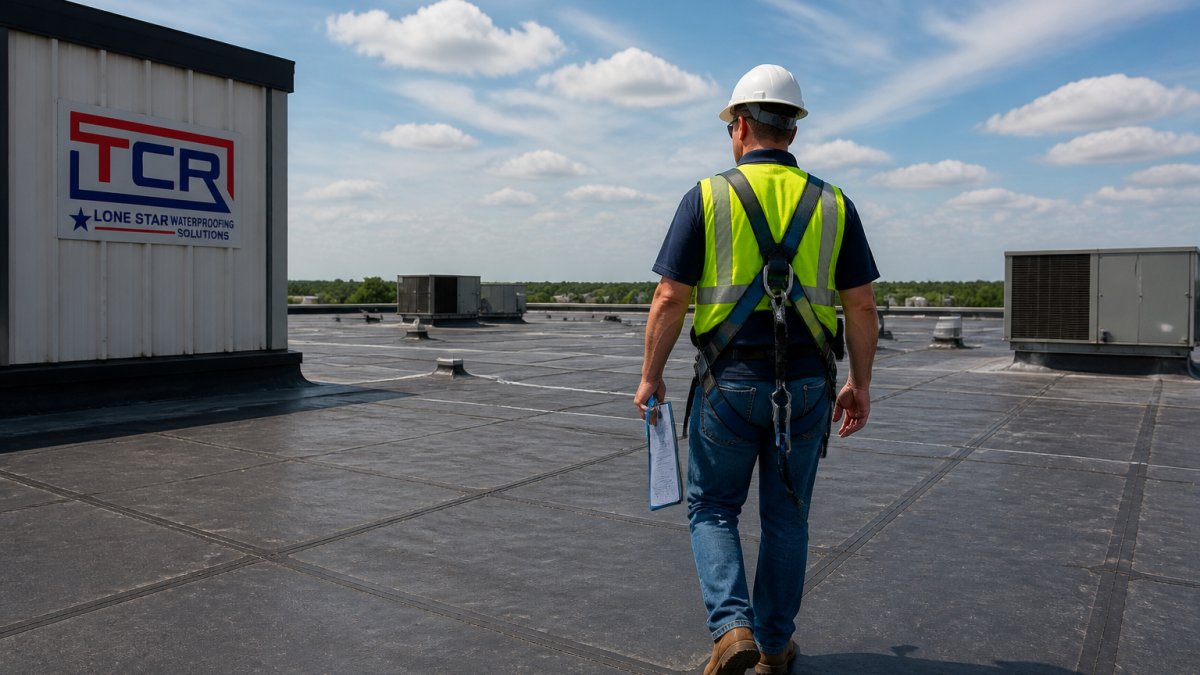
What most guides miss is that inspections should be documented, not just performed. An undated verbal “roof looks fine” gives you nothing when a warranty claim or budget request comes up.
3. Keep Flat Roof Drainage Maintenance Ahead of the Rain
Flat roof drainage maintenance is the cheapest protection you can buy. Standing water is the leading cause of flat roof failure, and most ponding comes from blocked drains, not roof defects.
A simple routine:
- Clear drains and scuppers before and after storm season
- Remove debris from roof corners where wind piles it
- Check that drain strainers are intact
- Confirm water flows to drains, not toward seams or equipment
- Note any low spots that hold water after rain
If water sits for more than a couple of days after rain, that is a drainage problem worth fixing, not just cleaning.
4. Give Metal Roof Maintenance the Attention It Deserves
Metal roof maintenance focuses on fasteners, sealants, and coatings, because those are the parts that age first. The panels themselves usually outlast everything attached to them.
Check for:
- Backed-out or missing fasteners
- Cracked or dried sealant at laps and penetrations
- Loose flashing around vents and curbs
- Surface corrosion at cut edges and panel ends
- Coating wear on older panels
Replace failed fasteners with the correct type and re-seal joints before water gets behind the panel. Small repairs done early cost far less than panel replacement.
Walking a metal roof in soft-soled shoes or in heat can dent panels and void warranties. Restrict foot traffic to designated walkways and use the right footwear.
5. Catch Leaks Early With a Repair-and-Restore Plan
A repair-and-restore plan means you fix the source of a leak and restore the surrounding area, rather than patching the ceiling stain and moving on. Water travels along purlins and decking, so the wet spot inside is rarely directly under the roof defect.
The process:
- Trace the leak back to its actual entry point
- Repair the defect, not just the symptom
- Restore sealant, flashing, or membrane around the repair
- Re-check the area after the next rain
- Log the repair with photos and date
Many facility teams find that early leak repairs cost a fraction of emergency work done after hours.
6. Use Coatings and Sealants to Extend Service Life
Roof coatings and sealants can add years to a sound roof system by reflecting heat, sealing small defects, and protecting surfaces from UV and weather. They are not a fix for a failing roof, though.
Use coatings when:
- The roof is structurally sound but aging
- Seams and fasteners need protection
- Surface temperatures are driving energy costs up
- You want to delay replacement on a budget cycle
Skip coatings when the roof has saturated insulation, active leaks, or widespread membrane failure. In those cases, coating over the problem just hides it.
Coatings work best as prevention on a healthy roof, not as a rescue for a failing one. Get an inspection first, then decide.
7. Decide What Your Team Handles and What Goes to a Contractor
Some tasks belong in-house. Others need a contractor with the right access, insurance, and warranty coverage.
| Task | Who Handles It | Frequency |
|---|---|---|
| Visual walk-through and photo log | In-house team | Monthly |
| Drain and debris clearing | In-house team | Before and after storm season |
| Full roof inspection with report | Contractor | Twice yearly |
| Leak diagnosis and repair | Contractor | As needed |
| Coating or restoration | Contractor | Per inspection findings |
| Fastener and sealant replacement | Contractor | Per inspection findings |
In-house teams should stay off roofs unless trained and equipped for fall protection. The line is simple: observing from a safe access point is fine; walking the roof and making repairs is contractor work.
This is where working with a specialist helps. Total Cladding and Roofing LLC handles inspections, leak repairs, preventative maintenance, coatings, and restoration for industrial and commercial properties, and we plan the work around your site operations. We also coordinate roof, insulation, wall panel, and drainage work together, so you are not juggling separate trades.
Maintaining an industrial roof in Bulverde is a scheduling problem as much as a technical one. The buildings that last are the ones with a written routine, a documented inspection history, and a clear split between in-house tasks and contractor work.
Total Cladding and Roofing LLC can build that routine with you: detailed building investigations, planned preventative maintenance, and coordinated repairs that keep disruption low. Get started with Total Cladding and Roofing LLC and turn roof maintenance into a managed asset plan rather than a series of emergencies.
Frequently Asked Questions
How often should an industrial roof be inspected in Bulverde?
Most industrial roofs benefit from at least two inspections a year, typically in spring and fall, plus a check after any major hail or wind event. Bulverde sits in a hail-prone stretch of Texas, so post-storm walkthroughs matter as much as scheduled visits. Facilities with older membranes, heavy foot traffic, or large rooftop equipment may need quarterly checks. Your commercial roof inspection frequency should be set by roof age, material, and how much activity the roof sees, not a single calendar rule.
What should an industrial roof maintenance checklist include?
A solid industrial roof maintenance checklist covers membrane seams and flashings, drain and scupper clearance, ponding water, fastener and panel condition on metal systems, sealant around penetrations and HVAC curbs, and debris buildup. Add photo documentation for each item and a note on who fixed what and when. Keeping the checklist consistent lets you compare inspections over time and spot a small issue before it becomes a leak that disrupts operations.
What causes standing water on a flat industrial roof?
Standing water usually comes from clogged drains, undersized or blocked scuppers, and slight deflection in the deck that stops water from reaching an outlet. Debris from nearby trees and wind-blown grit speeds up the problem. Flat roof drainage maintenance should include clearing outlets before storm season and after heavy rain, checking that drain strainers are intact, and confirming that water clears within 48 hours. Persistent ponding points to a drainage design issue worth a professional look.
Can roof coatings extend the life of an industrial roof?
Coatings can add years to a sound roof by sealing minor surface wear and reflecting heat, which helps in Texas summers. They work best on roofs with good substrate and no widespread saturation. A coating will not fix active leaks, wet insulation, or structural problems, so an inspection should come first. Ask a contractor to confirm the roof is a candidate and to explain how the coating fits into your metal roof maintenance or flat roof plan.
To upload drawings, specs and plans please go to the form on our contact page.
Get in Touch