
Table of Contents
- Why Building Envelope Solutions Matter for Commercial Properties
- Thermal Performance and Energy Efficiency Gains
- Building Envelope Retrofit Strategies for Existing Structures
- Insulated Metal Panel Maintenance and Long-Term Durability
- Reducing Environmental Impact and Embodied Carbon
- Moisture Resistance and Building Envelope Protection
- Regulatory Compliance and Performance Standards
- Conclusion
- Frequently Asked Questions
Last Updated: September 25, 2026
Why Building Envelope Solutions Matter for Commercial Properties
A strong building envelope is the difference between a facility that costs a fortune to heat and cool and one that operates efficiently. For commercial and industrial property owners managing multiple sites, the building envelope directly impacts your bottom line through energy consumption, maintenance frequency, and long-term asset value.
The building envelope, the outer layer of walls, roofing, and insulation that separates your interior from the weather, controls how much heat escapes in winter and how much solar gain enters in summer. When it fails, you’re paying to condition air that immediately leaves through gaps, cracks, and poor insulation. When it’s optimized, you’re extending the service life of your building systems while cutting operational costs.
European building envelope solutions have become increasingly relevant in the U.S. market because they were developed in climates and regulatory environments that demand higher performance standards. These approaches emphasize integrated design, coordinating the roof, insulation, wall panels, and drainage as a system rather than treating each component separately. At Total Cladding and Roofing LLC, we’ve brought this refurbishment expertise from the UK to help Texas facility managers and developers assess their existing envelopes and implement upgrades that actually work in our heat and humidity.
Thermal Performance and Energy Efficiency Gains
Thermal performance is where building envelope solutions deliver measurable impact. The building envelope’s ability to resist heat transfer, measured as R-value for insulation and U-value for overall assembly performance, determines how hard your HVAC system has to work.
European standards, particularly the Energy Performance of Buildings Directive, require thermal transmittance values that are significantly lower than many older U.S. buildings achieve. This means better insulation thickness, fewer thermal bridges (places where heat escapes through metal studs or fasteners), and more continuous insulation coverage. When you retrofit an existing building envelope with modern insulation integration and seal air leakage points, you reduce the heating and cooling load substantially.
The practical result: facilities report lower monthly utility bills, reduced peak demand charges, and less strain on aging HVAC equipment. This matters especially for industrial warehouses and manufacturing plants where large open spaces make conditioning costs enormous. A well-designed building envelope retrofit can extend the life of your existing HVAC system by years because it’s not running continuously at maximum capacity.
Daylighting strategies, designed window placement and high-performance glazed areas, also reduce lighting loads during the day. Combined with proper thermal insulation, this integrated approach to the building envelope creates a multiplier effect on energy savings.
Building Envelope Retrofit Strategies for Existing Structures
Most commercial properties in Texas were built before modern building envelope performance standards existed. A retrofit strategy assesses what you have, identifies the biggest performance gaps, and prioritizes improvements by cost-effectiveness and impact.
The most common retrofit approach starts with the roof, which typically accounts for the largest heat gain in commercial buildings. Replacing or restoring the roof with a high-performance system, metal roofing with integrated insulation, or adding an insulation layer beneath your existing roof, immediately reduces cooling demand. This is where European refurbishment experience proves valuable: rather than always replacing the entire roof, a detailed investigation often reveals that targeted restoration combined with insulation integration extends service life and improves performance at a fraction of replacement cost.
Wall panels and exterior cladding are the second priority. Insulated metal panels (IMPs) are increasingly common in retrofits because they combine structural support, insulation, and weather protection in one assembly. They eliminate thermal bridging through the wall cavity and provide continuous insulation coverage. This is fundamentally different from adding insulation inside an existing wall, which leaves gaps and doesn’t address the thermal bridge problem.
Moisture resistance and drainage system design are critical to retrofit success. Water penetration is the enemy of long-term durability. European building envelope solutions emphasize layered defense: exterior cladding sheds water, a drainage plane allows any water that gets behind the cladding to move down and out, and interior barriers prevent moisture from entering the conditioned space. This is integrated planning, the kind Total Cladding and Roofing LLC coordinates across roof, insulation, and wall systems to ensure water doesn’t become a long-term liability.
Insulated Metal Panel Maintenance and Long-Term Durability
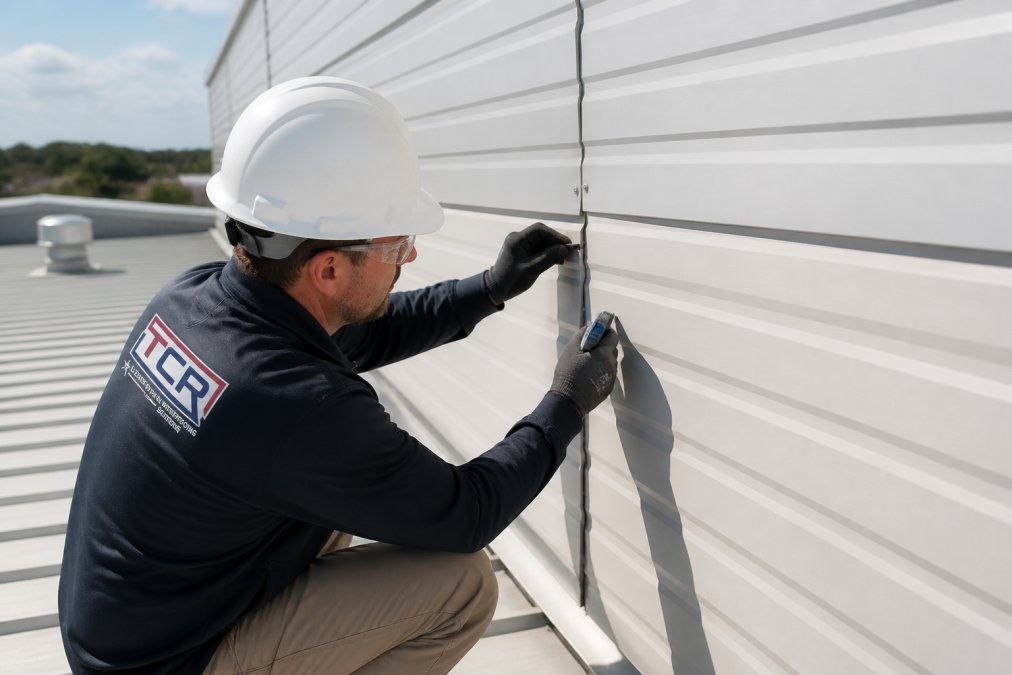
Insulated metal panels are engineered for durability, but maintenance is essential to preserve their performance. The panel seams, fasteners, and edges are where water infiltration typically begins. Regular inspection, at least annually, more frequently after severe weather, catches problems before they become structural issues.
Non-combustible insulation materials (polyurethane, polyiso, or mineral wool cores) resist degradation and maintain their R-value over decades. However, the metal facings and sealants deteriorate with UV exposure and thermal cycling. A preventative maintenance program includes:
- Inspecting and resealing panel seams every 5-10 years
- Checking fastener integrity and replacing corroded fasteners
- Clearing drainage channels to prevent water backup
- Addressing any dents or damage to the metal facing promptly
The long-term durability advantage of insulated metal panels is that the insulation layer is protected inside the assembly, not exposed to weather. This is different from external insulation systems where the insulation itself is the weather-facing material. When properly maintained, IMPs routinely provide 30+ years of service life.
Cost-efficient maintenance is the key to extending service life. Small repairs now prevent expensive structural damage later. Total Cladding and Roofing LLC provides detailed inspections that identify what needs immediate attention and what can be planned for the next maintenance cycle, helping you budget effectively and avoid emergency repairs.
Reducing Environmental Impact and Embodied Carbon
Building envelope solutions directly address environmental impact through two mechanisms: operational carbon reduction and embodied carbon management.
Operational carbon is the greenhouse gas emissions from heating, cooling, and lighting the building over its life. A high-performance building envelope reduces operational carbon by 20-40% compared to a baseline building, depending on the climate and the retrofit depth. Over a 30-year building life, this is substantial. For a 50,000-square-foot commercial building, the difference between a poor envelope and a well-designed one can be hundreds of tons of CO2 equivalent.
Embodied carbon is the emissions associated with manufacturing and transporting the building materials themselves. European building envelope solutions often emphasize durability and long service life specifically to amortize the embodied carbon over a longer period. A panel that lasts 40 years has lower embodied carbon per year of service than one that lasts 20 years, even if both have the same manufacturing footprint.
Material selection matters. Mass timber components, where code-permitted, have lower embodied carbon than steel or concrete. Insulation made from recycled content or bio-based materials reduces manufacturing emissions. European standards increasingly require life cycle assessment, a full accounting of environmental impact from raw material through end-of-life, which is beginning to influence material choices in the U.S. market.
Moisture Resistance and Building Envelope Protection
Moisture is the primary threat to building durability. Water entering the building envelope damages insulation, corrodes fasteners, promotes mold growth, and degrades structural materials. A properly designed building envelope protects against moisture through layered defense.
Regulatory Compliance and Performance Standards
Building codes and energy standards in the U.S. are increasingly aligned with European performance requirements. The International Energy Conservation Code (IECC), adopted by most states, now requires thermal performance levels that mandate integrated building envelope design rather than individual component selection.
Conclusion
| Building Envelope Component | Primary Function | Maintenance Frequency | Expected Service Life |
|---|---|---|---|
| Metal roofing with insulation | Shed water, reduce heat gain, structural support | Annual inspection, seal reapplication every 5-10 years | 30-40 years |
| Insulated metal panels | Weather protection, thermal insulation, structural support | Annual inspection, fastener checks, seam sealing | 30-40 years |
| Drainage systems | Direct water away from building structure | Quarterly cleaning, post-storm inspection | 20-30 years |
| Thermal insulation layer | Reduce heat transfer, maintain R-value | Visual inspection for degradation, replacement if damaged | 30-50 years |
| Vapor barriers and air seals | Prevent moisture and air infiltration | Inspection at seams and penetrations, repair as needed | 25-35 years |
The biggest mistake property managers make is treating roof, insulation, and wall panels as separate projects. When coordinated as a single building envelope system, with integrated thermal performance, moisture management, and drainage, the result is significantly better performance and lower long-term costs.
Building envelope solutions reduce operational energy costs by 20-40%, extend the life of existing structures by 10-20 years, and lower embodied carbon through durability rather than constant replacement.
According to the International Energy Conservation Code, commercial buildings must meet minimum thermal performance standards for walls, roofs, and windows based on climate zone, making integrated building envelope design a compliance requirement rather than an optional upgrade.
Frequently Asked Questions
What are the primary benefits of European building envelope solutions for industrial facilities?
European building envelope solutions deliver superior thermal performance, reduced energy consumption, and extended service life compared to standard approaches. They minimize thermal bridging through advanced insulation integration, improve moisture resistance to prevent structural damage, and lower long-term operational costs. For industrial facilities managing multiple sites, these solutions provide predictable performance across varying climate conditions and reduce emergency repair disruptions to operations.
How do insulated metal panel maintenance strategies prevent costly building envelope failures?
Insulated metal panel maintenance focuses on sealing, fastener inspection, and thermal bridge management. Regular inspections catch moisture intrusion before it causes structural damage. Preventative maintenance extends panel service life by 10-15 years, avoiding the disruption and expense of emergency replacements. Professional maintenance also identifies thermal performance degradation early, allowing facility managers to plan refurbishment work around business operations rather than responding to failures.
Can European building envelope retrofit strategies work in the Texas climate?
Yes. European retrofit strategies address thermal performance, moisture resistance, and durability, challenges that apply regardless of climate. Texas’s heat, humidity swings, and hail require robust thermal insulation, effective moisture barriers, and durable materials, all of which European solutions provide. The key difference is specifying solutions for local conditions: high-reflectance coatings for solar gain, enhanced drainage for humidity, and impact-resistant materials for hail. Professional assessment ensures the retrofit strategy matches your facility’s specific exposure.
What regulatory standards govern building envelope performance in the U.S.?
Building envelope compliance is governed by the International Energy Conservation Code (IECC), adopted by most states, which sets minimum thermal transmittance and air leakage standards. The ASHRAE 90.1 standard addresses energy performance of buildings. Local building codes may impose stricter requirements. European solutions typically exceed these standards, providing compliance assurance and long-term performance margins. Professional inspections verify compliance and document performance for warranty and liability purposes.
To upload drawings, specs and plans please go to the form on our contact page.
Get in Touch