

Table of Contents
- How Long Commercial Roof Leak Repair Takes: Key Timeline Factors
- Commercial Roof Leak Inspection: Finding the Source
- Temporary Commercial Roof Leak Repair Solutions
- Commercial Flat Roof Leak Repair: Specific Challenges
- Commercial Roof Maintenance Checklist for Prevention
- Typical Repair Timeline: From Detection to Completion
- Minimizing Downtime and Protecting Operations
- Frequently Asked Questions
Last Updated: October 14, 2026
How Long Commercial Roof Leak Repair Takes: Key Timeline Factors
The timeline for commercial roof leak repair varies with the cause and complexity of the fix. At Total Cladding and Roofing LLC, most repairs fall into two categories: emergency patches that take hours, and permanent fixes that span days or weeks.
Several factors control how long the work takes. Repair complexity matters most: a simple membrane patch might finish in a day, while full section resurfacing can take a week or more. Roof system type also plays a role, with metal roofing repairs often moving faster than flat roof work.
Repair complexity and leak source location
A straightforward leak from a single puncture or small tear takes 4-8 hours: the contractor locates the damage, cleans the area, applies patching material, and allows it to cure. Simple jobs often complete in one business day.
Complex leaks take longer. Water ingress from multiple points, damaged insulation, or compromised structural elements require investigation, material removal, and extensive repairs, typically spanning 3-7 days.
Leak source location matters. Leaks near roof penetrations (vents, pipes, HVAC units) or at seams require careful flashing work, and leaks in high-traffic areas may involve removing and replacing membrane sections.
Roof system type and material
Metal roofing repairs typically complete faster than flat roof work. A seam leak or fastener issue often resolves in 4-6 hours, since metal panels can be replaced individually without affecting adjacent sections.
Flat roof repairs take longer. The membrane must be prepared, patched, and often needs reinforcing fabric and coating, with full curing adding 24-48 hours.
Single-ply membranes (TPO, EPDM) patch faster than built-up roofs, while torch-down or tar-and-gravel systems require more labor-intensive removal and reinstallation. Your membrane type directly affects crew efficiency and material lead times.
Commercial Roof Leak Inspection: Finding the Source
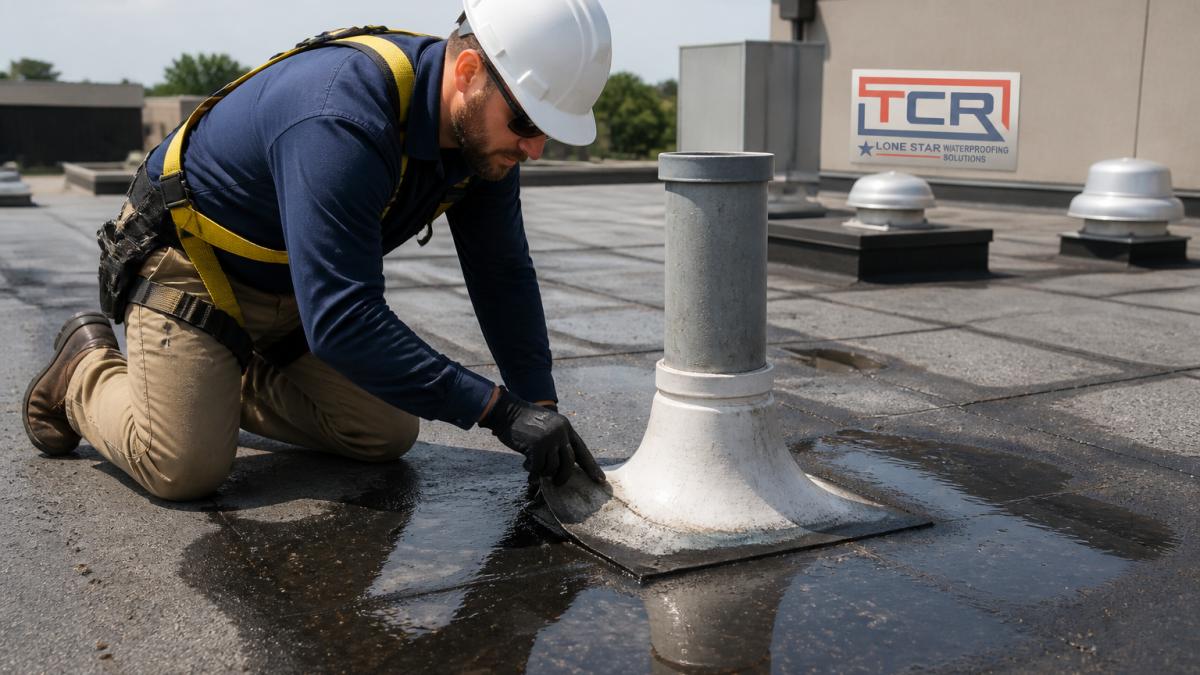
Identifying exactly where water enters your building is the critical first step. Without accurate diagnosis, temporary fixes fail and permanent repairs address the wrong problem. Most commercial roof leak inspections take 2-4 hours.
Visual inspection and moisture mapping
The inspection begins with a visual walk of the entire roof surface, looking for tears, punctures, debris, standing water, and deteriorated flashing. This phase takes 1-2 hours depending on roof size.
Next comes moisture mapping. Water travels horizontally before entering the building interior, so the leak you observe inside may be 10-20 feet from where water enters the roof.
This mapping phase is essential for flat roofs. Ponding water and inadequate slope create persistent moisture problems.
Identifying entry points and water damage
Once water entry points are located, inspectors assess damage extent. They probe the roof membrane, check insulation saturation, and examine underlying structure. Wet insulation reduces R-value and may need replacement (How Much Condensation Occurs With Various Insulation Thicknesses?).
Entry point identification determines repair strategy. A single puncture gets patched. Multiple seam failures suggest the membrane is near end-of-life and resurfacing makes more sense than repeated repairs.
The inspection report becomes your repair scope, specifying what needs fixing, required materials, and realistic labor hours. This prevents scope creep and surprise costs.
Temporary Commercial Roof Leak Repair Solutions
When a leak occurs mid-project or during peak operations, temporary fixes buy time for permanent repairs. These emergency solutions take 2-4 hours to install and hold for 3-6 months depending on weather exposure and traffic.
Same-day patching and emergency tarping
The fastest temporary fix is roof tarping: a large tarp secured over the damaged area with mechanical fasteners. It stops water ingress immediately, takes 1-2 hours to install, and works for any roof type and weather condition.
Temporary patching uses self-adhesive membranes or quick-set sealants: the area is cleaned, patch material applied, and seams sealed.
Both temporary solutions require follow-up. Tarps degrade under UV exposure and weather cycles, and patches fail when building movement stresses seams or thermal cycling causes separation. Plan permanent repairs within 6 months of temporary installation.
When temporary fixes suffice versus permanent repair
Temporary repairs make sense when:
- The leak is small and isolated
- Budget timing requires delaying permanent work
- Permanent repair requires material lead times
- The roof membrane is relatively new otherwise
- You’re investigating whether the problem is actually this location
Permanent repair is necessary when:
- The roof membrane is 15+ years old
- Multiple leak points exist
- Insulation is saturated
- Structural damage is present
- The temporary fix fails repeatedly
At Total Cladding and Roofing LLC, we recommend treating temporary repairs as genuinely temporary. A leak that requires tarping or patching signals the roof system is failing, so plan the permanent fix while the temporary solution buys time.
Commercial Flat Roof Leak Repair: Specific Challenges
Flat roofs present unique complications. They’re vulnerable to ponding water, which causes material deterioration and ongoing water ingress. Drainage system failures compound the problem. Flat roof leak repairs often take longer than pitched roof work because the root cause, inadequate slope or blocked drainage, must be corrected.
Ponding water and drainage system failures
Standing water on a flat roof indicates inadequate slope or clogged drains. Water should drain completely within 48 hours of rain; if pooling persists, the drainage system isn’t working.
Clogged drains and gutters are the most common cause: debris blocks roof drains, downspouts become obstructed, and gutters fill with leaves and sediment.
Inadequate slope is a structural problem. If the roof was designed or installed with insufficient fall toward drains, water pools even when drains are clear.
Water ingress from ponding usually means the membrane has already failed.
Membrane repair versus resurfacing timelines
Small membrane damage under a ponding area can be patched, but the underlying water problem remains. A patch buys time, yet within months water finds another path and the leak reappears.
Resurfacing the entire flat roof takes longer but addresses the root problem: the old membrane is removed, insulation is inspected and replaced where necessary, and new membrane is installed.
Resurfacing makes sense when the membrane is 15+ years old, multiple leaks exist, or ponding is persistent. A new system provides 15-20 years of protection, while repeated patching just delays the inevitable replacement.
Commercial Roof Maintenance Checklist for Prevention
Prevention is always faster than repair. Regular maintenance catches problems before they become leaks. A comprehensive maintenance program takes 4-8 hours quarterly and prevents costly emergency repairs.
| Maintenance Task | Frequency | Time Required | Prevention Impact |
|---|---|---|---|
| Debris removal and drain clearing | Quarterly | 2-3 hours | Prevents ponding water and drainage failures |
| Flashing and seam inspection | Quarterly | 1-2 hours | Catches deterioration before water ingress |
| Roof membrane visual check | Quarterly | 1-2 hours | Identifies punctures and damage early |
| Gutter and downspout cleaning | Twice yearly | 2-4 hours | Maintains surface water drainage |
| Penetration sealant inspection | Annually | 1-2 hours | Prevents leaks around vents and pipes |
| Coating condition assessment | Annually | 2-3 hours | Extends membrane life by 5+ years |
Routine inspection and debris removal
Quarterly roof inspections catch problems early. Walk the entire roof surface, looking for debris, standing water, membrane damage, and deteriorated flashing. Remove leaves, branches, dirt, and sediment. Clear roof drains and gutters completely.
Debris left on the roof accelerates deterioration: organic material traps moisture, heavy accumulation adds structural weight, and leaves in gutters block drainage and create ponding. Thirty minutes of quarterly cleaning prevents hours of repair work.
Flashing, seam, and penetration maintenance
Flashing around roof penetrations (vents, pipes, HVAC equipment) is a common leak source. Inspect it quarterly for cracks, separation, or corrosion, reseal gaps with appropriate roofing sealant, and replace corroded flashing before water ingress occurs.
Seams in the roof membrane require attention. Inspect for separation, cracks, or lifting edges, since reinforcing fabric deteriorates over time. Recoating seams annually extends their life significantly.
Roof penetrations need secure bases and proper flashing overlap. Ensure fasteners are tight and sealant is intact, since a single loose fastener can create a water entry point. Regular checks prevent this common failure mode.
Typical Repair Timeline: From Detection to Completion
Understanding the full repair timeline helps you schedule work and plan for operational disruption. Most commercial roof leak repairs follow a predictable sequence.
Same-day emergency response and assessment
When you report a leak, the contractor performs an emergency assessment. The assessment identifies the leak location, determines whether temporary protection is needed, and estimates the permanent repair scope.
If water is actively entering the building, temporary tarping or patching stops the problem immediately. This emergency work takes 2-4 hours and prevents additional damage while you plan the permanent fix.
The assessment report specifies materials, labor hours, and a realistic timeline for permanent repair, letting you budget and schedule the work around your business operations.
Multi-day repairs and material lead times
Most permanent repairs take 3-7 business days depending on scope. Simple membrane patches complete in 1-2 days. Membrane resurfacing spans 5-10 days. Flashing replacement and drainage system repairs typically take 3-5 days.
Material lead times can extend the timeline: custom flashing or specialized coatings may require 1-2 weeks for delivery. Scheduling the repair after materials arrive prevents crew downtime and delays.
Weather impacts the schedule: rain delays work, cold temperatures slow curing, and hot weather accelerates curing but creates safety concerns for crews at height.
Minimizing Downtime and Protecting Operations
Strategic scheduling keeps your business running while repairs proceed. Work with your contractor to plan around peak operations and weather forecasts.
Scheduling repairs around occupancy and weather
Coordinate repair timing with your operational calendar. If possible, schedule work during slower periods. Many facilities plan roof repairs during seasonal downtime or maintenance windows.
Check the weather forecast before committing to a repair date. A 10-day forecast showing rain in days 3-5 means plan for delays. Contractors can work around light rain but heavy storms shut down roof work for safety reasons.
Temporary protection buys scheduling flexibility. If permanent repair requires 7 days but your schedule allows only 3 consecutive days, tarping holds the problem while you arrange a longer work window later.
When to escalate beyond DIY or quick fixes
Some roof problems require professional assessment and repair. If you’re uncertain about the leak cause, call a professional.
Structural damage, saturated insulation, or widespread membrane failure are beyond quick-fix territory and require experienced contractors with proper equipment and materials.
Water damage inside the building, staining, mold, or structural deterioration, signals the leak has been active for weeks or months. Immediate professional intervention prevents further damage and health hazards.
Commercial roof leak repairs range from same-day emergency fixes to multi-week permanent solutions. Contact us for a professional roof assessment and repair timeline that fits your business schedule.
Frequently Asked Questions
How long does it take to find the source of a commercial roof leak?
Finding a leak source typically takes 2-4 hours for straightforward cases, but can extend to a full day for complex roofs. Moisture mapping, visual inspection of flashing and penetrations, and water-damage tracing all factor into diagnosis time. Flat roofs with ponding water or multiple low spots may require additional investigation to isolate the actual entry point from the water’s visible location.
Can a commercial roof leak be temporarily patched the same day?
Yes. Emergency tarping and temporary sealant patches can be applied within hours of detection, often the same day. These solutions control immediate water ingress and protect building contents while a permanent repair is planned. Temporary fixes buy time for material procurement and scheduling but are not intended as long-term solutions; permanent repair should follow within days or weeks depending on roof condition and weather.
What factors affect the time needed to repair a commercial roof leak?
Repair duration depends on leak severity and location, roof system type (flat, metal, membrane), weather conditions, material availability, and the extent of water damage. A simple seam or flashing repair may take 4-8 hours. Larger membrane patches, drainage system repairs, or work requiring resurfacing can take 2-5 days. Occupied buildings may require off-hours scheduling, extending overall project duration.
Does ponding water make a roof leak harder to repair?
Yes. Ponding water masks the actual leak source, complicates membrane inspection, and indicates inadequate roof slope or drainage failure. Repairs must address both the standing water and the underlying cause, whether low spots, clogged drains, or failed gutters and downspouts. This dual-problem approach extends diagnosis and repair time compared to leaks on properly draining roofs.
To upload drawings, specs and plans please go to the form on our contact page.
Get in Touch