
Last Updated: October 30, 2026
Quick Summary
Roof restoration can increase property value, but usually by less than owners expect. It works mainly by removing a liability that buyers, appraisers and lenders would otherwise discount, rather than adding value on its own. Whether it helps depends on the roof’s condition, property type and local market.
- A restored roof does not add value on its own; it removes a discount that buyers and lenders would apply.
- Restoration suits sound metal panels with isolated leaks or surface corrosion, not rotted decks or saturated insulation.
- Restoration cannot fix rotten decking, trapped moisture in insulation or panels that have lost their profile.
- Anyone promising a specific percentage return on restoration should be asked for the source.
- Compare restoration and replacement on net cost, expected remaining life and your sale or refinance timing.
Table of Contents
- Does Roof Restoration Actually Increase Property Value?
- Roof Restoration Versus Roof Replacement: Decision Criteria
- Roof Replacement Return on Investment: Value Added Versus Project Cost
- Metal Roof Restoration Cost: What Drives the Price
- How Buyers, Appraisers, Inspectors and Lenders Read an Older Roof
- Roof Restoration Lifespan and What Restoration Includes
- Planning Your Roof Decision Before Selling or Refinancing
- Frequently Asked Questions
Does Roof Restoration Actually Increase Property Value?
Roof restoration can raise property value, but the gain is often smaller and less predictable than owners expect.
A restored roof does not add value on its own. It removes a liability that buyers, appraisers and lenders would otherwise price in.
A restored roof will rarely produce a dollar-for-dollar return on the restoration cost. Anyone promising a specific percentage increase should be asked for the source.
Roof Restoration Versus Roof Replacement: Decision Criteria
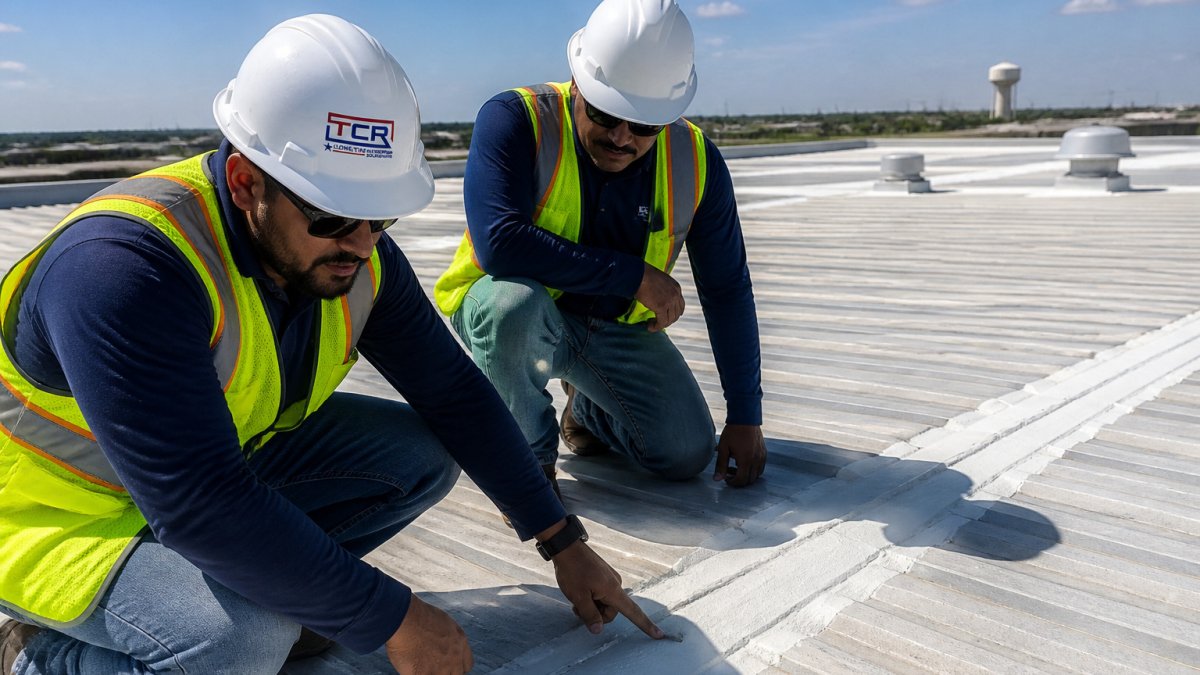
The choice between restoring and replacing a roof starts with the substrate, not the price. A metal roof with sound panels, intact fasteners and only surface corrosion or aged coatings is usually a restoration candidate.
Replacement makes more sense when the structure itself has failed. Restoration cannot fix rotten decking, trapped moisture in insulation or panels that have lost their profile; coating over those problems only hides them briefly.
When Restoration Makes Sense
Restoration can be a reasonable option when several conditions line up:
- The roof is metal, such as R-panel or standing seam, and the panels are structurally sound.
- Leaks are isolated and traceable to specific seams, penetrations or flashings.
- Corrosion is surface-level rather than through the panel.
A detailed building investigation is the most reliable way to confirm these points. Without one, owners are guessing about what sits beneath the surface.
When Restoration Will Not Add Meaningful Value
Restoration may add limited value in several situations:
- The deck is soft, rotted or has been compromised by long-term water intrusion.
- Insulation is saturated, and moisture is trapped in the assembly.
- Panels are dented, buckled or have lost fastener integrity across large areas.
In these cases, a restoration may delay replacement without changing the outcome. Compare the expected remaining life of each option before committing budget.
Roof Replacement Return on Investment: Value Added Versus Project Cost
Replacement is generally the more expensive option. A new roof with a manufacturer’s warranty removes the age-related discount that appraisers and buyers apply, and it resets the remaining-life assumptions in a lender’s underwriting. But “return on investment” gets used loosely in roofing marketing, so it helps to separate what a new roof actually changes from what it does not.
What a New Roof Actually Changes
A replacement does three concrete things to a property’s financial picture:
- It removes a known liability. A roof near the end of its service life is a future capital expense that buyers, appraisers and lenders price in. Replacing it converts an uncertain future cost into a documented current condition.
- It resets remaining economic life. Appraisers estimate remaining economic life when valuing a building. A new roof with a defined warranty period gives them a defensible number to work with instead of an assumption.
- It restores insurability and financing options. Many insurers and lenders will not write or renew coverage on a roof they consider at end of life, and some will require replacement before closing. A new roof keeps those options open.
What a New Roof Does Not Do
A replacement does not guarantee a dollar-for-dollar increase in appraised value or sale price. In markets where buildings trade mainly on location, land value or income, the roof may add little beyond keeping the asset insurable and operational. Where buyers and tenants prioritize building condition, a new roof can support higher rents or sale prices, but the amount varies by property type, buyer pool and local expectations.
A Transparent Net-Return Framework
Instead of chasing a single ROI percentage, owners can compare options on a net basis. The framework below is a way to organize the comparison, not a promise of any specific result:
- Project cost. Get a written scope and price for each option, restoration and replacement, showing surface preparation, repairs, coating or membrane specification, and warranty terms.
- Avoided repair and negotiation costs. Estimate what failing roof elements would cost in emergency repairs, tenant disruption and price concessions at sale, real costs that do not appear on a roofing proposal.
- Insurance and financing effects. Ask your insurer and lender how each option affects premiums, coverage terms and loan conditions. A roof that keeps coverage in place may be worth more than its invoice suggests.
- Expected remaining life. Compare how many serviceable years each option buys. A lower-cost restoration lasting a few years may cost more per year of life than a replacement lasting decades.
- Resale or refinance timing. If a sale or refinance is near, the buyer’s or lender’s view of roof age may outweigh the per-year math. If you plan to hold the building for years, the per-year comparison matters more.
Ask any contractor, including us, to show how a proposed scope affects expected remaining life, not only the immediate price. A proposal that states the expected service life and warranty term is easier to compare against alternatives.
Evidence Behind ROI Claims
Broad claims that a roof “returns” a specific percentage of its cost are common in marketing content, but the methodology is rarely shown.
Owners should weigh the full project cost against the value it protects. A failing roof can reduce marketability, raise insurance costs and force emergency repairs that disrupt tenants, costs that belong in the calculation even though they do not appear on a restoration proposal.
Metal Roof Restoration Cost: What Drives the Price
Restoration pricing depends on the roof’s condition and size, the number of penetrations and seams, the coating system specified and site access.
Pricing depends on quantity, dates and delivery. For current figures, request a site-specific quote from Total Cladding and Roofing LLC.
Scope matters as much as price. A low bid that omits seam repairs or substrate treatment may not last.
How Buyers, Appraisers, Inspectors and Lenders Read an Older Roof
Each party reads a roof differently. Buyers look at visible condition and documentation of past work. Appraisers consider age and condition when estimating remaining economic life.
A documented restoration with clear scope and warranty information helps all four parties. It shows the roof was assessed and serviced rather than ignored. Without that record, an older roof is often assumed to be at the end of its life, regardless of what was done to it.
Owners preparing for a sale or refinance should ask their inspector and appraiser how they would view the current roof. That conversation often reveals whether restoration is likely to help or whether a replacement will be expected.
Roof Restoration Lifespan and What Restoration Includes
Restoration is a category of work that returns an existing roof to serviceable condition without removing and replacing the roof system. Understanding what is included, and what is not, is the difference between a restoration that lasts and one that only postpones replacement.
What Roof Restoration Typically Includes
On metal roofs, restoration commonly involves some combination of the following, depending on the substrate and the coating system specified:
- Cleaning and surface preparation. Removing dirt, chalking, rust and loose coating so the new system can bond.
- Repairs to panels, seams and flashings. Fixing isolated corrosion, tightening or replacing fasteners, sealing seams and repairing penetrations and flashings before coating.
- Coating or sealing. Applying a compatible coating system over the prepared surface to seal seams and slow corrosion. On some systems, a reinforcing fabric or seam tape is used at joints and penetrations.
Restoration does not replace the structure underneath. It cannot fix rotten decking, saturated insulation or panels that have lost their profile; coating over those problems only hides them briefly.
Decision Criteria: Restoration Versus Replacement
The choice starts with the substrate, not the price. A metal roof with sound panels, intact fasteners and only surface corrosion or aged coatings is usually a restoration candidate. A roof with widespread deck damage, failed insulation or repeated leaks at the same locations generally is not.
| Criterion | Favors Restoration | Favors Replacement |
|---|---|---|
| Panel condition | Structurally sound, surface corrosion only | Dented, buckled or through-panel corrosion |
| Deck and insulation | Dry and serviceable | Soft, rotted or saturated |
| Leaks | Isolated and traceable to seams or flashings | Widespread or recurring at the same locations |
| Remaining life | Several serviceable years expected | End of service life reached |
| Sale or refinance timing | Owner plans to hold the building | Sale or refinance is near and buyer or lender will focus on roof age |
A detailed building investigation is the most reliable way to confirm these points. Without one, owners are guessing about what sits beneath the surface.
How Long a Restoration Lasts
How long a restoration lasts depends on the coating system, substrate condition, surface preparation quality and the building’s exposure. In climates with intense sun, hail and temperature swings, coatings face real stress, so system and installation quality matter. Ask what the coating is, how it was applied, the expected service life and what the warranty covers.
Verifying Quality: Warranty, Permits and Contractor Credentials
Verifying a restoration means checking more than the price. Ask for:
- A written scope that lists surface preparation, repairs, coating specification and dry-film thickness where applicable.
- Warranty terms that state what is covered, for how long, and what voids coverage. Manufacturer warranties and contractor workmanship warranties are different things; ask for both where available.
- Permits and code compliance where local rules require them for roofing work.
A contractor who cannot explain these points should be questioned before work begins.
How Appraisers, Inspectors, Insurers and Lenders Read a Restoration
A documented restoration with clear scope and warranty information helps all four parties. Appraisers consider age and condition when estimating remaining economic life; documentation can support a more favorable view of condition, though it does not guarantee a specific appraisal increase. Inspectors flag active leaks, rust and damage, which can drive renegotiation; a restoration record shows the roof was assessed and serviced rather than ignored. Insurers may view a recently restored roof more favorably when writing or renewing coverage. Lenders weigh condition against collateral value and may require repairs before closing; documentation can reduce surprises at closing.
Without that record, an older roof is often assumed to be at the end of its life, regardless of what was done to it. Owners preparing for a sale or refinance should ask their inspector and appraiser how they would view the current roof. That conversation often reveals whether restoration is likely to help or whether a replacement will be expected.
Planning Your Roof Decision Before Selling or Refinancing
Start with a condition assessment that identifies active leaks, substrate health and remaining life, then compare restoration and replacement against your timeline for selling, refinancing or holding.
Bring your inspector, appraiser and insurance agent into the planning early; their views on how the roof will be read can save money and prevent surprises at closing.
Contact Total Cladding and Roofing LLC to discuss the options for your specific building.
Frequently Asked Questions
Does roof restoration increase property value?
Roof restoration can support property value by protecting the building and removing a visible condition concern, but it rarely adds value dollar-for-dollar. Buyers and appraisers focus on whether the roof is sound, its remaining service life and whether leaks or damage have been documented. A restored roof with a documented inspection and warranty gives buyers more confidence than an unverified roof of the same age. The actual gain depends on the property type, the local market and the condition of the roof before work started. Ask your inspector and an appraiser to review the roof before you commit to a project.
How much value does a new roof add to a property?
A new roof can add value, but the return is usually lower than the project cost. Its effect on sale price depends on how much the old roof was holding back the sale, such as active leaks, failing flashing or an inspection issue that would otherwise lead to a price reduction. For many commercial and industrial owners, the main benefit is avoiding a buyer discount or a lender’s repair requirement rather than a direct increase in appraised value. Compare the replacement quote with the cost of restoration and with the expected remaining life of each option.
Is roof restoration worth the cost before selling?
Restoration is worth considering when the roof structure and deck are sound, the existing membrane or metal panels can be cleaned, repaired and coated, and the roof has enough remaining life to satisfy a buyer’s inspection. It is less useful when the roof has widespread rust perforation, soft decking, or repeated leaks that point to structural failure. Get a documented condition assessment first, then compare restoration quotes with replacement quotes using the same scope and warranty terms.

To upload drawings, specs and plans please go to the form on our contact page.
Get in Touch