Table of Contents
- What Is Roof Rejuvenation and How Much Does It Cost?
- Factors That Affect Roof Rejuvenation Treatment Cost
- Roof Restoration vs. Replacement: Cost Comparison
- Metal Roof Restoration Costs and Considerations
- How Long Does Roof Restoration Last?
- Roof Coating Cost and Treatment Options
- Getting an Accurate Roof Rejuvenation Estimate
- Frequently Asked Questions
Last Updated: October 15, 2026
What Is Roof Rejuvenation and How Much Does It Cost?
Roof rejuvenation restores flexibility and protective properties to aging asphalt shingles by reapplying oils that have dried out over time. Unlike full replacement, roof rejuvenation cost typically runs a fraction of a complete teardown and reinstall, making it attractive for property managers overseeing large commercial portfolios.
Asphalt shingles lose oils and flexibility to UV exposure, weather cycles, and age, becoming brittle and prone to cracking.
Published estimates put rejuvenation at a lower cost per square foot compared to full replacement. A 10,000-square-foot industrial roof might see rejuvenation costs significantly less than complete replacement. Actual figures depend on your roof’s condition, pitch, accessibility, and contractor.
At Total Cladding and Roofing LLC, we assess each roof individually through detailed building investigations, because what works for one facility may not suit another.
Factors That Affect Roof Rejuvenation Treatment Cost
Several variables influence what you’ll pay for a roof rejuvenation project. Understanding them helps you anticipate costs and evaluate contractor quotes.
Roof Size and Square Footage
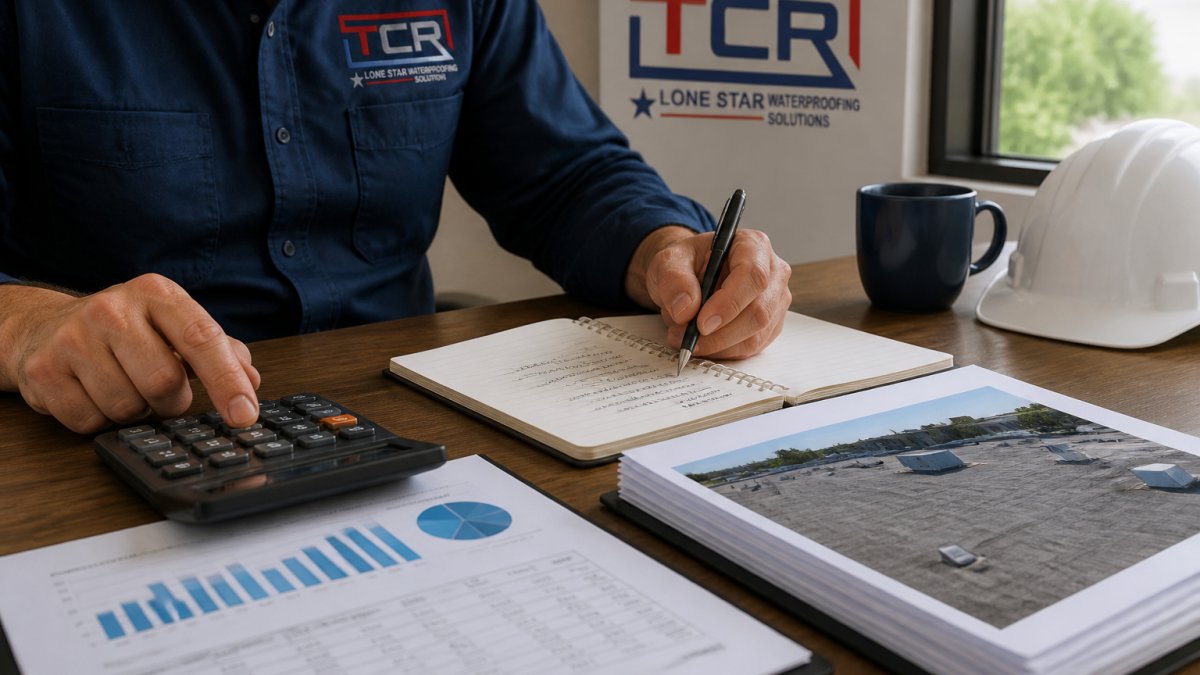
The most straightforward cost driver is square footage: larger roofs require more material and labor, so pricing scales with area.
Most contractors price rejuvenation per square foot, so know your exact roof area before requesting a quote; a professional inspection can capture it. Property managers with multiple facilities often find bundling several roofs into one contract improves pricing, since crews mobilize more efficiently.
Roof Pitch and Accessibility
A steep-pitch roof costs more to treat than a low-slope one, requiring additional safety equipment, slower application speeds, and higher labor intensity.
Accessibility also matters: a roof surrounded by tall trees, complex HVAC equipment, or other obstructions takes longer to treat, while a simple, flat-to-low-slope commercial roof with clear access is faster and cheaper. Urban rooftops with limited staging areas may carry a premium.
Shingle Condition and Age
Not every roof is a candidate. If shingles are severely damaged, missing, or curling excessively, treatment won’t restore them and replacement becomes the only option, so contractors inspect first to determine suitability.
A roof in good structural condition but showing age (dried-out appearance, loss of flexibility, some granule loss) is ideal. Roofs 8 to 20 years old often respond well; newer roofs don’t need it, and very old or severely compromised roofs won’t benefit. A professional assessment upfront prevents wasted quotes.
Roof Restoration vs. Replacement: Cost Comparison
The decision between roof rejuvenation and full replacement hinges on condition, remaining service life, and total cost of ownership. Rather than a headline savings percentage, compare like-for-like estimates over a defined time horizon, including repeat treatments, maintenance, avoided repairs, and the real possibility that replacement is still required at the end of the extension period.
Sample estimates by roof size
The figures below are illustrative planning ranges, not quotes, assuming a sound, dry, low-slope asphalt shingle roof with moderate granule loss, clear access, and no active leaks. Pricing depends on quantity, dates, and delivery.
| Roof size | Rejuvenation estimate | Replacement estimate |
|---|---|---|
| 5,000 sq ft | $5,000-$30,000 | $40,000-$125,000 |
| 10,000 sq ft | $10,000-$60,000 | $80,000-$250,000 |
| 25,000 sq ft | $25,000-$150,000 | $200,000-$625,000 |
| 50,000 sq ft | $50,000-$300,000 | $400,000-$1,250,000 |
These ranges reflect general industry estimates. Treat them as a budgeting starting point, not a substitute for a site-specific estimate.
What a like-for-like estimate should include
A fair comparison requires both quotes to cover the same scope. Ask each contractor to itemize:
- Inspection and condition assessment
- Surface cleaning and prep
- Minor repairs (flashing, sealant, fasteners, small patching)
- Treatment or replacement material and application labor
- Disposal and haul-away (replacement only)
- Permits and inspections where required
- Warranty terms and duration
- Post-project maintenance recommendations
If one quote bundles these items and another omits them, the lower number is not actually lower. It is incomplete.
Long-term cost over a defined horizon
A single per-year figure hides the real decision. Consider a 10,000-square-foot roof over a 20-year horizon.
Path A, Rejuvenate now, then replace later.
- Year 0: rejuvenation
- Year 7-10: repeat treatment or targeted repairs
- Year 10-15: replacement becomes likely
- Ongoing maintenance: drainage, debris removal, small leak repairs
Path B, Replace now.
- Year 0: replacement
- Year 15-20: minor maintenance only
- New warranty coverage from day one
Path A defers the large capital outlay and can improve cash flow, but it does not eliminate replacement and adds a second treatment cycle plus continued maintenance. Path B costs more upfront but resets the clock and typically comes with a fresh manufacturer warranty.
The break-even question
The relevant question is not “which is cheaper” but “which produces the lowest cost per year of reliable service.” A rejuvenation extending service by 7 years can be more cost-effective per year than a replacement lasting 20 years, but if the roof needs a second treatment at year 8 and replacement at year 12, the advantage narrows or disappears.
Run the comparison over at least 15 years, include repeat treatments and maintenance, and assume replacement will still be needed eventually. That is the only way to see whether rejuvenation genuinely saves money for your roof.
When replacement is the better financial choice
Replacement makes more sense when:
- The roof has already failed in multiple locations
- Structural decking or insulation is compromised
- Remaining service life is too short for a treatment to bridge to a sensible replacement window
- The building is being sold and buyers or lenders expect a new roof
- Insurance or warranty requirements favor full replacement
Rejuvenation is a deferral strategy, not a permanent fix. Used correctly, it buys time and improves year-over-year value; used on the wrong roof, it wastes money better applied to replacement.
Metal Roof Restoration Costs and Considerations
Metal roofing systems, standing seam, metal shingles, and corrugated panels, follow different treatment logic than asphalt. Metal roofs don’t dry out the way asphalt shingles do, so traditional rejuvenation treatments don’t apply.
Instead, metal roof restoration focuses on rust, coating degradation, and sealant failure. Costs depend on the extent of corrosion, roof size, and whether recoating or more extensive repairs are needed.
Total Cladding and Roofing LLC specializes in metal roofing systems across commercial and industrial properties.
How Long Does Roof Restoration Last?
Roofs in harsh climates, intense UV, frequent hail, high humidity, or extreme temperature swings, may see shorter extension periods.
The key is that rejuvenation buys time; it’s not permanent. Once those added years pass, you’re back to considering replacement.
Maintenance during the rejuvenation period matters too. Keeping debris clear, ensuring proper drainage, and addressing small leaks promptly all help maximize the treatment’s effectiveness.
Roof Coating Cost and Treatment Options
Roof coatings serve a different purpose than rejuvenation, though the terms are sometimes used interchangeably.
Coating systems cost roughly $0.50 to $2.00 per square foot, depending on coating type and surface condition; a 10,000-square-foot roof might see coating costs between $5,000 and $20,000.
Some roofs benefit from both approaches: rejuvenation to restore the shingle core, followed by a protective coating to seal the treated surface. Others need only one. A professional assessment determines which strategy fits your roof.
Getting an Accurate Roof Rejuvenation Estimate
Accurate pricing starts with a thorough roof inspection; never rely on phone quotes or generic online calculators, which miss critical cost details. Before requesting pricing, confirm the roof is actually a candidate, and after receiving quotes, verify the warranty, insurance, and resale implications.
Eligibility checklist: is your roof a candidate?
Use this checklist to separate a sound, dry asphalt shingle roof from one that needs repair or replacement.
Favorable signs
- Shingles are pliable when gently lifted at the edge
- Granule loss is light to moderate, not exposing the mat
- No active leaks or water staining on the deck or ceiling below
- No soft spots, sagging, or structural movement
- Flashing and penetrations are intact
- Roof age is roughly 8 to 20 years
Warning signs that point to repair or replacement
- Multiple active leaks or recurring leak history
- Cracked, curling, or missing shingles across large areas
- Exposed mat or bare spots from heavy granule loss
- Soft or spongy decking when walked
- Rusted or failed fasteners, or widespread sealant failure
- Ponding water that does not drain within 48 hours
- Prior patchwork that has not held
If two or more warning signs are present, get a repair or replacement assessment before pricing rejuvenation. Treating a failing roof does not fix the underlying problem.
Independent condition assessment
A contractor selling rejuvenation has an incentive to recommend it. Where possible, have the condition assessment performed or reviewed by someone not tied to the treatment sale. Ask for:
- Moisture readings at representative locations
- Photographs of decking, flashing, and shingle undersides
- A written summary of remaining service life
- A clear statement of what the treatment will and will not address
This protects you from paying for a treatment on a roof that cannot benefit from it.
What to verify in every quote
Beyond price, confirm the following in writing:
- Scope of work. Inspection, cleaning, repairs, application, and cleanup should each be listed.
- Product and application method. Ask for the specific product name, manufacturer, and application rate.
- Warranty. Distinguish between the manufacturer’s material warranty and the contractor’s workmanship guarantee. Ask what voids each one.
- Insurance. Confirm the contractor carries general liability and workers’ compensation coverage, and request a certificate of insurance.
- Timeline and disruption. Ask how long the roof will be unavailable and what access restrictions apply.
- Payment terms. Avoid large upfront deposits; tie payments to milestones.
Warranty, insurance, and resale implications
Rejuvenation warranties vary widely: some manufacturers offer limited coverage tied to specific products and application conditions, and some contractors offer a workmanship guarantee for a defined period. Read both, and ask what maintenance keeps them valid.
On insurance, confirm with your carrier whether rejuvenation affects coverage or counts as a maintenance item rather than a repair.
If you plan to sell, disclose the treatment and provide documentation; buyers, inspectors, and lenders may ask about roof age and condition.
Evidence to request from the contractor
Separate measurable outcomes from marketing claims. Ask for:
- Test methods used to assess shingle flexibility before and after treatment
- References from similar roofs in similar conditions
- Realistic service-life expectations in writing, not verbal promises
- A statement of limitations, including what the treatment will not fix
A contractor who cannot provide these is asking you to take the claims on faith; one who can gives you something to compare against other bids.
Request at least three itemized estimates and compare scope, warranty, and evidence, not just the bottom-line number. The lowest bid is often the one with the most omissions.
Total Cladding and Roofing LLC provides detailed written estimates after a comprehensive site assessment. We explain what we find, why we recommend a particular approach, and what to expect during and after the work. Our commercial and industrial roofing experience means we understand your facility’s specific challenges, whether heat exposure, hail vulnerability, or coordination with ongoing operations.
Frequently Asked Questions
Is roof rejuvenation cheaper than replacing a roof?
Yes. Roof rejuvenation typically costs less than full replacement. The actual savings depend on your roof’s square footage, pitch, and condition. A professional inspection can confirm whether rejuvenation is suitable for your roof and provide a specific cost comparison for your situation.
How long does roof restoration last after treatment?
Roof restoration typically extends asphalt shingle life by 5 to 10 years, depending on climate, roof exposure, and maintenance. The treatment restores lost oils to dried-out shingles, improving flexibility and weather resistance. Results are most effective on roofs that are structurally sound but showing age-related drying. Metal roof restoration may last longer if the underlying structure is intact. A detailed roof inspection before treatment helps establish realistic expectations for service life extension.
What types of roofs can be rejuvenated?
Asphalt shingle roofs are the primary candidates for rejuvenation treatment. Metal roofs can also be restored through specialized coatings and sealants, though the approach differs from asphalt treatment. Flat roofs and built-up roofs have different restoration options. Rejuvenation works best on roofs that are structurally sound, have no major leaks, and show age-related deterioration rather than structural damage. A professional roof inspection determines whether your roof qualifies for rejuvenation or requires replacement.
What factors most affect the cost of roof rejuvenation?
Roof size (measured in square footage) is the primary cost driver, along with roof pitch and accessibility. Steeper roofs and those difficult to access cost more to treat. Shingle condition also matters: roofs with significant damage, active leaks, or missing sections may not qualify for rejuvenation and could require replacement instead. Labor costs vary by region and contractor expertise. Getting multiple quotes from qualified contractors allows you to compare pricing and understand what factors apply to your specific roof.
To upload drawings, specs and plans please go to the form on our contact page.
Get in Touch