

Last Updated: November 4, 2026
Quick Summary
The signs of heat damage on asphalt shingles include curled edges, blistering, cracking, brittle shingles, granule loss, and fading or discoloration. Heat damage tends to appear evenly across sun-facing slopes, unlike patchy wind damage. Widespread blistering, heavy granule loss, or brittle shingles across multiple slopes mean it is time for a professional roof assessment.
- On a 100°F afternoon, a dark shingle roof facing south or west can run 150°F to 170°F or higher.
- Check gutters after a dry, windy stretch: a thick layer of granules like coarse sand signals heavy loss.
- Inspect from the ground with binoculars first, then the attic, and leave the roof surface to professionals.
- Heat curl is broad and gradual on sun-facing slopes, while wind damage is patchy near ridges and edges.
- Isolated curled edges can often be repaired, but brittle shingles across the roof usually mean replacement.
Table of Contents
- Why Texas Heat Ages Asphalt Shingles Faster
- What Temperature Is Too Hot for Shingles?
- 1. Asphalt Shingles Curling From Heat at the Edges
- 2. Blistering, Cracking, and Brittle Shingles
- 3. Granule Loss on Asphalt Shingles and Loose Granules in Gutters
- 4. Discoloration, Fading, and Trapped Attic Heat
- How to Inspect a Roof for Heat Damage Safely
- Heat-Damaged Roof Repair or Replacement: How to Decide
- Frequently Asked Questions
Why Texas Heat Ages Asphalt Shingles Faster
Asphalt shingles fail faster under sustained heat than almost any other roof type, and the signs of heat damage on asphalt shingles show up long before a leak does.
Your roof bakes every day from spring through fall. Surface temps climb well above air temperature. The asphalt that holds the shingle together softens, then hardens again overnight. Repeat that cycle for years and the material gives out.
The damage usually starts small. A lifted edge here, a few granules in the gutter there. Left alone, it turns into a leak over a warehouse aisle or a tenant complaint you can’t ignore.
Below, we break down the key signs of heat damage on roofs, plus how to tell heat damage from ordinary wear.
What Temperature Is Too Hot for Shingles?
Asphalt shingle temperature ratings vary by product, so check the manufacturer’s specifications for your shingles. Past high surface temperatures the asphalt binder can soften enough that it stops holding granules tightly, and the shingle begins to lose the layer that shields it from UV.
On a 100°F afternoon, a dark shingle roof facing south or west can run 150°F to 170°F or higher. The spread comes from four variables that are worth understanding, because they explain why two roofs on the same street age at different rates:
- Roof orientation and pitch. South- and west-facing slopes absorb the most direct sun and stay hot longest into the evening. Steeper pitches shed heat slightly better than low-slope sections, which can hold a hot boundary layer of air.
- Shingle color and reflectivity. Dark shingles absorb more solar energy than light ones. Products with higher solar reflectance, often marketed as cool-roof shingles, run measurably cooler at the surface, though reflectance fades as granules wear and dirt accumulates.
- Attic ventilation. This is the variable homeowners most often overlook. A roof deck that is not vented properly traps hot air beneath the shingles, so the deck stays hot from below while the sun heats it from above. Balanced intake at the eaves and exhaust at the ridge or in the upper roof keeps the deck closer to outdoor air temperature.
- Attic insulation and air sealing. Insulation slows heat transfer from the living space into the attic, and air sealing stops conditioned air and moisture from leaking upward. A hot, humid attic accelerates deck deterioration and can warp shingles from underneath.
A practical way to judge your own roof is to compare surface temperature to air temperature on a clear afternoon. An infrared thermometer pointed at the shingle surface, safely, from a ladder or an accessible low slope, will show the gap.
Watch out: there is no single universal attic temperature that proves heat damage. Attic readings vary with outdoor conditions, roof color, insulation, and vent design, so treat any temperature as a clue to investigate, not a verdict. Look for the symptoms, curled edges, granule loss, brittle shingles, and let those drive the decision.
1. Asphalt Shingles Curling From Heat at the Edges
Curling is a sign people often notice. The edges of the shingle lift or roll upward, usually at the bottom corners first. Heat softens the asphalt, and the shingle loses its flat lay against the roof deck.
Asphalt shingles curling from heat tend to look different from wind damage. Heat curl is even across a wide area, often on the sun-facing slope. Wind damage is patchy and clustered near edges or ridges.
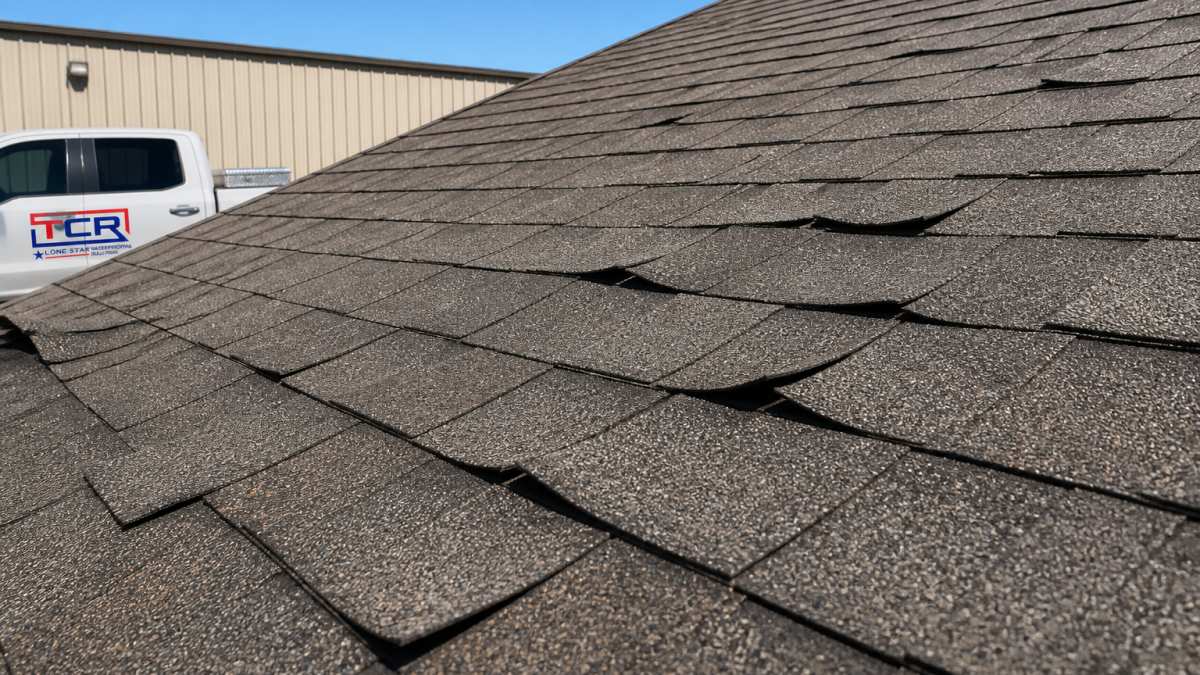
Watch out: once edges curl, wind gets under them. A small lift becomes a torn shingle fast.
2. Blistering, Cracking, and Brittle Shingles
Blistering shows up as small raised bubbles on the shingle surface. Trapped moisture or trapped air expands under heat and pushes the asphalt up. When the bubble pops, it leaves a small crater that collects water.
Cracking and brittle shingles follow. The asphalt dries out, loses flexibility, and cracks when it flexes. Walk on a roof in this condition and you may crack shingles just by stepping on them.
If you see blistering across more than a few shingles, the roof is past simple repair. That’s when we recommend a full inspection before the next storm season.
3. Granule Loss on Asphalt Shingles and Loose Granules in Gutters
Granule loss on asphalt shingles is one of the clearest measures of wear. Granules protect the asphalt from UV. When they’re gone, the shingle ages fast.
Check your gutters after a dry, windy stretch. A handful of granules is normal. A thick layer that looks like coarse sand is not.
- Light loss: a few granules, roof still has color
- Moderate loss: bare patches visible, granules collect at downspouts
- Heavy loss: shingle surface looks smooth or gray, granules everywhere
Heavy granule loss means the shingle is near the end of its life. It also means the roof is shedding material into your drainage system, which can clog drains and cause ponding on flat sections.
4. Discoloration, Fading, and Trapped Attic Heat
Fading and discoloration are cosmetic at first. Dark shingles turn gray or chalky white as the asphalt oxidizes under UV exposure. Uneven fading often points to a ventilation problem.
Trapped attic heat makes everything worse. When hot air can’t escape, the roof deck stays hot from below and above. That cooks the shingles from both sides.
Signs of roof overheating include:
- Attic temps that feel like an oven in summer
- Uneven shingle color across the roof
- Sagging areas near the ridge
A cool roof system or reflective coating can cut surface heat. If fading is widespread, it’s worth having the attic checked too.
How to Inspect a Roof for Heat Damage Safely
A useful inspection moves from the safest vantage point to the riskiest, and most of what you need to know is visible without ever stepping on the roof.
From the ground. Use binoculars and start with the sun-facing slopes, which usually show heat stress first.
From the attic. With a flashlight, look at the underside of the roof deck for staining, sagging, or daylight showing through.
On the roof, professionals only. If you are not trained in fall protection, stay off. A hot roof is both brittle and slippery, and a fall is a far worse outcome than a missed crack.
Telling heat damage apart from look-alikes. Curling, cracking, and granule loss are not unique to heat, and misreading the cause leads to the wrong repair. Use these distinctions:
- Heat versus aging. Heat damage tends to concentrate on sun-facing slopes and appear evenly across a wide area. Ordinary age-related wear is more uniform across all slopes and follows the shingle’s expected service life.
- Heat versus wind. Wind damage is patchy and clustered near ridges, edges, and corners, and often includes missing or creased shingles. Heat curl is broad and gradual.
- Heat versus hail. Hail leaves round impact marks, bruised spots, and granule loss in localized strikes. Heat blistering produces raised bubbles and small craters that are not tied to a storm path.
- Heat versus poor installation. Fasteners set too high or too deep, or shingles installed without proper overlap, cause lifting and curling that follows installation patterns rather than sun exposure.
If your inspection turns up widespread blistering, heavy granule loss, or brittle shingles across multiple slopes, that is the point to bring in a roofer for a full assessment rather than a spot repair.
Heat-Damaged Roof Repair or Replacement: How to Decide
The decision comes down to how much life is left in the roof. A few curled shingles on one slope can often be repaired. Widespread blistering, heavy granule loss, and brittle shingles across the roof usually mean replacement is the better call.
Here’s how we weigh it:
| Condition | Likely Path | Why |
|---|---|---|
| Isolated curled edges | Repair | Damage is limited to one area |
| Blistering on a few shingles | Repair or spot replacement | Roof still has service life |
| Heavy granule loss, bare patches | Replacement or restoration | Shingle is near end of life |
| Brittle shingles across roof | Replacement | Material fatigue is widespread |
| Sagging or soft spots | Full inspection first | May point to deck or structural issues |
Restoration is often the middle option. For a decision framework on when a roof is past patching and whether a metal roof retrofit, TPO recover or full replacement is the right next step, see when a commercial roof should be replaced. You can explore the full range of commercial roof restoration options in Texas before choosing repair or replacement. If replacement is the call, you can compare commercial roof replacement options in Texas side by side.
For a deeper look at why roofs fail here, our guide to commercial roof failure in Texas covers the causes and how to prevent them.
Contact Total Cladding and Roofing LLC for an inspection before you commit to either path. We assess project requirements, explain suitable options, and plan around site operations.
Frequently Asked Questions
What are the first signs of heat damage on asphalt shingles?
The earliest signs usually show up at the edges and surface of the shingle. Watch for curling or lifting edges, a dull or faded surface, and granules collecting in gutters or at downspout outlets. Small blisters or surface bubbles can appear as the asphalt softens and then rehardens through repeated heat cycles. Catching these early matters because heat damage compounds: once the protective granule layer thins, UV exposure reaches the asphalt faster and the decline speeds up. A visual inspection each spring, before summer heat peaks, gives you a baseline to compare against.
What temperature is too hot for shingles?
Asphalt shingles are rated for high heat, but sustained roof surface temperatures above roughly 150 to 160 degrees Fahrenheit start to soften the asphalt binder and accelerate wear. On a 95-degree day, a dark shingle roof can reach 150 degrees or more because the surface absorbs solar radiation. The bigger issue is trapped attic heat: when ventilation is poor, stagnant hot air keeps the decking and shingles hotter for longer, and that prolonged exposure is what drives curling, blistering, and granule loss. Proper intake and exhaust ventilation lowers that trapped heat.
Does heat damage to asphalt shingles ever go away?
No. Heat damage is permanent material change, not a temporary condition. Once asphalt softens, blisters, or loses its granules, those shingles do not recover, and the damage typically worsens with each additional heat cycle. That is why the decision between heat-damaged roof repair or replacement depends on how far the damage has spread. Isolated blisters or a few curled shingles can sometimes be repaired, but widespread granule loss, brittle shingles, or sagging areas usually point to replacement. A professional inspection can tell you which situation you are in.
Can hot weather cause asphalt shingles to curl or crack?
Yes. Repeated expansion and contraction from hot days and cooler nights puts stress on the shingle mat and asphalt coating. Over time the edges lift and curl, and the shingle becomes brittle enough to crack under foot traffic or hail. Curling from heat often looks different from curling caused by poor installation or aging: heat-related curling tends to appear across sun-exposed slopes, while installation problems often show up in patterns or on specific sections. Distinguishing the cause matters, because it changes whether repair or replacement is the right call.
Heat damage rarely fixes itself. The earlier you catch the signs, the more options you have. Total Cladding and Roofing LLC offers roof inspections, leak repairs, preventative maintenance, coatings, restoration, and replacement for commercial and industrial properties. We coordinate roof, insulation, and drainage work around your schedule to keep disruption low. Get started with Total Cladding and Roofing LLC and protect your roof before the next summer takes its toll.

To upload drawings, specs and plans please go to the form on our contact page.
Get in Touch