CTG-3xE — Acrylic-surfaced reinforced roof system
- Manufacturer
- Western Colloid
- Product
- CTG-3xE — Acrylic-surfaced reinforced roof system
- Status
- Current
- Market
- United States
- Latest revision
- 1105e
- Last verified
- September 20, 2026
Overview
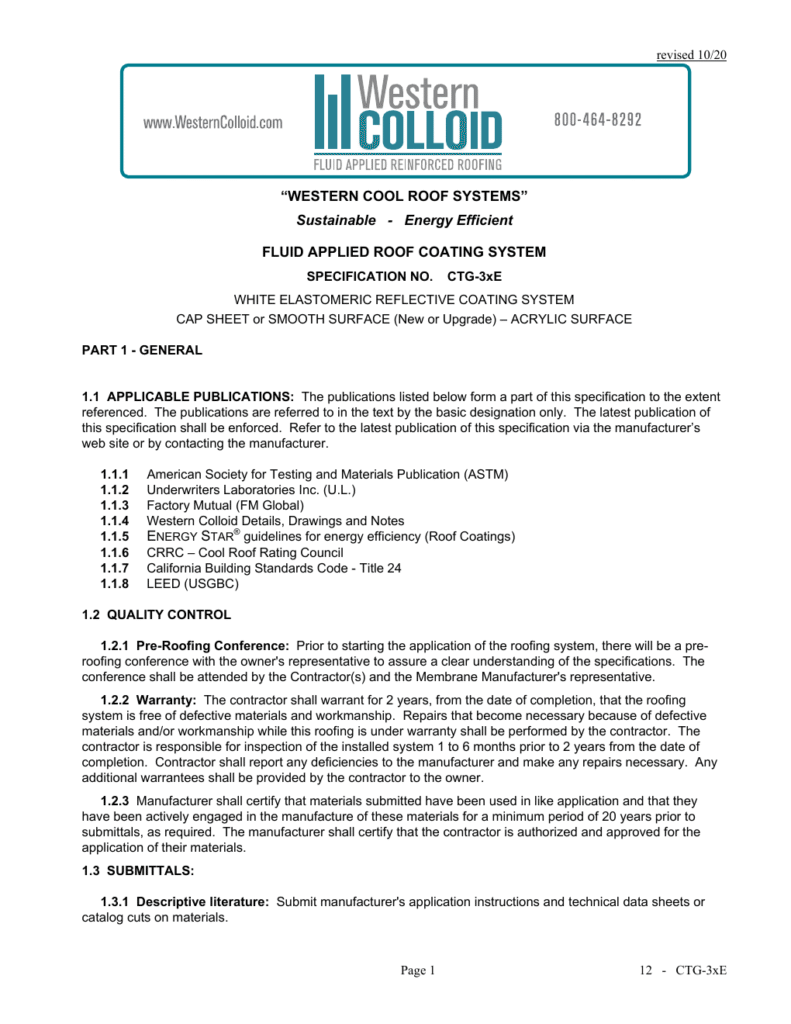
CTG-3xE is a Western Colloid fluid-applied roof coating system specification, revised 10/20, for a white elastomeric reflective coating on a cap sheet or smooth surface, new or upgrade, with an acrylic surface. The specification carries the Western Cool Roof Systems heading. The manufacturer's specification index describes it as a re-coat cap, new or existing, smooth system, an acrylic surface coating system available in white or colors using ElastaHyde Acrylic White.
The ElastaHyde rate is 3 gallons per 100 square feet in two coats. The method is cold process and water based, with very low odor. It can also re-coat existing spray polyurethane foam roofs, and it brings a new or existing built-up or modified bitumen roof up to California Title 24 standards. Roofs of that kind are among the cool roof systems that take reflective acrylic coatings.
Assembly and weights
The assembly lists one component: white acrylic ElastaHyde at 3.0 gallons per 100 square feet, weighing approximately 21.0 lb dry. That is also the total system dry weight. The approximate total dry thickness is 25 mils.
Data sheets and technical documents
Current manufacturer system specifications, application guidelines and component data sheets matched to this assembly.
Current files
Archived files
No older reviewed revisions are archived for this product yet.
Criteria
Criteria named for the assembly are UL Class A, Factory Mutual, California Title 24, LEED (USGBC) and ENERGY STAR.
Materials
- Stitchbonded polyester fabric, 2.75 ounce firm or 3.0 ounce soft, reinforces asphalt emulsion, acrylic coating and flashing materials.
- #850 SWS walkway coating is a water-based acrylic coating that contains an aggregate for a textured, non-slip surface.
- #8000 All Weather Elastic Cement is a solvent-based white sealant used where wet conditions are present during repair, and it can replace #800 when more immediate water resistance is needed.
- #800 Elastic Cement is a water-based acrylic emulsion flashing and sealing compound in white or black.
- #970 A2A Bonding Primer is a water-based clear acrylic primer for smooth asphalt products. It may be needed where polyester fabric was top coated with asphalt emulsion or on chopped glass and emulsion systems.
- ElastaHyde #720 ARC serves as the base coat and finish coat, and meets ASTM D6083/6083M-18 for 100% acrylic roof coating.
Preparation
A new built-up or modified bitumen membrane is installed to its own manufacturer's requirements, and all flashings and details are finished before the coating starts. For an upgrade of an existing roof, the membrane is first made sound and watertight, loose gravel and debris are cleared by vacuum, sweeping or power blower, and the surface is washed with attention to valleys and ponding areas.
Small splits get a three-course repair with #800 at 5 gallons per 100 square feet (about 1/8 inch), an embedded polyester ply, and a second coat at 4 gallons per 100 square feet. Pipe flashings, cones, exposed metal joints and flanges are treated in the same manner.
Drains and ponding
At drains and scuppers, a polyester ply is set in ElastaHyde. Valleys, waterways and locations where water ponds longer than 48 hours receive one more ply that reaches 12 inches past the ponding area or drain sump. It is set in ElastaHyde at 3 gallons per 100 square feet and broomed lightly, and it goes on before the final coats.
Reflective coating
Smooth asphalt and non-granulated modified bitumen are primed with #970 A2A at 1/2 gallon per 100 square feet after washing off asphaltic residue. Granulated surfaces are not primed.
ElastaHyde is applied in two coats of 1 1/2 gallons per 100 square feet each, with 24 hours between them, cross-hatched at right angles. The final coat is the second. Work starts early in the day, before the emulsion softens, and is discontinued if the surface sticks to equipment or feet. The material is mixed well, strained if sprayed, and not thinned.
Walkway areas can take #850 SWS in two coats of 2 gallons per 100 square feet, with at least 24 hours between them. At roof doors, hatches and service doors, a polyester ply is first broomed into a 2 gallon coat of #850 SWS.
ElastaHyde data
For the white #720 ARC coating, initial solar reflectance is 84% (ASTM C1549) and initial thermal emittance is 89% (ASTM C1371). SRI is 106, and 93 after aging. CRRC rated product ID 0682-003 shows weathered reflectance of 0.75 and weathered emittance of 0.91. Dry fire classification is Class A under UL 790 and ASTM E108. Low-temperature flexibility passes at 15 degrees F over a 1/2 inch mandrel (ASTM D522), and tear resistance is above 100 lbf/in (ASTM D624). Water swelling is under 20% (ASTM D471).
Environmental conditions
The water based coating is applied at a minimum of 55 degrees F and rising. It is not applied during wet weather, rain, snow or freeze, or with ice or frost on the roof surface or deck. Expected rain, inclement weather or temperatures below 40 degrees F within 48 hours also rule application out. Preparation and repair work that uses no water based material may be done just before inclement weather.
Colors and packaging
White is the base color of ElastaHyde #720 ARC, with California Tan and Platinum Gray also available. All three are stated to meet California Title 24, and the ENERGY STAR guidelines are met for white, Platinum Gray and California Tan only. Standard and custom colors are offered. Packaging is 5 gallon pails, 55 gallon drums, totes and bulk tankers.
The coating is formulated for conventional and modified built-up roofs, existing spray polyurethane foam roofs, metal roof systems and the topcoat of Western Colloid fluid-applied reinforced membranes. Reflectance of the white version is over 84 percent. A #720 QS Quick Set version is for use when damp, wet or rainy weather is expected before the coating dries.
Storage and handling
Materials are protected from inclement weather before and during the project, and container lids stay tightly closed when not in use. Materials stored on the roof sit in approved areas, with the load distributed to stay within the live load limits of the roof construction. Overspray protection uses shield boards, maskings and protective coverings as necessary. A pre-roofing conference is held with the owner's representative, the contractor and the membrane manufacturer's representative before application starts.
Daily cleanup
Each day, debris, scraps, containers and rubbish from the installation are removed from the roof area. The coating is applied early in the day so the membrane surface has not heated and softened, and work stops if the surface sticks to equipment or feet.
Installing this in San Antonio or Austin?
We install protective coatings for metal roofs and cladding on commercial and industrial buildings from our Bulverde office.
Related products
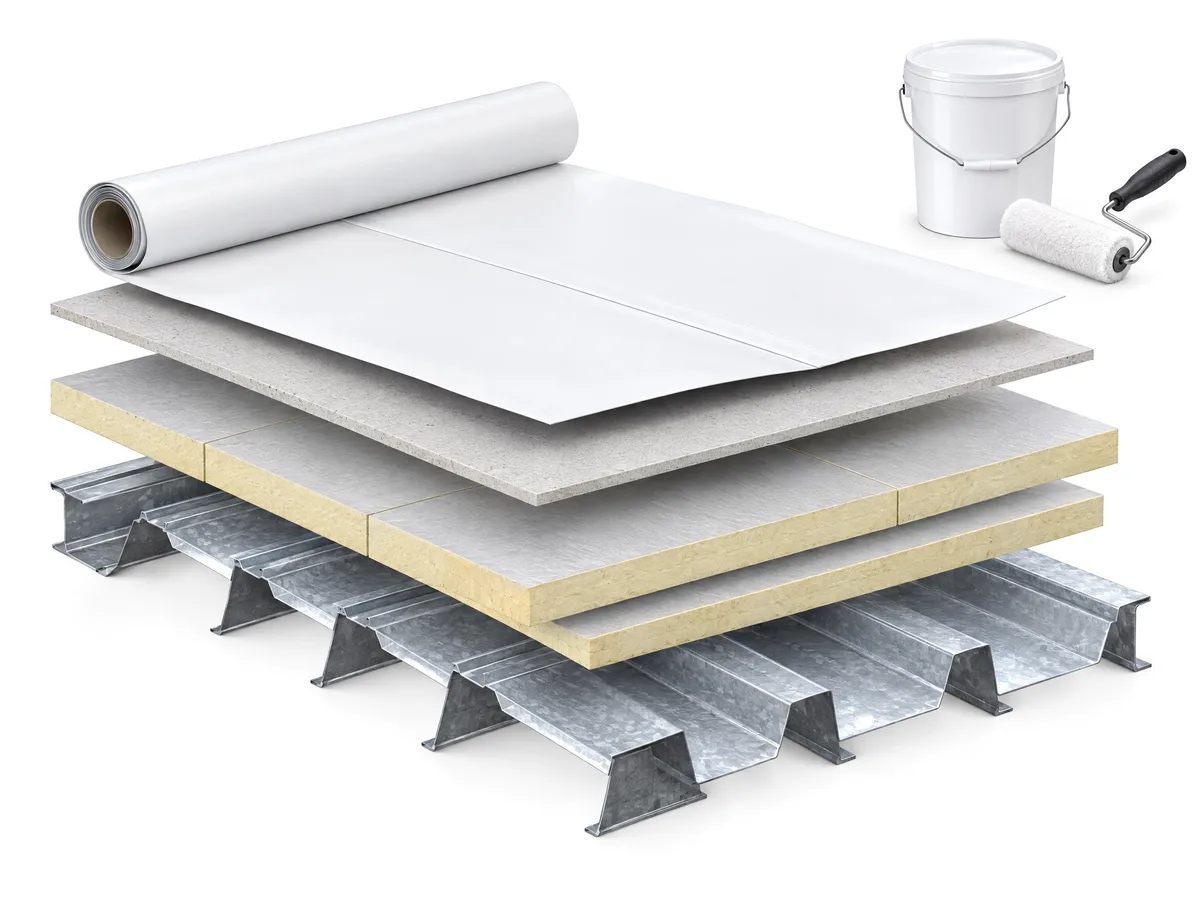 Illustration
Sikalastic-835 I – 701 SF Fluid-Applied Protected or Exposed Membrane Roofing-Waterproofing
Acrylic Roof Restoration Coating System Metal Corrugated Standing Seam R Panel
Acrylic Reinforced Coating System Concrete
Duro-Last EV PVC Membrane
Illustration SM-1P-14-3G-A — Aluminum-surfaced roof restoration system
Illustration GR-2P-24-XE — Gravel-roof reinforced restoration system
Contribution history
Published changes remain in this permanent record. Corrections create a new entry instead of deleting earlier history.
- September 21, 2026 at 8:48 amLibrary Record
CTG-3xE — Acrylic-surfaced reinforced roof system — initial source record
Created the system record and matched the current manufacturer system specification, application guidance and component data sheets.
By Tom · Verified Primary Source
Sources: Official Western Colloid CTG-3xE — Acrylic-surfaced reinforced roof system system page