Table of Contents
- Why Commercial Roof Inspections Matter in Texas
- Commercial Roof Inspection Checklist: What to Assess
- Commercial Roof Maintenance Schedule and Frequency
- Roof Structure Repair: Addressing Critical Findings
- Documentation for Insurance Claims and Compliance
- Energy Efficiency Assessment During Inspection
- Safety Compliance and Roof Access Procedures
- Frequently Asked Questions
Last Updated: October 2, 2026
Why Commercial Roof Inspections Matter in Texas
A commercial roof inspection is a systematic assessment of your building’s roof condition, identifying damage, wear, and potential failures before they become costly problems.
Texas weather accelerates roof deterioration: a roof lasting 20 years elsewhere may fail in 12 years here.
Facilities that skip inspections often discover major damage only after leaks damage inventory.
Insurance policies typically require inspections every 1-2 years. Without proof of maintenance, claim denials are common.
Schedule inspections before severe weather seasons, spring for hail and wind, and fall before winter weather arrives. Timing matters because you’ll catch damage while repair windows are still open.
Commercial Roof Inspection Checklist: What to Assess
A thorough commercial roof inspection covers multiple systems and components that affect roof performance and building integrity.
Roof Membrane and Coating Condition
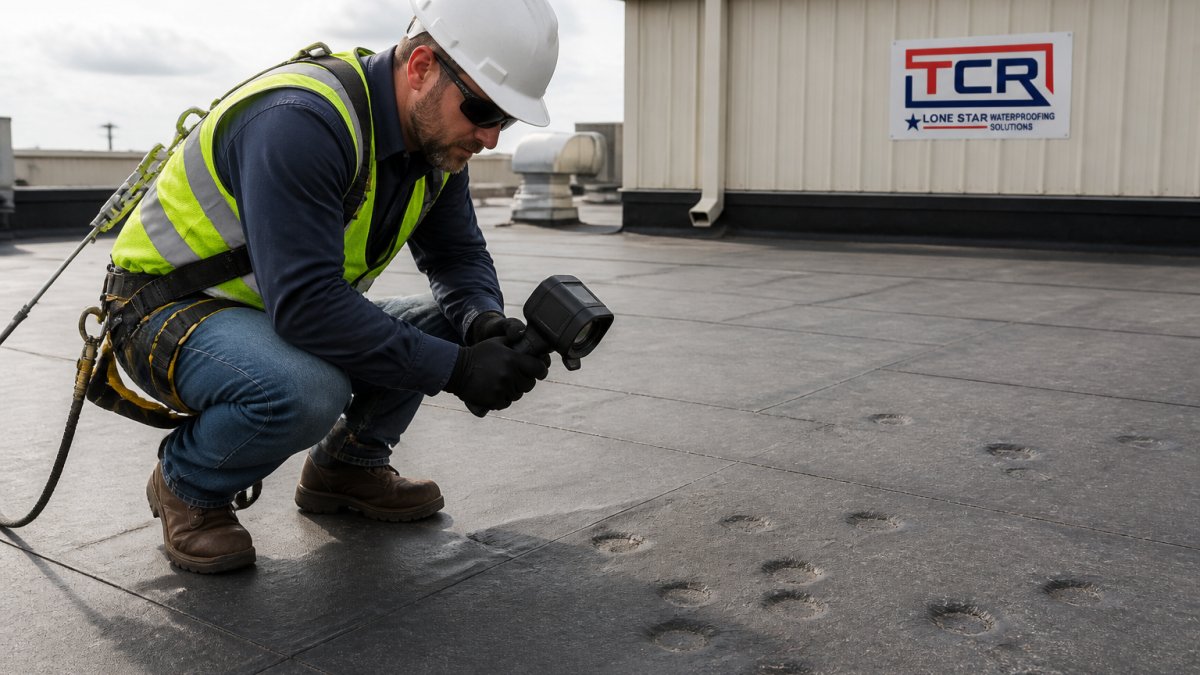
The roof membrane is your first line of defense against water penetration. Inspect for blistering, cracking, splitting, UV damage, alligatoring, punctures, and separation from substrate. Check protective coatings, reflective coatings extend membrane life and reduce cooling costs. Flat roofs are vulnerable to ponding water; look for low spots where water collects after rain.
Flashing and Roof Penetrations
Flashing is the metal trim that seals where the roof meets walls, HVAC units, pipes, and other penetrations, the number-one source of roof leaks. Inspect for separation, rust, cracked or missing sealant, and gaps. Curb flashing around equipment and parapet wall flashing must slope outward to shed water properly.
A single failed flashing seal can introduce water into insulation and structural components. Water damage spreads quickly and becomes expensive. Replace failed flashing immediately.
Drainage Systems and Ponding Water
Blocked or undersized drainage causes ponding water, one of the fastest ways to destroy a roof. During inspection, verify drains are clear, scuppers unobstructed, gutters slope correctly, and no water pools after rain. Clear drains twice yearly. If water sits for more than 48 hours after rain, your drainage system is failing.
Structural Damage and Wind Zone Assessment
Inspect for wind damage: lifted membrane edges, torn seams, missing fasteners, and debris. Check the roof deck for sagging, cracks, rust on fasteners, and water stains. Your inspector should verify that your roof assembly meets current wind zone requirements for your location. Hail damage assessment is critical, hail creates impact marks, cracks, and punctures that may appear weeks later.
Commercial Roof Maintenance Schedule and Frequency
Inspection frequency depends on roof age, material, and local conditions. A maintenance schedule protects your investment and extends roof life.
Recommended inspection frequency:
| Roof Age | Inspection Frequency | Priority |
|---|---|---|
| 0-5 years | Annually | Low risk |
| 5-10 years | Twice yearly | Moderate risk |
| 10-15 years | Twice yearly | High risk |
| 15+ years | Quarterly | Critical |
Older roofs need more frequent inspections because failure risk increases. A roof approaching end-of-life can fail suddenly if a single component breaks.
Spring and fall inspections catch seasonal damage. Spring inspections reveal winter weather damage. Fall inspections identify issues before winter arrives.
Document every inspection with photos and notes.
Twice-yearly inspections are the baseline for most commercial roofs in Texas. More frequent checks for aging roofs prevent emergency repairs and extend service life by years.
Roof Structure Repair: Addressing Critical Findings
Prioritize repairs by urgency: critical repairs (active leaks, separated flashing, structural damage, punctures >6 inches) within days; important repairs (blistering >10%, blocked drains, deteriorating coating) within weeks; routine maintenance (minor wear, sealant cracks, debris removal) within months. Assess whether repairs extend roof life or replacement is necessary.
Documentation for Insurance Claims and Compliance
Document annually: inspection photos, maintenance records, roof age and material, previous claims, and proof of regular inspections. When damage occurs, photograph overall damage, close-ups, location context, and use date stamps. Buildings with documented maintenance histories receive faster claim approvals and higher settlement amounts.
Energy Efficiency Assessment During Inspection
Check coating reflectivity, reflective coatings reduce cooling costs by 10-15%. Inspect insulation for moisture damage; water stains indicate absorption. Thermal imaging reveals insulation gaps or moisture problems. Upgrading to reflective coatings or improved insulation often pays for itself within 5-7 years through energy savings.
Safety Compliance and Roof Access Procedures
Roof access is one of the highest-risk activities in building maintenance. The Occupational Safety and Health Administration (OSHA) classifies fall hazards as the leading cause of serious workplace injuries and fatalities. Compliance with fall protection standards is legally required and essential for protecting your team and limiting liability.
OSHA Fall Protection Standards
OSHA regulation 29 CFR 1926.500 requires fall protection for all employees working at heights of 6 feet or more above a lower level.
Fall protection methods (in order of preference):
**1.
2. Safety net systems: Nets installed 8-30 feet below the work area catch falling workers.
**3.
4. Guardrail systems: Guardrails with mid-rails and toe boards prevent workers from falling off edges.
For roof inspections, personal fall arrest systems are the standard.
Competent Person Requirements
OSHA requires a “competent person” to supervise fall protection activities. A competent person is someone who:
- Has the ability to identify existing and predictable hazards in the workplace
- Has authorization to take corrective action to eliminate hazards
- Has received training in fall protection and rescue procedures
The competent person must:
- Inspect all fall protection equipment before use
- Verify that anchor points are properly installed and rated
- Ensure all workers are properly trained in harness use and emergency procedures
- Monitor work to ensure compliance with fall protection standards
- Maintain inspection records and equipment maintenance logs
Your roofing contractor or inspection company must provide a competent person on site during all roof work. If your in-house maintenance team performs roof inspections, you must designate and train a competent person before any roof access occurs.
Equipment Specifications and Inspection
Harnesses: Full-body harnesses distribute fall forces across the torso and legs. Harnesses must be ANSI Z359.11 certified and inspected before each use. Check for:
- Torn or frayed webbing
- Bent or cracked hardware
- Corrosion or rust on metal components
- Proper fit (harness should fit snugly without excessive slack)
Harnesses have a service life of 5 years from manufacture, even if unused.
Lanyards and shock absorbers: Lanyards connect the harness to the anchor point. Shock absorbers limit fall distance and reduce impact forces. Lanyards must be:
- ANSI Z359.1 certified
- No longer than 6 feet (to limit fall distance)
- Equipped with shock absorbers rated for the worker’s weight
- Inspected for damage before each use
Damaged lanyards (cuts, fraying, separation of shock absorber) must be removed from service immediately.
Anchor points: Anchor points must be capable of supporting 5,000 pounds per attached worker. Roof-mounted anchor plates are the most common.
Before using an anchor point, verify:
- The anchor plate is properly installed and bolted
- The mounting bolts are tight and not corroded
- The anchor point is rated for fall arrest (not just fall restraint)
- The anchor point is positioned so the worker cannot swing into an obstruction
Temporary anchor systems (portable anchors or rope anchors) must be installed by a qualified person and certified for the specific roof and load conditions.
Roof Access Procedures
Establish written roof access procedures and train all personnel before any roof work:
Pre-access checklist:
- Verify weather conditions (high winds or lightning risk prohibit roof access)
- Inspect all fall protection equipment
- Confirm the competent person is on site
- Verify that rescue equipment is available and personnel are trained in rescue procedures
- Check that the roof surface is safe (no wet areas, debris, or unstable sections)
During roof access:
- All personnel must wear harnesses connected to approved anchor points
- Maintain visual contact between team members
- Use hand signals or radios to communicate
- Avoid working alone on roofs
- Keep work areas clear of trip hazards and debris
- Use non-slip footwear with good traction
After roof access:
- Remove all equipment and secure it properly
- Document the work performed and any hazards encountered
- Inspect all equipment for damage and store it in a designated location
- Maintain records of roof access activities
Rescue and Emergency Procedures
If a worker falls and is suspended in a harness, rescue must begin immediately. A suspended worker can lose consciousness within minutes if the harness restricts blood flow.
Rescue requirements:
- A rescue plan must be in place before roof work begins
- Rescue equipment (tripod, winch, or mechanical lift) must be available on site
- At least one person trained in rescue procedures must be present
- Emergency services (fire department) must be notified of the rescue location
Many fire departments in Texas provide rescue training and can assist with rescue planning. Contact your local fire department to discuss rescue procedures for your facility.
Contractor Selection and Liability
When hiring contractors for roof inspections or maintenance, verify:
- The contractor carries liability insurance covering fall protection and roof work
- The contractor provides proof of OSHA training for all personnel
- The contractor has a written fall protection plan
- The contractor provides references from similar projects
- The contractor maintains records of equipment inspections and maintenance
Require the contractor to provide a certificate of insurance naming your organization as an additional insured. This protects your organization from liability if a contractor’s employee is injured.
OSHA fall protection compliance is not optional, it is a legal requirement with serious penalties for violations. Proper fall protection equipment, trained personnel, and written procedures protect your team and limit your organization’s liability. Never allow roof access without verified fall protection systems and a competent person on site.
Frequently Asked Questions
How often should a commercial roof be inspected?
Commercial roofs in Texas should be inspected at least twice annually, spring and fall, to assess weather damage and seasonal wear. After severe weather events like hail or high winds, conduct additional inspections immediately. Properties with older roof systems or those nearing end-of-life should increase frequency to quarterly inspections. Document all findings to track deterioration patterns and plan maintenance budgets.
What is the 25% rule in commercial roofing?
The 25% rule states that if damage affects 25% or more of your roof’s total area, replacement is often more cost-effective than repairs. This threshold varies by roof type and age. Consult your commercial roof inspection report and warranty documentation to determine whether repairs or replacement better protects your investment and extends building service life.
What should a commercial roof inspection checklist include?
A comprehensive commercial roof inspection checklist covers roof membrane condition, flashing integrity, drainage systems, ponding water, structural damage, wind damage, roof penetrations, coating failure, and building envelope assessment. Include thermal imaging to detect moisture penetration and insulation damage. Document all findings with photographs and measurements. This checklist supports insurance claims, warranty compliance, and preventative maintenance planning.
Are there specific building codes for commercial roofing in Texas?
Texas commercial roofs must comply with the International Building Code (IBC) and wind zone standards established by the Texas Department of Licensing and Regulation. Wind resistance requirements vary by location and elevation. Flat roofs and single-ply membranes have specific design and installation standards. Ensure your inspection report references applicable codes and that any repairs maintain compliance with current standards.
To upload drawings, specs and plans please go to the form on our contact page.
Get in Touch