

Last Updated: November 8, 2026
Quick Summary
Plan Denton attic insulation and roofing as one coordinated scope: fix the roof and air sealing first, then insulate, then verify ventilation. A leaking or poorly vented roof destroys new attic insulation within a season, so roof condition should be assessed before any insulation work begins.
- Seal gaps around recessed lights, top plates, plumbing penetrations, and the attic hatch before adding insulation.
- Wet, matted, contaminated, or compressed insulation must be removed rather than topped up.
- Ask for an itemized quote separating roof work from insulation work before comparing prices.
- Verify general liability insurance and workers’ compensation before signing with any contractor.
- Start with a building investigation covering the attic, roof surface, ventilation, and moisture signs.
Table of Contents
- How Attic Insulation and Roofing Work Together
- Comparing Insulation and Roofing Contractors Side by Side
- Denton Attic Insulation and Roofing Cost: What Drives the Estimate
- Attic Insulation Removal and Replacement: When It Is Necessary
- Recommended Attic Insulation R-Value in Texas
- Spray Foam, Blown-In, and Open-Cell vs Closed-Cell Options
- Reading Denton Attic Insulation and Roofing Reviews
- Requesting a Building Investigation and Installation Estimate
- Frequently Asked Questions
How Attic Insulation and Roofing Work Together
Denton attic insulation and roofing are two halves of one building envelope, and treating them separately is the most common planning mistake we see. A leaking or poorly vented roof destroys new insulation within a season, and insulation over a failing deck wastes money. The order of work matters as much as the materials, so both are best assessed together.
Why Roof Condition Changes Insulation Performance
Water is the quiet killer. According to the U.S. Department of Energy’s guidance on attic insulation, moisture control and air sealing must come before adding insulation, not after.
Roof condition also helps decide whether insulation work is worth doing this year. If the decking is soft or the shingles are near end of life, planning the roof first avoids paying twice for the same access and disruption.
Air Sealing, Ventilation, and Temperature Control
Air leaks damage attic performance more than thin insulation does. Gaps around recessed lights, top plates, plumbing penetrations, and the attic hatch let hot, humid air push up from below.
Ventilation works the other side of the equation: intake at the soffits and exhaust at the ridge keep the deck cool and dry. For more, see our guide to Denton roof ventilation solutions that cut attic heat.
Comparing Insulation and Roofing Contractors Side by Side
Most property owners hire two contractors and hope the scopes line up, which creates gaps: the roofer blames the insulation, the insulation crew blames the roof, and you pay for the argument. Having one contractor handle both scopes can reduce that risk.
| What to Compare | Insulation Contractor | Roofing Contractor | Combined Scope |
|---|---|---|---|
| Attic inspection | Usually included | Sometimes | Always included |
| Air sealing | Often an add-on | Rarely offered | Built into the plan |
| Roof deck condition | Not assessed | Assessed | Assessed before insulation |
| Insurance and licensing | Verify separately | Verify separately | One set of documents |
| Scheduling | Two timelines | Two timelines | One coordinated schedule |
Ask every contractor for proof of general liability insurance and workers’ compensation before signing. Our walkthrough on how to check roofing contractor insurance before hiring covers exactly which certificates to request and how to confirm they are current.
Denton Attic Insulation and Roofing Cost: What Drives the Estimate
Attic insulation and roofing costs depend on several factors, including depth, access, and roof condition. Below are the cost drivers that typically move a quote most. For current pricing, contact Total Cladding and Roofing LLC through its website for a quote.
The Five Variables That Move the Number
- Attic square footage and accessible area. A walkable attic with a full-height hatch is faster to work in than a low-pitch roof over a vaulted ceiling. Labor hours, not material, often decide the final figure.
- Existing insulation depth and condition. Topping up sound material is cheapest. Wet, matted, or contaminated insulation must be removed first, adding disposal and labor.
- Air-sealing scope. Sealing recessed lights, top plates, plumbing penetrations, and the attic hatch delivers the comfort; more penetrations means more time.
- Ventilation corrections. Blocked soffit vents, missing baffles, and failed ridge vent are common finds, cheap to fix while the crew is there, expensive to ignore.
- Roof work. Decking replacement, flashing, pipe boots, and shingle repair are priced separately. If the deck is soft, the roof scope comes first.
Typical Industry Ranges to Expect
Pricing depends on quantity, access, material, and scope, so contact Total Cladding and Roofing LLC through its website for a current quote.
Ask what is excluded from any quote before comparing prices, since omitted removal or air sealing can change the total.
How to Read an Itemized Quote
A quote you can actually compare should separate roof work from insulation work and show the following lines:
- Attic square footage and accessible area
- Existing insulation type, depth, and whether it is wet or contaminated
- Air-sealing scope: which penetrations, how many
- Ventilation corrections: baffles, ridge vent, soffit repair
If a quote arrives as a single lump sum with no breakdown, ask for the itemized version before comparing it to anything else. A contractor who cannot itemize is either guessing or hiding the margin.
Sequencing Changes the Total
Doing the roof and the insulation as one coordinated scope can reduce repeated mobilization, since the crew and attic access are already in place. Doing them in the wrong order, insulation first and roof later, means paying twice for access and disruption. That sequencing decision is often worth more than any per-square-foot difference between contractors.
Attic Insulation Removal and Replacement: When It Is Necessary
Removal is not always required, but clear signals show when topping up will not work: insulation that is wet, matted, contaminated with pest droppings, full of construction debris, or compressed below its rated depth has to come out. Once damaged insulation is removed, coordinating the attic work with roof preparation can help keep the space clear, and Xperienced homeowners know that planning the home before installation matters too.
Replacement makes sense when old insulation has failed structurally rather than just settled. Blowing new material over a soaked batt traps moisture against the ceiling and hides the real problem. Removal also gives the crew a clean look at the deck and framing, often when hidden roof damage finally shows up.
Recommended Attic Insulation R-Value in Texas
The U.S. The exact target depends on your home’s construction, existing insulation, and how the attic is vented, so check the current DOE recommended R-values by climate zone map before specifying a number.
Why Depth Alone Does Not Hit the Target
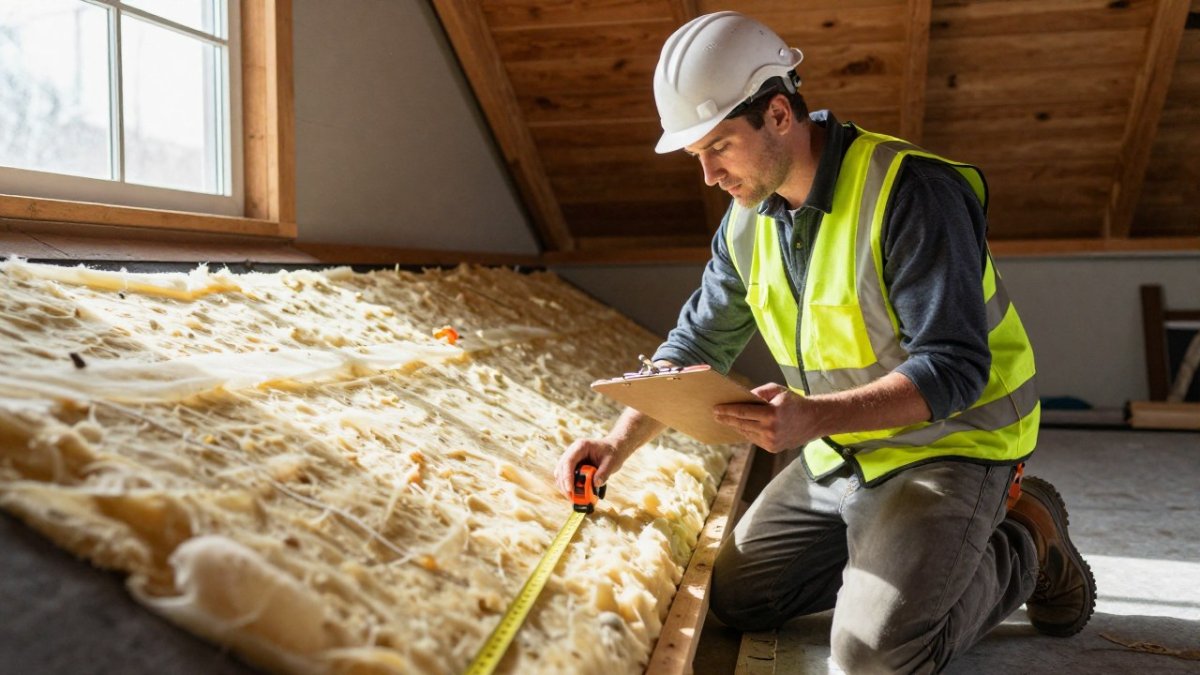
R-value is a laboratory number; in a real attic, air leaks and moisture drag performance below the label. A common pattern is a home with R-38 of blown-in fiberglass that still feels hot upstairs because the top plates and recessed lights were never sealed. Sealed air and correct venting let the rated R-value perform, which is why air sealing comes before adding depth.
Material Performance Comparison
Use this table to compare the common options on the factors that decide whether the R-value holds up over time.
| Material | R-value per inch (typical) | Air sealing | Moisture behavior | Best fit |
|---|---|---|---|---|
| Blown-in fiberglass | About 2.2 to 2.7 | Poor on its own | Absorbs water; loses value when wet | Open, vented attics; topping up sound existing material |
| Blown-in cellulose | About 3.1 to 3.8 | Better than fiberglass when dense-packed | Absorbs water; can mat and settle | Vented attics where depth can be added |
| Open-cell spray foam | About 3.5 to 3.8 | Excellent | Vapor-permeable; can hold moisture if the assembly leaks | Irregular cavities; interior applications |
| Closed-cell spray foam | About 6.0 to 7.0 | Excellent | Resists moisture passage; acts as a vapor retarder | Roof decks and assemblies where a vapor barrier is wanted |
| Rigid board | About 4.0 to 6.5 | Good when seams are taped | Resists moisture; can trap it if installed wrong | Clean, predictable thickness; metal buildings |
R-value per inch (typical)
Matching Material to Attic Condition
The right choice depends on your roof assembly, budget, and whether the attic is vented.
- Blown-in fiberglass or cellulose: Best for open, vented attics where depth can be added quickly. It is the usual choice for topping up existing insulation.
- Open-cell spray foam: Expands to fill irregular cavities and seals air as it cures. It is softer and more vapor-permeable, which suits interior applications.
- Closed-cell spray foam: Denser, with a higher R-value per inch and resistance to moisture passage. It costs more and needs an experienced installer.
- Rigid board and insulated panels: Useful where a clean, predictable thickness is needed, including metal building applications.
Watch out: spray foam applied directly to an unvented roof deck changes how the assembly dries. If the roof leaks later, closed-cell foam can hide moisture from the attic side, so the roof surface must be inspected and maintained, one more reason to assess roof condition before choosing a material.
For a fuller material comparison aimed at larger Texas buildings, our breakdown of the best insulation for Texas industrial buildings covers performance and suitability in more detail.
Spray Foam, Blown-In, and Open-Cell vs Closed-Cell Options
- Blown-in fiberglass or cellulose: Best for open, vented attics where depth can be added quickly. It is the usual choice for topping up existing insulation.
- Open-cell spray foam: Expands to fill irregular cavities and seals air as it cures. It is softer and more vapor-permeable, which suits interior applications.
- Closed-cell spray foam: Denser, with a higher R-value per inch and resistance to moisture passage. It costs more and needs an experienced installer.
- Rigid board and insulated panels: Useful where a clean, predictable thickness is needed, including metal building applications.
For a fuller material comparison aimed at larger Texas buildings, our breakdown of the best insulation for Texas industrial buildings covers performance and suitability in more detail.
Reading Denton Attic Insulation and Roofing Reviews
Reviews can tell you more about process than price.
Watch for patterns across several reviews rather than one glowing or angry post. Repeated mentions of missed callbacks or surprise charges matter more than a single complaint.
Warranty terms deserve the same scrutiny. Before you weigh any review, read our guide to roof insulation repair warranty considerations so you know which questions to ask about coverage length, exclusions, and transferability.
Requesting a Building Investigation and Installation Estimate
Start with an inspection, not a quote. A proper investigation covers the attic interior, the roof surface, the ventilation path, and any signs of moisture intrusion. From that, a contractor can tell you what actually needs doing and in what order.
Ask for the findings in writing, with photos of the problem areas, then request an itemized estimate separating roof work from insulation work so you can see each cost. If you are weighing consultants, our article on what to look for when hiring a commercial roof consultant sets out the credentials and scope questions that matter.
The hardest part of this work is sequencing it correctly: fix the roof and air sealing first, then insulate, then verify ventilation. Get that order wrong and the money is wasted.
Frequently Asked Questions
What is the recommended R-value for attic insulation in Texas?
The U.S. Department of Energy publishes recommended insulation levels by climate zone. Older homes often sit well below that, so an attic inspection that measures existing depth is the first step. A qualified insulation contractor can help confirm the target R-value for your building and match it to the roof assembly and ventilation setup.
Should I replace my roof before adding attic insulation?
Often yes. If the roof has active leaks, failing flashing, or worn asphalt shingles, insulating first traps moisture and hides the problem. A roof inspection before insulation work lets you sequence repairs correctly and avoid pulling new insulation out later. When the roof is sound, insulation can go in first. Ask your contractor to document roof condition during the interior inspection so both scopes are planned together.
When should old attic insulation be removed and replaced?
Removal makes sense when insulation is water-damaged, contaminated by pests or mold, compressed below useful performance, or when you are switching materials, such as moving to spray foam. Attic insulation removal and replacement also comes up when roof leaks have soaked batts or loose fill. A contractor should inspect the attic, confirm the cause, and quote removal separately from new installation so you can see what each part costs.
How do I compare attic insulation and roofing estimates fairly?
Line up the same items on each quote: square footage, R-value or material spec, removal and disposal, air sealing, ventilation work, permits, and warranty terms. Ask whether the price includes roof repair or only insulation, and confirm the service area and crew availability. Checking Denton attic insulation and roofing reviews and contractor ratings helps, but the scope sheet is what tells you whether two bids are actually comparable.

To upload drawings, specs and plans please go to the form on our contact page.
Get in Touch