
Table of Contents
- Why Industrial Roof Maintenance Matters
- Establishing a Commercial Roof Inspection Frequency Schedule
- Industrial Roof Inspection Checklist: What to Look For
- Building a Preventive Roof Maintenance Plan
- Metal Roof Maintenance: System-Specific Care
- Prioritizing Repairs by Risk and Severity
- Documentation, Records, and Compliance
- Safety Protocols for Roof Access and Work
- Frequently Asked Questions
Last Updated: October 7, 2026
Why Industrial Roof Maintenance Matters
Industrial roof maintenance isn’t optional, it’s the difference between extending your building’s service life by years and facing catastrophic failures that shut down operations.
At Total Cladding and Roofing LLC, we understand how facilities that skip preventive maintenance can face escalating issues. Consistent industrial roof maintenance prevents expensive problems that can force production halts and emergency contractors.
Industrial roofing systems face relentless exposure, UV radiation, thermal cycling, heavy weather, and constant expansion and contraction. Metal roofing, flat roof systems, and insulated metal panels all require different maintenance approaches, but they share one commonality: neglect accelerates failure.
Establishing a Commercial Roof Inspection Frequency Schedule
The foundation of any industrial roof maintenance program is a structured inspection schedule. Most facilities benefit from biannual inspections, one in spring and one in fall, to catch seasonal damage before it compounds. This frequency allows you to address issues before weather extremes hit and document the roof’s condition over time.
Spring and Fall Seasonal Inspections
Spring inspections focus on winter damage. Snow load, ice dams, and freeze-thaw cycles can crack membranes, loosen fasteners, and push water into seams. A spring inspection documents what the winter weather did and allows repairs before the summer heat cycle begins.
Fall inspections prepare the roof for winter stress. They ensure drainage systems are clear, seams are sealed, and the membrane can handle temperature swings and moisture.
Schedule these inspections 2-3 weeks before the seasonal transition, not during it. Inspecting in early March gives you time to plan repairs before April weather hits. Inspecting in late August lets you address issues before fall rain arrives.
Post-Storm and Severe Weather Assessments
Severe weather doesn’t follow a schedule. Hail, high winds, heavy rain, and lightning strikes demand immediate inspection. Don’t wait for visible leaks, water intrusion often travels laterally through the building envelope before appearing inside. After any significant storm, have a qualified roofing contractor inspect the roof within 24-48 hours.
Document the damage with photographs and detailed notes. This creates a record for insurance claims and helps prioritize repairs by severity. Post-storm inspections often reveal issues that biannual checks would miss because the damage is fresh and localized.
Industrial Roof Inspection Checklist: What to Look For
A structured inspection checklist ensures you don’t miss critical issues. Walk the roof systematically, section by section, and document everything. The goal isn’t just to find active leaks, it’s to identify early signs of deterioration that will become leaks if left unaddressed.
Roof Surface and Membrane Condition
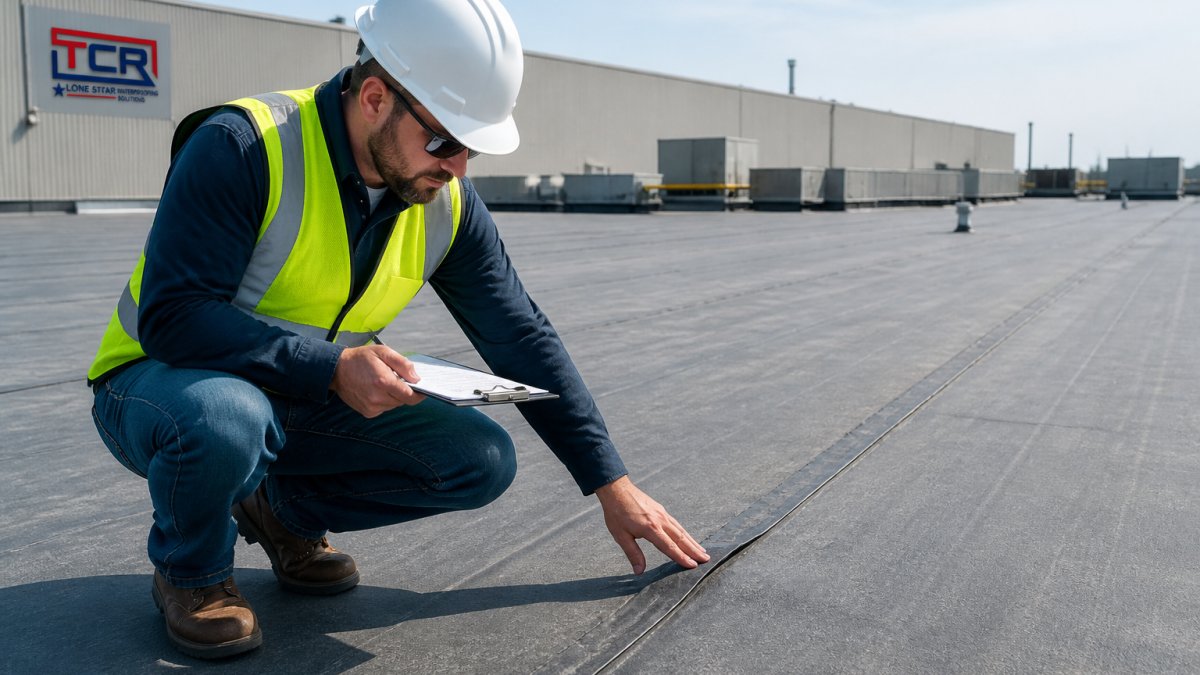
Start with the roof membrane itself. Look for blistering, cracking, shrinkage, or punctures. Blistering indicates moisture trapped under the membrane, it will eventually rupture.
Check fasteners and seams closely. Fasteners should sit flush, not protruding. Raised fasteners allow water to pool around them. Seams should be sealed and bonded, any separation is a potential leak site.
Inspect the roof edge and perimeter. The edge is where water often enters because it’s where the membrane ends and flashing begins. Look for gaps, lifted edges, or deteriorated flashing.
Drainage Systems, Gutters, and Standing Water
Standing water is the enemy of roof longevity. Even shallow pools accelerate membrane breakdown and create weight stress. Walk the entire roof surface and note areas where water collects. These are your drainage problem zones.
Check roof drains, gutters, and downspouts for debris. Leaves, dirt, and sediment clog systems and force water to back up. Clear debris manually or with low-pressure washing.
For flat roofs, look for sagging or low spots that weren’t there before. Substrate settling or structural issues can create new drainage problems. If standing water persists after clearing debris, the drainage system itself may need repair or redesign.
Flashing, Seams, and Roof Penetrations
Flashing is where roofs fail most often. Check flashing around HVAC units, exhaust pipes, skylights, and any other penetration. Flashing should overlap the membrane, not sit on top of it. Gaps or separation between flashing and the membrane are direct water entry points.
Seams between roof sections are stress points. They expand and contract with temperature changes, and they’re vulnerable to UV damage. Walk all seams and look for lifting, separation, or deterioration. Sealed seams should remain flexible, brittle or cracked sealant needs replacement.
Roof penetrations create weak points. Each penetration is a potential leak source. Document the number and location of all penetrations. Some facilities have dozens, each one requires monitoring.
Building a Preventive Roof Maintenance Plan
A preventive maintenance plan is the roadmap that keeps your industrial roof maintenance on track. It specifies what gets inspected when, who does the work, what gets documented, and how repairs are prioritized. Without a plan, inspections become sporadic and issues slip through.
Debris Removal and Surface Cleaning
Debris accelerates deterioration. Leaves, dirt, and sediment trap moisture against the membrane. Branches and twigs create puncture risks. Clear the roof surface at least twice yearly, once in spring and once in fall. After storms, clear debris immediately.
Use low-pressure washing or soft-bristle brooms. High-pressure washing can damage membranes and flashing. For metal roofing, avoid abrasive scrubbing that removes protective coatings. A gentle approach removes debris without creating new problems.
Drainage Maintenance and Gutter Care
Clear gutters and downspouts at least twice yearly. Clogged drainage is the single most common cause of roof failure. Debris accumulation happens fast, especially near trees. Some facilities need quarterly clearing.
Inspect drainage systems for corrosion, rust, or separation. Metal gutters corrode from the inside out, you won’t see the damage until water starts leaking. Replace corroded sections before they fail. Verify that all connections are tight and sealed.
Metal Roof Maintenance: System-Specific Care
Metal roofing systems require different maintenance than flat roofs or membrane systems. Metal expands and contracts significantly with temperature swings.
Check fasteners every spring and fall. Metal roofing fasteners back out as the metal expands and contracts. Loose fasteners allow water to pool and penetrate.
Inspect overlaps where panels connect. These are where water enters if seals fail. Sealant deteriorates faster on metal roofs due to UV exposure and temperature cycling. Plan to reseal overlaps periodically, depending on climate severity.
Monitor for corrosion, especially on fasteners and in valleys where water collects. Salt air, industrial pollution, and humidity accelerate corrosion. Protective coatings extend metal roof life significantly.
Prioritizing Repairs by Risk and Severity
Not all roof issues require immediate action, but some do. A prioritization framework prevents you from wasting resources on minor issues while critical problems accumulate.
Early Signs of Water Intrusion and Moisture Damage
Water intrusion is the most dangerous condition. It damages insulation, corrodes structural elements, and creates mold. Early detection is critical. Look for staining on ceiling tiles, peeling paint, or visible moisture on interior surfaces.
Interior moisture is a lagging indicator, the roof problem started weeks or months earlier. If you see interior damage, the roof issue is already advanced. This is why external inspection matters more than waiting for interior symptoms.
Moisture detection technology can help. Thermal imaging reveals moisture trapped in insulation before it causes visible damage. Moisture meters quantify the problem. These tools cost money upfront but prevent far larger costs by catching problems early.
When to Repair, Restore, or Replace
Small issues, isolated blisters, minor cracks, localized flashing problems, are repair candidates. These typically cost a few hundred to a few thousand dollars and extend roof life by 2-3 years.
Widespread issues affecting 25-50% of the roof surface suggest restoration. Restoration includes membrane coating, seam reinforcement, and systematic flashing replacement.
Full replacement is the right choice when the roof is near end of life and repairs would be ongoing. A roof that’s 20+ years old and showing multiple failure modes is a replacement candidate.
The decision depends on age, condition, and budget. A 15-year-old roof with isolated problems is worth restoring. A 25-year-old roof with systemic issues is a replacement candidate.
Documentation, Records, and Compliance
Documentation transforms inspections from a one-time snapshot into a historical record. Over time, records show whether conditions are stable, improving, or deteriorating.
Document every inspection with photographs, measurements, and written notes. Include the date, inspector name, weather conditions, and specific findings. Photograph problem areas from multiple angles.
Create a maintenance log that tracks all work performed. Record what was done, when, by whom, and at what cost. Over years, this log shows spending patterns and helps forecast future needs.
Keep records for the life of the roof. When you eventually replace the roof, these records demonstrate that you’ve been diligent about maintenance.
Safety Protocols for Roof Access and Work
Roof work is inherently hazardous. Falls, electrical hazards, and equipment injuries are real risks.
Require fall protection for anyone working on the roof. Harnesses, lanyards, and anchor points are non-negotiable.
Establish rules about roof access. Restrict access to trained personnel only.
Weather is a safety factor. Don’t allow roof work during high winds, rain, or electrical storms.
Coordinate with your insurance provider about roof work. Some policies require notification before contractors access the roof.
Industrial roof maintenance is an investment that pays dividends in extended service life, reduced emergency repairs, and operational continuity.
Total Cladding and Roofing LLC specializes in detailed building investigations and coordinated roof maintenance planning for industrial and commercial facilities.
Frequently Asked Questions
How often should an industrial roof be inspected?
Industrial roofs should be inspected at least twice per year, once in spring and once in fall, to catch seasonal damage early. Additional post-storm inspections are critical after severe weather, hail, or high winds. Properties in harsh climates or with aging roofs may benefit from quarterly inspections. A qualified roofing contractor can recommend the right frequency based on your roof’s age, condition, and exposure.
What should an industrial roof maintenance checklist include?
A comprehensive industrial roof inspection checklist must cover roof surface condition and membrane integrity, all flashing and seams, roof penetrations and equipment, drainage systems and gutters, standing water or pooling, debris accumulation, signs of leaks or moisture intrusion, and structural damage. Document findings with photos and notes. This checklist guides both routine maintenance and helps contractors prioritize repairs by severity and risk.
What is the best preventive roof maintenance plan for commercial properties?
An effective preventive roof maintenance plan includes scheduled inspections twice yearly, regular debris removal and surface cleaning, drainage system maintenance to prevent standing water, prompt repairs of minor damage before it spreads, detailed documentation of all work and findings, and a long-term lifecycle budget. Preventive maintenance extends roof service life, reduces costly emergency repairs, and protects your building envelope from water intrusion and structural damage.
What are OSHA guidelines for safety on roofs?
OSHA requires fall protection for workers on roofs more than 6 feet above ground level. This includes guardrail systems, safety harnesses, or warning lines depending on the roof configuration. Employers must provide proper training, inspect equipment regularly, and establish safe access routes. For industrial facilities, additional hazards like rooftop equipment, electrical lines, and weather exposure require site-specific safety planning. Always hire qualified, insured contractors who follow OSHA standards.
When should an industrial roof be repaired versus replaced?
Repair individual leaks, small membrane damage, and isolated flashing issues promptly to prevent water intrusion. Consider restoration when 25-30% of the roof shows damage or the system is nearing the end of its service life but still structurally sound. Full replacement is necessary when damage exceeds 50%, the roof has reached its design lifespan, structural integrity is compromised, or repair costs approach replacement costs. A professional inspection determines which approach makes economic and operational sense.
How can facility managers prevent leaks on an industrial roof?
Prevent leaks through regular inspections to catch early signs of damage, maintain clear drainage systems to avoid standing water, remove debris promptly, seal small cracks and gaps before they expand, inspect flashing and seams after severe weather, and address repairs quickly. Keep detailed maintenance records to track problem areas. A proactive maintenance plan catches issues before they cause interior water damage, equipment failure, or business disruption.
What roof maintenance records should a facility keep?
Maintain records of all inspections (dates, findings, photos), repairs completed (description, cost, contractor), maintenance performed (cleaning, drainage work), weather events that affected the roof, warranty information, and the roof’s installation date and expected service life. These records help track roof condition trends, support warranty claims, document compliance, justify budget requests, and provide valuable information to future contractors or owners. Digital records with photos are easiest to organize and reference.
To upload drawings, specs and plans please go to the form on our contact page.
Get in Touch