
Table of Contents
- What Insulated Metal Panel Contractors Do
- How to Vet and Compare Insulated Metal Panel Contractors
- Insulated Metal Panel Installation: Process and Timeline
- Insulated Metal Panel Cost: What Affects Your Estimate
- Insulated Metal Panel Maintenance and Lifecycle Management
- Insulated Panel Repair: When and How to Address Damage
- Code Compliance and Warranty Expectations
- Frequently Asked Questions
Last Updated: October 11, 2026
What Insulated Metal Panel Contractors Do
Insulated metal panel contractors specialize in the design, fabrication, and installation of insulated metal panels (IMPs) for commercial and industrial buildings. These specialists handle everything from initial site assessment through final installation, working with metal wall panels, roofing systems, and complete building envelope solutions.
The scope of work varies considerably. Some contractors focus exclusively on new construction, while others combine new installation with refurbishment and repair of existing systems. A full-service insulated metal panel contractor manages structural framing coordination, panel fabrication to specification, on-site erection, thermal insulation verification, and integration with drainage and cladding systems.
What separates experienced contractors from basic installers is their ability to assess your building’s actual performance needs. They evaluate thermal requirements, local climate conditions, building codes, and your operational constraints. Then they recommend the right panel materials, whether stainless steel, aluminum, galvanized metal, or composite materials, and design a system that delivers the performance your facility requires.
Most contractors also handle inspections and maintenance planning. They understand that insulated metal panels degrade over time, and they can identify problems before they become expensive failures. This preventative approach extends the service life of your building envelope and protects your operations from unexpected downtime.
How to Vet and Compare Insulated Metal Panel Contractors
Choosing the right contractor determines whether your project stays on schedule, meets performance targets, and delivers genuine value. The difference between a competent contractor and a struggling one often shows up months after installation, when thermal performance falls short or panels begin to fail.
Key credentials and experience to verify
Start with verifiable credentials. Ask whether the contractor holds current memberships in industry organizations like the Roofing Contractors Association of Texas (RCAT) or the Central Texas Roofing Contractors Association (CTRCA). These memberships signal commitment to professional standards and ongoing training.
Experience in your specific building type matters enormously. A contractor experienced in cold storage facilities may not excel at manufacturing plant installations. Ask directly: How many projects have you completed in my industry? Can you reference three similar facilities you’ve worked on? Insulated metal panel contractors who’ve handled industrial buildings, warehousing facilities, or manufacturing plants will understand the thermal and operational demands you face.
Ask about their fabrication capabilities. Do they fabricate panels in-house or source them from suppliers?
Verify their crew size and capacity. A contractor with five people cannot handle multiple simultaneous projects across your portfolio. If you manage several facilities, confirm they can deploy adequate crews to meet your timeline without compromising quality or creating months of staggered downtime.
Questions to ask before hiring
Move beyond credentials to operational questions that reveal how they actually work.
Ask about their inspection process. How do they assess your existing building envelope before proposing solutions? Contractors who conduct thorough building investigations, measuring thermal performance, identifying moisture issues, checking structural integrity, will deliver better recommendations than those who quote from photos or generic templates.
Request their approach to project sequencing and site coordination. How do they minimize disruption to your operations? Do they work around your production schedule, or do they expect you to accommodate theirs? A contractor experienced in refurbishment understands that your facility is still operating.
Ask about code compliance and warranty. What building codes do they follow? How do they verify compliance during installation? What warranty do they provide on labor and materials? Contractors who can’t clearly explain their code compliance process or who offer vague warranties are signaling that they may cut corners.
Request a detailed estimate breakdown. A vague quote for “insulated metal panel installation” tells you nothing. A professional estimate itemizes materials, labor, equipment, timeline, and any site-specific costs. This transparency lets you compare contractors fairly and understand what drives the final price.
Ask about their experience with your specific climate conditions. Texas facilities face intense heat, humidity swings, and occasional hail. A contractor with proven experience handling these conditions, not just theoretical knowledge, will design systems that actually perform in your environment.
Insulated Metal Panel Installation: Process and Timeline
The installation process for insulated metal panels follows a predictable sequence, though timing varies based on building size, panel complexity, and site conditions.
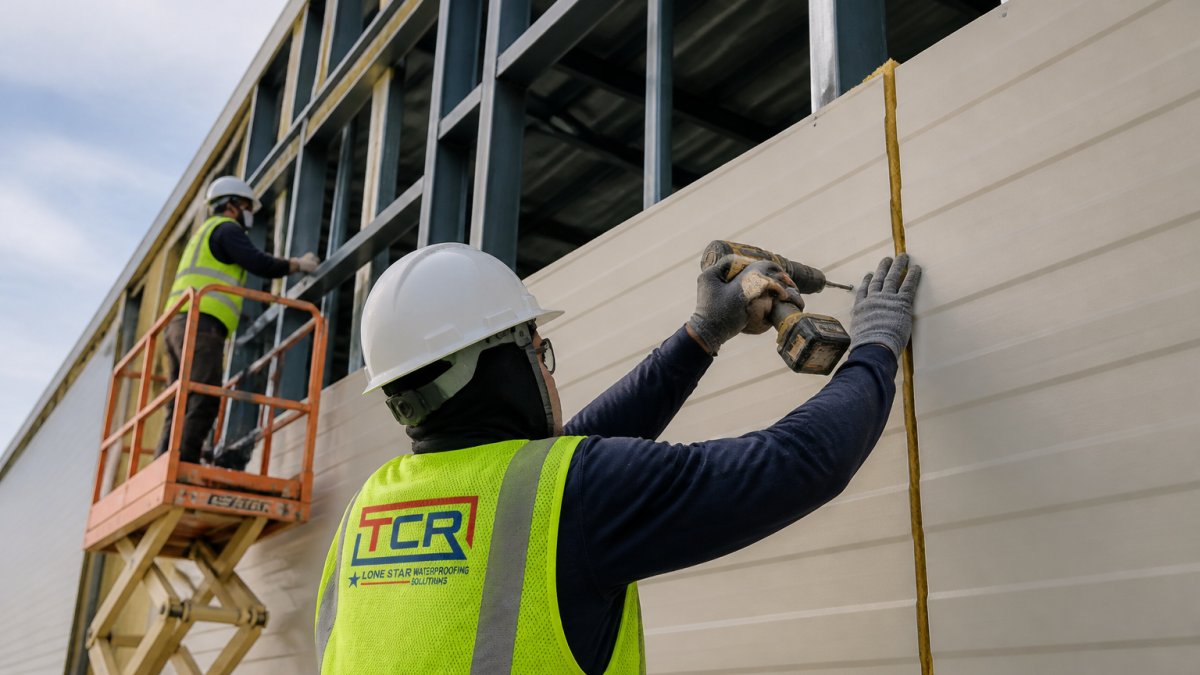
The first phase is structural preparation. Contractors verify that your building’s structural framing meets specifications and can support the panel load. They check alignment, install any necessary blocking or bracing, and confirm drainage paths are clear.
The second phase is panel staging and layout. Fabricated panels arrive on-site and are organized by location. Contractors verify panel dimensions, material specifications, and condition before installation begins. This quality check prevents costly errors once work starts.
Installation itself proceeds systematically. Crews attach the first panel to the structural frame, verify plumb and alignment, then progressively add adjacent panels.
The final phase involves inspection, testing, and punch-list work. Contractors verify thermal continuity, check all seals and fasteners, test drainage systems, and address any deficiencies. This phase is often overlooked by less experienced contractors but is critical for long-term performance.
Total project duration depends on building size. A 50,000-square-foot facility typically requires 6-12 weeks of active installation work. Weather delays, site access constraints, and design complexity can extend this timeline.
Insulated Metal Panel Cost: What Affects Your Estimate
Project cost depends on multiple variables, and understanding these factors helps you evaluate whether a quote is realistic or inflated.
Panel material choice is the primary cost driver. Stainless steel panels cost more than aluminum, which costs more than galvanized metal. The material you select depends on your environment, thermal requirements, and expected service life.
Building size and complexity affect labor and material quantities directly. A simple rectangular warehouse costs less per square foot than a facility with complex geometries, numerous penetrations, or architectural features.
Site conditions matter significantly. Difficult access, poor drainage, or existing structural problems increase labor time and material costs. A contractor who visits your site and documents conditions will provide a more accurate estimate than one quoting remotely.
Thermal performance specifications drive panel thickness and insulation requirements. Higher R-values require thicker panels and more expensive materials.
Installation timeline affects labor costs. A compressed schedule requiring larger crews or overtime work increases costs. Contractors who can work within your operational constraints often deliver better value than those who demand exclusive site access.
When comparing estimates from different insulated metal panel contractors, ensure they’re quoting identical specifications. Vague estimates that don’t specify materials, panel thickness, R-values, or labor scope are impossible to compare fairly. Request detailed breakdowns so you can evaluate value, not just price.
Insulated Metal Panel Maintenance and Lifecycle Management
Insulated metal panels don’t require constant attention, but planned maintenance extends their service life and prevents expensive failures.
Annual inspections should identify visible damage, seal degradation, or moisture infiltration. A contractor experienced in panel maintenance can spot early signs of problems, small cracks in sealant, fastener corrosion, or panel movement, before they compromise thermal performance or building integrity.
Sealant maintenance is critical. Sealant around panel joints and fasteners degrades over time due to UV exposure, thermal cycling, and weathering. Resealing every 5-10 years prevents moisture infiltration and maintains thermal continuity. This is far cheaper than replacing failed panels.
Drainage system inspection prevents water damage. Panel systems rely on proper drainage to shed water away from the building. Blocked or damaged drainage paths allow moisture to accumulate, leading to insulation degradation and structural corrosion. Contractors should verify drainage function during annual inspections.
Fastener inspection catches corrosion before it spreads. Corroded fasteners lose holding power and can allow panels to shift or separate. Early identification and replacement prevents catastrophic failures.
Coatings protect panel surfaces from weathering. Many panel systems benefit from periodic recoating to restore UV protection and maintain water shedding. The frequency depends on your climate and the original coating system.
Total Cladding and Roofing LLC approaches maintenance planning during the initial installation phase. We assess your facility’s specific conditions and recommend a maintenance schedule that prevents failures while minimizing costs.
Insulated Panel Repair: When and How to Address Damage
Damage to insulated metal panels can range from minor cosmetic issues to structural problems requiring immediate attention.
Small punctures or dents in the panel face can often be repaired without full panel replacement. Contractors can fill punctures with matching sealant, seal the opening to prevent moisture infiltration, and restore thermal continuity.
Damaged sealant around joints is the most common repair need. When sealant cracks or separates, water can penetrate the joint, compromising insulation and potentially causing structural corrosion. Contractors remove failed sealant, clean the joint, and reseal with compatible material.
Fastener failure requires immediate attention. If fasteners corrode, loosen, or fail, the panel can shift or separate, exposing the building interior. Contractors replace failed fasteners and verify that adjacent fasteners remain tight. This prevents progressive failure across the panel system.
Large punctures, significant dents, or structural damage to the panel substrate may require panel replacement. A contractor experienced in insulated metal panel repair can determine whether repair or replacement is more cost-effective. Sometimes a single damaged panel can be replaced without affecting adjacent panels.
Water damage inside the panel, indicated by moisture staining, soft spots, or visible degradation of insulation, usually requires panel replacement. Once water penetrates the insulation, drying it completely is difficult, and the panel’s thermal performance is compromised.
Contractors who specialize in refurbishment can often repair panels that others would automatically replace. This approach can save money and extend the service life of your building envelope.
Code Compliance and Warranty Expectations
Building codes establish minimum standards for insulated metal panel systems, and compliance is non-negotiable.
The International Building Code (IBC) governs most commercial construction in the United States. Panel systems must meet fire-rating requirements, wind-load specifications, and thermal performance standards.
Energy codes, which vary by state and sometimes by municipality, establish minimum insulation requirements. These codes aim to reduce building energy consumption. Your contractor should verify that your panel system meets current energy code requirements for your location.
Wind-load requirements depend on your geographic location and building height. Coastal areas and high-elevation locations face higher wind pressures. Contractors must design panel fastening and structural support to handle these loads.
Warranties vary significantly between contractors. A reputable contractor provides a written warranty covering materials and labor for a defined period, typically 5-10 years. The warranty should specify what is and isn’t covered.
Total Cladding and Roofing LLC conducts detailed building investigations to understand your site conditions and code requirements. We design systems that comply with all applicable codes and perform reliably in your specific climate.
Selecting the right insulated metal panel contractors requires evaluating credentials, understanding their process, and confirming they can handle your specific project scope. The best contractors combine technical expertise with practical experience managing complex installations while minimizing disruption to your operations.
Total Cladding and Roofing LLC brings extensive experience in both new insulated metal panel installation and refurbishment of existing systems.
Frequently Asked Questions
What does an insulated metal panel contractor do?
Insulated metal panel contractors design, fabricate, and install wall and roofing systems that combine structural metal with thermal insulation. They handle new construction, retrofits, and repairs on commercial and industrial buildings. Services include site assessment, panel specification, installation, sealing, and ongoing maintenance to ensure the building envelope performs as designed and meets energy and safety codes.
How do I choose an insulated metal panel contractor?
Verify credentials through industry associations, check references from similar-sized projects in your region, and review their experience with your building type. Request detailed bids that specify panel materials, R-value, installation sequence, timeline, and warranty. Ask about their quality control process, code compliance knowledge, and capacity to handle multiple sites if needed. Compare their approach to building assessment and problem-solving, not just price.
What factors affect insulated metal panel installation cost?
Cost depends on total square footage, panel type and insulation thickness, existing surface condition, site access and complexity, labor availability, project timeline, and regional material prices. Retrofit projects often cost more than new construction due to removal and surface preparation. Pricing also reflects contractor expertise, warranty terms, and whether work includes integrated drainage or thermal upgrades. Request itemized quotes to compare what’s included.
How should I maintain insulated metal panels?
Schedule annual inspections to check fasteners, seals, and caulking for deterioration. Clean panels as needed to prevent corrosion, especially in humid climates. Address any gaps, cracks, or water intrusion immediately to prevent insulation damage and structural issues. Keep drainage channels clear and verify that thermal performance hasn’t degraded. A contractor experienced in refurbishment can assess whether panels can be restored or need replacement.
To upload drawings, specs and plans please go to the form on our contact page.
Get in Touch