
Table of Contents
- Why Regular Industrial Roof Inspections Matter
- Commercial Roof Inspection Frequency: How Often Should You Schedule Them
- Industrial Roof Repair Signs: What to Look For During Inspections
- Building an Industrial Roof Inspection Checklist
- Developing a Preventative Roof Maintenance Plan
- Early Detection Prevents Costly Repairs and Extends Roof Lifespan
- Documentation, Compliance, and Building Protection
- Frequently Asked Questions
Last Updated: October 18, 2026
Why Regular Industrial Roof Inspections Matter
Industrial roofs protect enormous investments, yet many facility managers treat inspections as optional until something breaks. A single leak can halt production, damage inventory, and create safety hazards.
Regularly inspected buildings catch problems early, while those that skip inspections face emergency shutdowns, spreading water damage, and replacement costs that dwarf preventive maintenance.
Why industrial facilities need regular roof inspections is straightforward: your roof is the primary barrier between operations and weather. Understanding why industrial facilities need regular roof inspections starts with recognizing that industrial roofs endure temperature swings, UV exposure, standing water, and thermal stress.
The real value of routine inspection is early detection. Small membrane tears become large leaks; minor seam separation becomes structural water intrusion. Catching these during a scheduled inspection costs a fraction of emergency repairs and prevents the chaos of unexpected downtime.
Most industrial facilities schedule inspections only after visible damage appears. By then, water has already penetrated the building envelope and begun damaging insulation, electrical systems, and structural components.
Commercial Roof Inspection Frequency: How Often Should You Schedule Them
How often you inspect depends on roof age, condition, and weather exposure, but clear guidelines exist.
New roofs (under 5 years) should be inspected at least annually. Roofs in middle service life (5-15 years) benefit from twice-yearly inspections: one in spring after winter and one in fall before cold months.
Climate matters. A warehouse in a hail-prone region should schedule inspections after every significant storm, not just seasonally. Flat roofs need inspection after heavy rain; metal roofs expand and contract with temperature swings, stressing seams and fasteners.
Operational factors also drive frequency. A 24/7 manufacturing facility puts more thermal stress on the roof than a seasonal warehouse.
The practical approach: establish a baseline schedule (twice yearly for most industrial facilities), then adjust based on findings. Minor wear may allow longer intervals; active problems demand increased frequency.
Skipping inspections because “the roof looks fine” is a common mistake. Roof damage often starts internally or in areas not visible from the ground. A small membrane tear under a vent or at a seam won’t show from below. By the time water stains appear on your ceiling, the damage has already spread through the building envelope. This is why professional inspections matter, inspectors access the roof surface and examine areas where problems hide.
Industrial Roof Repair Signs: What to Look For During Inspections
Knowing what to look for turns facility managers into early-warning systems.
Interior signs visible from inside the building:
Exterior signs visible from ground level or during a roof walk:
Visible rust on metal roofing, fasteners, or flashing means the protective coating has failed; rust spreads quickly in humid conditions and weakens metal.
Roof membrane and seam damage:
Cracks, splits, or tears in the membrane are obvious but easy to miss without careful looking.
Drainage system problems:
Standing water on flat roofs after rain indicates blocked drains or inadequate slope. Pooling around penetrations or in low spots accelerates deterioration.
Flashing and penetration failures:
Flashing around vents, skylights, HVAC units, or other penetrations should be sealed tightly. Gaps, rust, or visible separation mean water can enter directly.
The key insight: small visual clues indicate larger problems beneath the surface.
Building an Industrial Roof Inspection Checklist
A structured checklist ensures inspections are thorough and consistent. Without one, inspectors miss areas or focus on obvious problems while overlooking subtle failures.
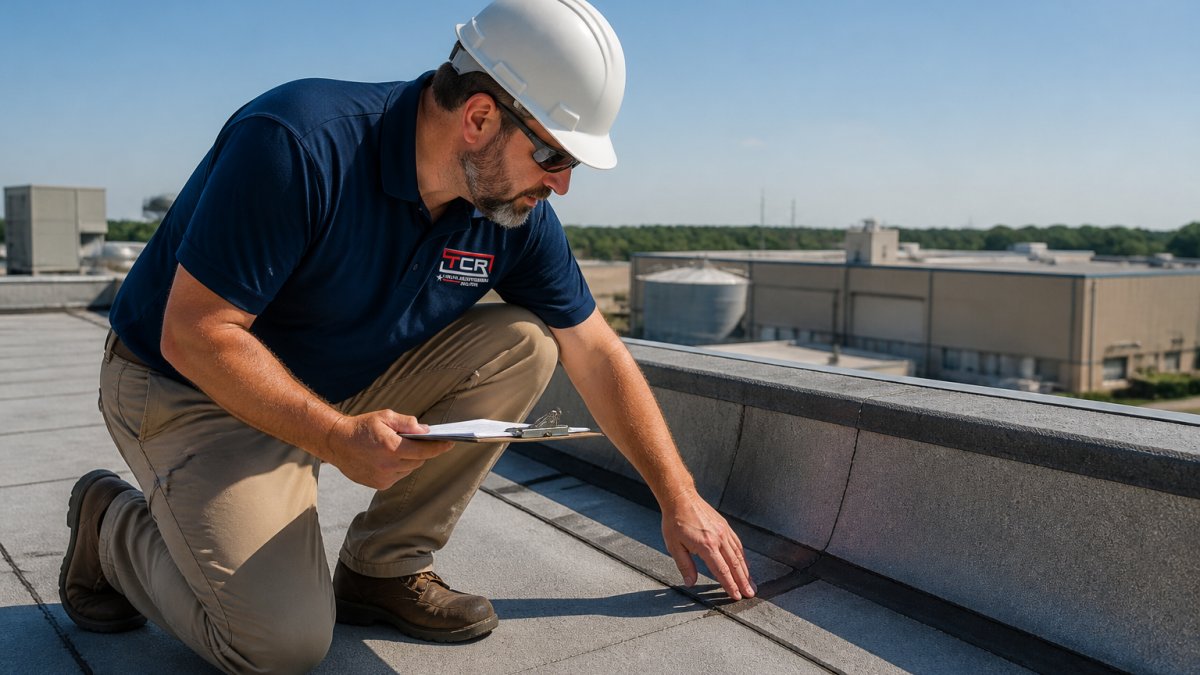
A basic industrial roof inspection checklist should include these elements:
Before climbing on the roof:
- Check weather forecast, never inspect during rain, high winds, or lightning risk
- Verify roof access is safe and all safety equipment is in place
- Photograph the roof from ground level to document baseline condition
- Review maintenance records from previous inspections
Roof membrane assessment:
- Walk the entire roof surface systematically
- Check for visible tears, cracks, splits, or punctures in the membrane
- Look for blisters, bubbles, or raised areas indicating trapped moisture
- Examine seams for separation, peeling, or visible deterioration
- Check for areas where membrane is lifting or not adhering to substrate
- Document all damage with photos and measurements
Metal components and fasteners:
- Inspect visible fasteners for rust, corrosion, or looseness
- Check metal flashing for rust, gaps, or separation
- Examine metal roof panels for dents, creases, or deformation
- Look for areas where fasteners are missing or visibly corroded
Roof penetrations and flashing:
- Inspect sealant around all vents, skylights, and HVAC penetrations
- Check for cracks, gaps, or missing sealant
- Look for rust or deterioration around penetration bases
- Verify flashing is intact and properly sealed
Drainage systems:
- Check all gutters and downspouts for debris, rust, or deterioration
- Look for standing water on flat roofs or in low spots
- Verify drain openings are clear and not blocked
- Check for water pooling around roof penetrations
Documentation:
- Photograph all problem areas with clear identifying markers
- Measure damage extent (tear length, affected area size)
- Note weather conditions and roof temperature during inspection
- Record time spent on roof and inspector name/credentials
Roof Membrane and Seams
The roof membrane is your primary weather barrier: single-ply (TPO, EPDM, or PVC), modified bitumen, or built-up on flat roofs; metal panels or shingles on sloped roofs. Seams are the critical failure points because they join two membrane sections.
Seam failures account for a large percentage of industrial roof leaks. Seams face constant thermal stress as the roof expands and contracts, UV exposure degrades sealants, and water seeks the membrane’s lowest-strength areas. A separating seam might not leak immediately, but it will within weeks or months.
During inspection, examine every visible seam closely. Heat-welded single-ply seams should be smooth and uniform; raised areas, separation, or gaps mean the weld failed. Adhesive or tape seams should show no peeling, gaps, or deterioration.
Flashing and Roof Penetrations
Flashing is the metal trim that directs water away from roof penetrations and edges. Vents, skylights, HVAC units, antennas, and other equipment piercing the membrane need flashing to prevent water entry. Flashing failures are common because they’re transition points where different materials meet and thermal movement creates stress.
Inspect the sealant around every penetration; it cracks and deteriorates over time, especially in direct sunlight, and once it fails, water flows directly into the building. Check that upper flashing overlaps lower flashing so water runs off rather than behind. Rust on metal flashing indicates corrosion has compromised the material.
Roof edges also need flashing. Edge flashing directs water off the roof rather than allowing it to run down exterior walls. Damaged or missing edge flashing allows water to saturate wall insulation and damage the building envelope.
Drainage Systems and Standing Water
Standing water is an industrial roof’s enemy. Pooled water sits in contact with the membrane, accelerating deterioration and adding weight to the structure. Over time it can cause the roof to sag, creating more low spots where water collects.
Drainage systems must be clear and functioning. Gutters, downspouts, and drain openings should be free of debris and unobstructed. On flat roofs with internal drains, verify water flows freely. After heavy rain, walk the roof and check for pooling; water remaining after rain has stopped signals a drainage problem.
Standing water also indicates slope issues. Flat roofs should have minimal slope toward drains to prevent pooling. If a roof is truly flat with no slope, water will pool. This is why proper roof design includes slope, typically at least 1/8 inch per foot toward drains.
Developing a Preventative Roof Maintenance Plan
Inspection is the first step. A preventative maintenance plan uses inspection findings to guide ongoing care. Without a plan, inspections identify problems but nothing changes until something fails.
A preventative maintenance plan should specify:
Inspection schedule: How often and when inspections occur. Most industrial facilities benefit from spring and fall inspections, plus post-storm inspections after severe weather.
Maintenance tasks: Specific work that extends roof life between inspections.
Repair priorities: How to prioritize repairs identified during inspections. Urgent repairs (active leaks, major seam separation) should be scheduled immediately.
Seasonal preparations: Tasks that prepare the roof for upcoming seasons. Before winter, ensure drains are clear and gutters are clean so melting snow drains properly.
Documentation and tracking: Maintaining records of all inspections, maintenance work, and repairs. This documentation proves you’ve maintained the roof properly, supports warranty claims, and helps predict when replacement might be necessary.
We help facility managers develop maintenance plans tailored to their specific roof systems and operational needs.
A preventative maintenance plan costs far less than reactive repairs. Facilities that follow structured maintenance plans typically extend roof service life by 5-10 years and avoid emergency shutdowns from unexpected roof failures. The investment in planning pays for itself through avoided downtime alone.
Early Detection Prevents Costly Repairs and Extends Roof Lifespan
This is where regular inspections deliver measurable value. Early detection prevents expensive cascading failures.
A small membrane tear discovered during inspection costs a few hundred dollars to repair. That same tear left undetected grows into a major leak that saturates insulation, damages electrical systems, and forces facility shutdown.
Water intrusion damages more than the roof. It penetrates insulation, reducing R-value and raising heating and cooling costs.
Roof lifespan depends heavily on maintenance. A properly maintained metal roof can last 40-50 years; neglected, it might fail at 15-20.
Early detection also means you can plan replacements strategically rather than facing emergency replacement. If inspection reveals your roof has 5-7 years of remaining life, you can budget for replacement and plan the project around your operational needs.
Documentation, Compliance, and Building Protection
Professional roof inspections create documentation that protects your facility and supports your business decisions.
Inspection reports document the roof’s condition at a specific point in time, creating a baseline.
Documentation supports warranty claims. Most roofing warranties require regular maintenance and inspections.
Records also protect you legally.
Building envelope integrity affects energy efficiency and environmental compliance. A leaking roof compromises insulation and increases heating and cooling costs.
For facility managers overseeing multiple properties, inspection documentation helps prioritize capital spending.
Regular roof inspections are not optional maintenance, they’re essential protection for your facility, your operations, and your bottom line. Early detection prevents costly failures.
At Total Cladding and Roofing LLC, we conduct thorough industrial roof inspections that identify problems before they become emergencies.
Frequently Asked Questions
How often should an industrial roof be inspected?
Most industrial facilities should schedule roof inspections twice per year, typically in spring and fall, to catch seasonal damage and weather-related wear. Facilities in high-exposure locations, those with older roofing systems, or properties that have experienced previous leaks should inspect quarterly or after severe weather events. Your specific frequency depends on roof condition, climate exposure, and maintenance history. A professional inspection helps determine the right schedule for your building.
What should an industrial roof inspection checklist include?
A comprehensive industrial roof inspection checklist should cover roof membrane condition and seams, flashing and penetrations, drainage systems and standing water, signs of leaks or water intrusion, storm and wind damage, structural integrity, and interior evidence of damage like ceiling stains or sagging. Documentation of findings, repair recommendations, and photos create a maintenance record that protects warranty coverage and informs future repair decisions. This systematic approach ensures nothing is missed and provides a baseline for tracking roof performance over time.
What are the signs that an industrial roof needs repair?
Common industrial roof repair signs include visible leaks or water stains on ceilings, sagging or soft spots on the roof surface, peeling paint or interior deterioration, standing water that does not drain properly, cracks or blistering in the roof membrane, damaged or missing flashing around penetrations, and debris accumulation. Storm damage, wind damage, and weather exposure accelerate these issues. Early detection of minor issues through regular inspections prevents them from becoming structural damage or costly replacements.
Can regular roof inspections actually prevent leaks and costly repairs?
Yes. Regular inspections catch minor issues like small membrane cracks, worn seams, or clogged drains before they allow water intrusion and interior damage. Addressing these early costs significantly less than repairing water damage, replacing structural components, or replacing the entire roof system. Professional inspections also document roof condition and maintenance, which protects manufacturer warranty coverage and extends the service life of your roofing system by years.
To upload drawings, specs and plans please go to the form on our contact page.
Get in Touch