Last Updated: October 22, 2026
Quick Summary
Aluminum metal roofing is the preferred choice for commercial and industrial properties in McKinney because it resists corrosion from humidity and salt-laden air, absorbs hail impact without cracking, and typically lasts 40-50 years with minimal maintenance. Unlike steel, aluminum forms a naturally protective oxide layer that regenerates continuously, eliminating the need for regular repainting.
- Aluminum metal roofing lasts 40-50 years with minimal intervention, translating to lower lifecycle costs than materials requiring replacement every 15-20 years.
- Steel costs 15-20% less initially but requires repainting every 10-15 years; aluminum typically costs less over a 40-year lifecycle despite higher upfront investment.
- Standing-seam metal roofing eliminates exposed fasteners by sealing vertical seams mechanically, making it the dominant design for commercial installations.
- Maintenance should occur twice yearly in spring and fall, including inspections of seams, flashing, gutters, and underlayment to catch issues before they become expensive repairs.
- Proper drainage system sizing and coordination between roof, wall cladding, insulation, and ventilation are critical to prevent leaks and performance failures.
Table of Contents
- Why Aluminum Metal Roofing Works in McKinney’s Climate
- Aluminum vs Steel Roofing: Benefits and Performance Differences
- Standing-Seam Metal Roofing Installation for Commercial Properties
- Commercial Metal Roofing Cost Per Square Foot: What Drives Pricing
- Commercial Roof Maintenance Checklist for Aluminum Systems
- Roof Replacement vs. Refurbishment: Extending Service Life
- Coordinating Aluminum Roofing with Cladding and Drainage Systems
- Frequently Asked Questions
Why Aluminum Metal Roofing Works in McKinney’s Climate
Aluminum metal roofing has become the preferred choice for commercial and industrial properties in this region, and the climate demands it. The combination of intense summer heat, severe hail storms, high humidity, and rapid temperature swings creates an environment where material durability isn’t optional, it’s essential.
Aluminum’s natural corrosion resistance handles the humidity and salt-laden air that accelerates deterioration in steel systems. The metal doesn’t rust, doesn’t require constant repainting, and maintains structural integrity through freeze-thaw cycles that crack concrete and split wood. When hail strikes, and it will, aluminum’s malleability absorbs impact without cracking or splitting like brittle materials do. The reflective surface also reduces cooling loads during peak summer months, a measurable benefit when you’re managing energy costs across multiple facilities.
The real advantage emerges over time. A metal roofing system properly installed with quality underlayment and drainage coordination typically lasts 40-50 years with minimal intervention. That lifespan translates directly to lower lifecycle costs compared to materials requiring replacement every 15-20 years.
Aluminum vs Steel Roofing: Benefits and Performance Differences
Aluminum and steel both deliver metal roofing performance, but they behave very differently under regional conditions. Steel is stronger and less expensive upfront, which explains why some contractors default to it. But strength alone doesn’t guarantee durability in this climate.
Steel requires protective coatings, typically a Galvalume or Galvanized finish, to prevent rust. These coatings degrade over time, especially under intense UV exposure and humidity. Once the coating fails, rust develops rapidly. Aluminum, by contrast, forms a naturally protective oxide layer that regenerates continuously. It doesn’t need coatings to survive, though many aluminum systems include them for added protection and aesthetic options.
Cost comparison reveals the trade-off clearly. Steel costs less initially, sometimes 15-20% less per installed square foot. But maintenance costs accumulate. Repainting steel roofs every 10-15 years, addressing rust spots, and managing coating failures adds expense that aluminum systems avoid entirely. Over a 40-year lifecycle, aluminum typically costs less despite higher initial investment.
Corrosion resistance in this specific region favors aluminum decisively. The humidity and temperature fluctuations that characterize the climate accelerate steel’s deterioration.
Aluminum’s lighter weight also matters for structural planning. Steel is heavier, requiring more strong structural support. Aluminum reduces dead load, which can lower building costs and simplifies retrofits on existing structures with limited load capacity.
Standing-Seam Metal Roofing Installation for Commercial Properties
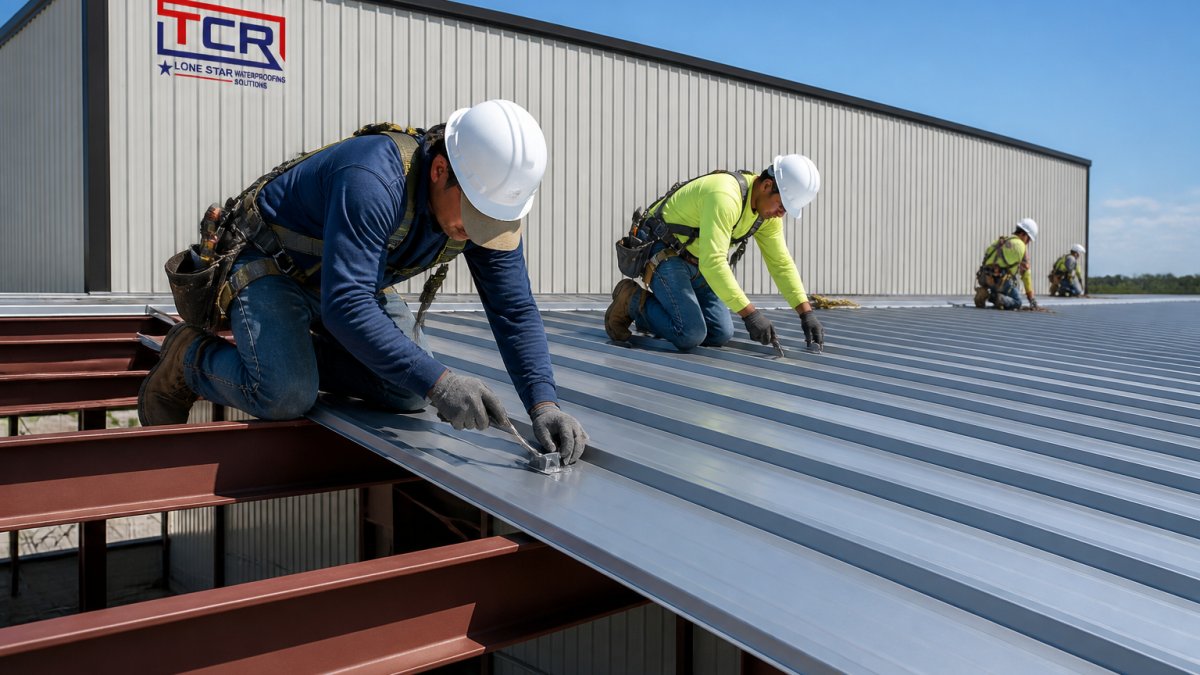
Standing-seam metal roofing dominates commercial installations because the design eliminates exposed fasteners, the primary leak points in traditional metal roofing. The system uses vertical seams that run the full length of the roof, with fasteners hidden at the base of each panel and sealed mechanically.
Installation requires precision. Panels must be measured, cut, and formed to exact dimensions. Seams are either mechanically seamed (using a specialized tool that compresses the seam) or, for premium systems, hand-seamed for custom configurations. The process depends on size and complexity. Weather delays can extend timelines, so scheduling during dry months reduces risk.
Proper drainage coordination is critical. Standing-seam systems direct water laterally along the roof surface before flowing to gutters. If gutters are undersized or drainage is obstructed, water pools and eventually finds gaps. We specify drainage systems during the design phase, not as an afterthought, ensuring water moves off the roof efficiently.
Underlayment selection affects system performance significantly. A quality synthetic or felt underlayment provides a secondary moisture barrier, protects against condensation, and accommodates thermal expansion. Cheap underlayment can fail within years, negating the benefits of the metal panels above.
Flashing details, where the roof meets walls, penetrations, and transitions, determine whether a system leaks or performs flawlessly. Standing-seam roofs require custom flashing fabricated to match the panel profile. Standard flashing doesn’t work; it must be integrated into the seam system. This is where experience matters.
Commercial Metal Roofing Cost Per Square Foot: What Drives Pricing
Material costs for aluminum metal roofing panels typically range based on specification, but we don’t quote exact figures without a site assessment, too many variables affect final pricing. What we can explain is what drives the costs you’ll encounter.
Panel thickness matters substantially. Thicker aluminum (typically 0.040″ to 0.050″) costs more but resists denting and provides superior structural performance. Thinner panels save money initially but may require more frequent maintenance and show impact damage more readily.
Finish options, bare aluminum, anodized, or painted, affect both cost and performance. Anodized finishes add expense but provide superior corrosion resistance and aesthetic options.
Seam type influences pricing. Mechanical seaming is less expensive than hand-seaming, but hand-seamed systems allow custom configurations and tighter tolerances. Commercial projects often justify the premium for hand-seaming because the precision reduces future maintenance.
Labor costs dominate total project expense. Skilled installation teams command higher rates because the work demands precision. A poorly installed metal roof will leak; a well-installed one performs for decades.
Complexity multiplies costs. A simple rectangular roof costs less per square foot than one with multiple penetrations, transitions, changes in slope, or integration with cladding systems.
Regional factors affect pricing too. Material availability, contractor density, and local labor rates create variation. Projects in areas with fewer experienced metal roofing contractors typically cost more because competition is limited.
Commercial Roof Maintenance Checklist for Aluminum Systems
Aluminum roofs demand less maintenance than traditional systems, but neglect still causes problems. A structured maintenance program, typically twice yearly, in spring and fall, catches issues before they become expensive repairs.
Inspection routine:
- Walk the entire roof surface, looking for standing water, debris accumulation, or visible damage
- Check all seams for separation or gaps
- Examine flashing around penetrations, walls, and transitions for gaps or corrosion
- Clear gutters and downspouts of leaves and debris
- Inspect underlayment in attic spaces for moisture or mold growth
- Document findings with photos and notes
Common issues to address:
- Debris accumulation traps moisture and accelerates corrosion; clear it promptly
- Vegetation growth in gutters prevents drainage; remove it
- Sealant around penetrations degrades over time; re-seal when cracks appear
- Fasteners in older systems can loosen; tighten as needed
- Flashing can separate from the roof plane; reseal or replace when gaps form
When to call a specialist:
- Visible seam separation or gaps exceeding 1/8″
- Water staining on interior ceilings or walls
- Rust development (rare in aluminum but possible at fasteners or in crevices)
- Damage from storms or impact
- Planned major work involving roof-mounted equipment
Total Cladding and Roofing LLC approaches maintenance as part of lifecycle planning. Regular inspections identify small problems, a failing seal, a separated flashing, before they become leaks that damage insulation, structural members, or building contents.
Documentation matters too. Maintain records of all inspections, maintenance, and repairs. This history demonstrates due diligence, supports warranty claims, and provides data for planning future work.
Roof Replacement vs. Refurbishment: Extending Service Life
The decision between replacing a roof and refurbishing it often comes down to economics, but it’s not always straightforward. A roof that’s failing doesn’t automatically need complete replacement. Sometimes a targeted refurbishment extends service life at a fraction of replacement cost.
Refurbishment works when the structural system is sound but the surface has deteriorated. If the underlying metal panels, purlins, and connections are intact, a new overlay system can extend life 15-20 years.
Replacement is necessary when structural damage is extensive: rusted-through panels, failed fastening systems, or compromised decking. A structural assessment determines which category applies. We inspect from above and below, examining the framing, fasteners, and underlayment to make an informed recommendation.
Cost comparison shows the timeline is shorter and disruption is lower. Refurbishment can often proceed during normal business operations; replacement requires temporary relocation or extended downtime.
The refurbishment approach we’ve developed from UK experience differs from standard practice. Rather than simply overlaying a new system, we assess the entire building envelope, roof, insulation, drainage, and wall systems. A leaking roof often reflects drainage failures or insulation gaps, not just surface deterioration.
Refurbished systems should perform as reliably as new installations. That requires proper diagnosis, quality materials, expert installation, and drainage coordination. Cut corners on any of these, and the refurbished system fails prematurely.
Coordinating Aluminum Roofing with Cladding and Drainage Systems
A roof doesn’t exist in isolation. It connects to walls, transitions to mechanical systems, and integrates with drainage infrastructure. Poor coordination between these systems creates leaks, performance failures, and expensive callbacks.
The most common failure point is the transition between roof and wall cladding. If the roof flashing and wall panels don’t align properly, water finds gaps and penetrates the building envelope. We design these transitions during the planning phase, not during installation.
Drainage system sizing affects roof performance directly. Proper drainage design accounts for the roof area, regional rainfall intensity, and the slope and configuration of the roof surface (Design of Roof Drainage Systems).
Insulation coordination matters too. If insulation is installed above the roof deck without proper ventilation, condensation builds up and degrades the system. If insulation is below the deck but poorly sealed, air leakage reduces efficiency and can cause moisture problems.
Thermal bridging, where metal fasteners or structural elements conduct heat through the insulation, reduces efficiency. Proper design minimizes these paths through careful material selection and installation technique.
When refurbishing existing buildings, these coordination challenges multiply. The existing roof, walls, insulation, and drainage may not be optimally designed. A refurbishment project is an opportunity to improve the entire envelope.
Aluminum metal roofing performs exceptionally in this region’s demanding climate, but performance depends on proper specification, expert installation, and integrated planning across the entire building envelope.
Frequently Asked Questions
What are the benefits of aluminum metal roofing for commercial buildings?
Aluminum metal roofing offers corrosion resistance, lightweight construction that reduces structural load, excellent weather resistance against hail and wind, and a long service life of 40+ years with minimal maintenance. It reflects solar heat, improving energy efficiency in hot climates. Aluminum systems are fully recyclable, supporting sustainability goals. For commercial properties, the combination of durability, low maintenance, and extended service life reduces lifecycle costs compared to conventional roofing materials.
How does aluminum metal roofing perform in severe weather conditions?
Aluminum metal roofing is engineered to withstand severe weather. Standing-seam systems resist high winds through continuous seaming and mechanical fastening. The material itself resists hail impact better than many alternatives, and impact-rated aluminum panels meet stringent wind and impact standards. In hail-prone regions, aluminum’s flexibility prevents cracking. Proper installation with sealed seams prevents water infiltration during heavy rain or ice buildup. Local wind and hail codes in Texas determine specific panel ratings and installation requirements for your facility.
Is aluminum roofing more cost-effective than steel for commercial roofs?
Aluminum typically costs more upfront than steel but offers better long-term value. Aluminum resists corrosion without coatings, whereas steel requires protective coatings and maintenance to prevent rust. Aluminum’s lighter weight may reduce structural reinforcement costs. Over a 40+ year service life, aluminum’s minimal maintenance and extended durability often result in lower total cost of ownership. Pricing depends on panel type, installation complexity, and local labor rates. Request a detailed quote comparing lifecycle costs, not just material price, to evaluate true cost-effectiveness for your project.
What maintenance does an aluminum metal roofing system require?
Aluminum metal roofing requires less maintenance than traditional roofing. Annual inspections should check for debris, ensure seams remain sealed, and verify that drainage systems function properly. Gutters and downspouts need periodic cleaning. Unlike steel, aluminum does not rust and typically does not need coating reapplication. In corrosive environments or near coastal areas, occasional rinsing removes salt deposits. A documented maintenance checklist, covering inspections, fastener checks, sealant integrity, and drainage clearance, helps identify small issues before they become costly repairs, extending the roof’s service life significantly.

To upload drawings, specs and plans please go to the form on our contact page.
Get in Touch