
Table of Contents
- What Commercial Roof Drainage Systems Do and Why They Fail
- Signs of Roof Drainage Failure to Watch For
- Types of Commercial Roof Drains and Their Components
- How to Inspect and Diagnose Drainage Problems
- Step-by-Step Repair Protocol for Commercial Roof Drainage
- Commercial Roof Maintenance Checklist for Long-Term Performance
- Understanding Commercial Roof Drain Cleaning Cost and Repair Economics
- Emergency Repair Protocols and When to Call a Professional
- Frequently Asked Questions
Last Updated: September 28, 2026
What Commercial Roof Drainage Systems Do and Why They Fail
A commercial roof drainage system repair prevents standing water from pooling on your roof, which adds weight, causes leaks, and shortens your roof’s life.
Most drainage problems are preventable with the right approach.
How drainage systems protect your building
Your roof drainage system channels water away from the roof surface through internal pipes or external scuppers, keeping water moving instead of pooling.
Standing water damages the roof membrane, creates hydrostatic pressure, and eventually leaks inside, damaging insulation, corroding structural steel, and ruining interior finishes.
Common reasons for drainage failure
Debris clogging is the number one culprit, leaves, dirt, and sediment block drain baskets and dome strainers, causing water to back up and pool.
Poor maintenance comes second; infrequent inspections allow minor clogs to become major blockages.
Design problems rank third, older buildings often have undersized drainage systems that can’t handle heavy rain runoff.
Installation defects also cause failures: improperly sealed flashing, incorrectly graded pipes, or scuppers installed at the wrong height.
Signs of Roof Drainage Failure to Watch For
Visible standing water on your roof after rain is the clearest warning sign, if water pools for more than 48 hours, your drainage system isn’t working.
Other indicators include sagging roof surface, interior water stains, rust around drains, membrane cracks, visible debris in strainers, mold smell, and exterior water damage.
Catch drainage issues during routine inspections before they become emergencies, interior water stains indicate weeks of prior damage.
Types of Commercial Roof Drains and Their Components
Most commercial roofs use internal drainage pipes or external scuppers.
Internal drainage pipes and scupper drains
Internal drainage systems use hidden pipes that channel water from roof drains to the ground or storm sewer.
Advantage: hidden appearance. Disadvantage: failures trap water inside where damage isn’t immediately visible.
Scupper drains are external openings in the roof edge that let water spill down the building’s exterior, failures are immediately visible.
On flat roofs, scuppers are backup systems; internal drains handle most runoff.
Dome strainers, drain baskets, and flashing
Dome strainers catch debris on top of drain openings; when clogged, water backs up. Drain baskets catch debris inside the opening before it enters the pipe. Flashing seals the drain to the roof membrane; improper sealing causes leaks around the drain.
All three components need regular inspection. One clogged strainer or loose piece of flashing can trigger a drainage failure.
How to Inspect and Diagnose Drainage Problems
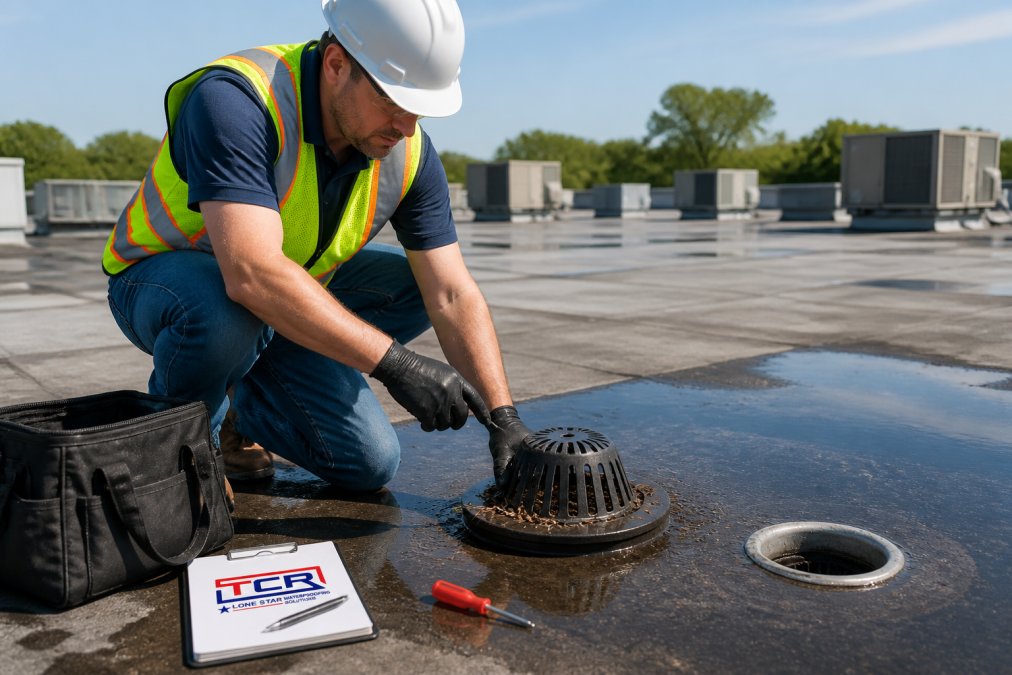
Start with a visual inspection after rain. Walk your roof and look for pooling water. Mark any areas where water sits for more than a few hours. These are your problem zones.
What to look for during a roof inspection
Check every drain opening. Remove the dome strainer or drain basket and look inside. You’ll usually find a layer of sediment, leaves, or dirt. This buildup restricts water flow.
Examine the flashing around each drain. Look for cracks, gaps, or areas where the sealant has pulled away from the roof membrane. Run your finger along the seal, if it’s hard and brittle, it’s failed.
Inspect the roof membrane itself around drainage areas. Water damage often shows up as discoloration, soft spots, or visible cracks. These indicate that water has been pooling or leaking.
Check downspouts and gutters if your system has external scuppers. Make sure they’re clear and water flows freely. A blocked downspout backs up water onto the roof just as effectively as a clogged internal drain.
Testing for water infiltration and hydrostatic pressure
Visual inspection catches obvious problems. Testing reveals hidden ones.
For water infiltration, pour water into a drain opening and watch how fast it flows. It should disappear immediately. If water backs up around the drain, your internal pipes are restricted or blocked.
Hydrostatic pressure testing is more technical. This involves sealing a section of roof and monitoring whether water pressure builds up underneath. High hydrostatic pressure indicates that water is trapped and pushing against your roof membrane. Over time, this pressure forces water through tiny cracks.
If you suspect hydrostatic pressure problems, call a professional. This test requires specialized equipment and interpretation.
Step-by-Step Repair Protocol for Commercial Roof Drainage
A systematic approach prevents mistakes and ensures your drainage system works properly. Follow these steps in order.
Step 1: Clear debris and perform drain cleaning
Remove all visible debris from drain baskets, dome strainers, and gutters. Use a wet/dry vacuum to pull out sediment from inside drain openings. Don’t force anything, if debris won’t come out easily, the blockage is deeper in the pipe.
For deeper clogs, use a drain snake or call a plumbing contractor. They have equipment to clear blockages inside the pipes without damaging the system.
After clearing, flush the drain with water.
Step 2: Inspect internal pipes and test drainage capacity
Once the drain is clear, inspect the inside of the pipe using a camera (CCTV inspection). This shows you whether the pipe has cracks, corrosion, or sagging sections that restrict flow.
Step 3: Repair or replace damaged components
Replace dome strainers that are cracked or deteriorated. Replace drain baskets that don’t fit properly or have corroded.
Step 4: Address roof membrane and flashing issues
Flashing repair is critical. Remove old, dried-out sealant completely. Clean the joint between the drain and roof membrane. Apply new sealant rated for your climate.
Step 5: Test the repaired system and verify water runoff
After repairs, test the system. Pour water into each drain and verify it flows freely. Check that water doesn’t back up or pool around the drain opening.
Commercial Roof Maintenance Checklist for Long-Term Performance
A maintenance schedule prevents most drainage failures. Stick to it.
Quarterly and semi-annual inspection tasks
Every three months, walk your roof and look for:
- Debris in or around drain openings
- Visible cracks in the roof membrane
- Rust or corrosion on metal components
- Loose or peeling flashing sealant
- Any signs of water pooling
Every six months, clean out all drain baskets and dome strainers. Remove sediment from inside the drain opening. Check downspouts and gutters for blockages.
Annual preventative maintenance schedule
Once a year, perform a comprehensive roof inspection. This includes:
- Full drain system cleaning and testing
- Flashing inspection and sealant evaluation
- Roof membrane condition assessment
- Photography and documentation for records
- Professional CCTV inspection of internal pipes (every 2-3 years)
Understanding Commercial Roof Drain Cleaning Cost and Repair Economics
Drainage system maintenance is one of the best investments you can make in your building. It costs far less than water damage repair.
Factors that affect repair and cleaning costs
Cleaning a clogged drain costs less than repairing structural water damage. A professional drain cleaning typically takes a few hours. Removing sediment, clearing blockages, and testing the system is straightforward work.
Cost-benefit analysis of drainage upgrades versus full replacement
Here’s the reality: regular maintenance costs far less than emergency repairs or full replacement.
Emergency Repair Protocols and When to Call a Professional
Sometimes drainage problems require immediate action. Knowing how to respond prevents catastrophic water damage.
Immediate steps to prevent water damage during an emergency
If you notice active water leaking inside your building during a storm, move people and equipment away from the affected area immediately. Shut off electrical equipment that might be damaged by water.
Working with a roofing professional and plumbing contractor
For emergency drainage failures, you may need both a roofing professional and a plumbing contractor. The roofing professional handles roof membrane issues and external drainage components. The plumbing contractor handles internal pipes and blockages.
Frequently Asked Questions
What are the most common signs of a failing commercial roof drainage system?
Standing water (ponding water) on the roof surface is the primary warning sign. Other indicators include visible cracks in the roof membrane around drains, water stains on interior ceilings, mold growth, sagging roof sections, and debris buildup around drain baskets and dome strainers. If water pools in the same location for more than 48 hours after rain, your drainage system is not functioning at capacity. Regular roof inspections catch these problems before they cause structural damage.
How often should commercial roof drains be inspected and cleaned?
Most commercial properties benefit from quarterly inspections and semi-annual cleaning, with increased frequency in areas prone to heavy debris (near trees or in high-wind regions). After severe weather, inspect immediately for damage and debris removal. A preventative maintenance schedule prevents clogged drains and extends the service life of your roof membrane. Many facility managers coordinate drain cleaning with gutter system maintenance to ensure complete water runoff from the building envelope.
Can clogged roof drains cause structural damage to a commercial building?
Yes. When drains are blocked, water accumulates on the roof surface, increasing hydrostatic pressure on the roof membrane and structural supports. Prolonged ponding water can lead to water infiltration, rot in wooden roof components, corrosion of metal framing, and foundation damage. The weight of standing water also stresses the building structure. Early intervention through debris removal and drain cleaning prevents these costly problems. A roofing professional can assess whether existing damage requires membrane repair or replacement.
What is the difference between primary and secondary roof drainage systems?
Primary drainage systems handle normal rainfall through main internal drainage pipes and scupper drains. Secondary systems (overflow drains) activate when primary capacity is exceeded, preventing water backup and ponding. Both must function correctly to protect your building. If your primary system fails, water diverts to secondary drains; if both fail, standing water accumulates and causes damage. During inspections, test both systems to ensure adequate drainage capacity for your roof pitch and local rainfall patterns.
To upload drawings, specs and plans please go to the form on our contact page.
Get in Touch