Table of Contents
- What Drives Industrial Roof Replacement Cost Analysis
- Key Cost Factors for Industrial Roofing Systems
- Commercial Roof Life Cycle Cost Analysis
- Metal Roof Restoration Benefits vs Full Replacement
- Signs Your Industrial Roof Needs Replacement
- Planning and Budgeting for Industrial Roof Projects
- Frequently Asked Questions
Last Updated: October 2, 2026
What Drives Industrial Roof Replacement Cost Analysis
Understanding the true cost of replacing an industrial roof goes far beyond the price per square foot. The decision to repair, restore, or fully replace a roofing system involves dozens of interconnected variables that facility managers must evaluate carefully. An industrial facility roof replacement cost analysis examines everything from structural integrity and material selection to labor complexity and long-term asset preservation.
At Total Cladding and Roofing LLC, we conduct these analyzes for industrial and commercial properties across Texas. What we consistently find is that many facility managers underestimate the scope of cost drivers until they’re deep into the project.
This guide walks you through the complete framework for analyzing roof replacement costs. We’ll break down the specific variables that move the needle on your budget, show you how different roofing systems compare economically over their lifetime, and help you understand when restoration makes financial sense versus when replacement is inevitable.
The cheapest initial quote rarely delivers the lowest lifetime cost. A thorough roof replacement cost analysis compares material durability, maintenance burden, energy performance, and warranty coverage alongside upfront installation expenses.
Key Cost Factors for Industrial Roofing Systems
The true cost of an industrial roof replacement isn’t determined by a single factor. Instead, a dozen variables combine to create your final project cost. Understanding each one helps you build an accurate budget and avoid surprises mid-project.
Square Footage and Roof Substrate Condition
Your roof’s total square footage is the foundation of any cost estimate, but the condition of what lies beneath matters equally. A 50,000-square-foot facility sounds straightforward until you discover the existing roof substrate is deteriorated, requiring expensive tear-off and disposal before new materials can be installed.
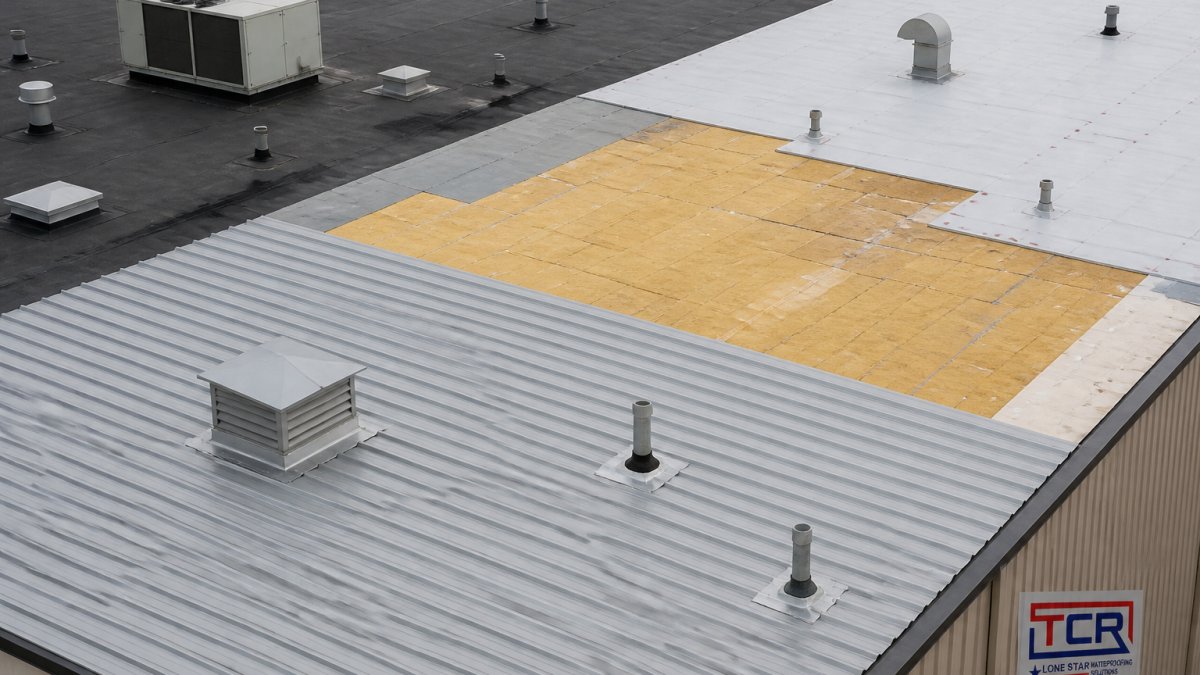
Substrate assessment determines whether you can install new roofing over existing materials or must remove everything down to the structural deck. Removal and disposal of old roofing materials represents a significant cost line item, one that varies dramatically based on what’s already there. Asbestos-containing materials, for example, require certified abatement contractors, which multiplies disposal costs substantially.
The structural integrity of your roof deck also affects labor costs. A sound concrete or steel substrate allows faster installation. A compromised deck requires structural repairs before roofing can begin, extending timelines and adding expense. This is why a detailed building investigation, not just a visual inspection, is essential before committing to a budget.
Request a formal substrate assessment before accepting any bid. Contractors who skip this step are guessing at costs, and you’ll likely face change orders once work begins.
Material Selection: TPO, PVC, EPDM, and Metal Roofing
Your choice of roofing material drives both immediate costs and decades of operational expenses. Each system, TPO, PVC, EPDM, and metal roofing, carries different price points, durability profiles, and maintenance demands.
TPO (thermoplastic polyolefin) membranes are popular in industrial applications because they balance cost and performance. They’re lighter than PVC, which can reduce structural loading requirements. TPO typically offers decent UV resistance and tear strength, making them suitable for facilities with moderate foot traffic or equipment on the roof.
PVC membranes cost more upfront but deliver superior chemical and flame resistance. For facilities handling solvents, oils, or other aggressive substances, PVC becomes the practical choice despite higher material costs. The investment pays back through reduced membrane degradation and longer service life.
EPDM (ethylene propylene diene monomer) is the budget option, lowest initial material cost, proven durability, but requires more frequent maintenance and recoating. EPDM doesn’t resist oils and solvents as well as PVC, so it’s best suited for clean industrial environments or facilities where cost is the primary driver.
Metal roofing systems, standing seam or metal panels, cost significantly more to install but deliver unmatched durability and energy performance. Metal roofs routinely last 40-50 years with minimal maintenance. For facilities where operational continuity is critical or where energy costs are substantial, metal roofing’s lifetime value often justifies the higher upfront expense.
| Roofing Material | Initial Cost per Sq Ft | Typical Lifespan | Best For | Maintenance Burden |
|---|---|---|---|---|
| TPO | Lower-mid | 15-20 years | General industrial | Moderate |
| PVC | Mid-high | 20-30 years | Chemical/solvent exposure | Low-moderate |
| EPDM | Lowest | 15-25 years | Budget-conscious, clean environments | High |
| Metal Roofing | Highest | 40-50 years | Long-term asset preservation | Very low |
Installation Complexity and Labor Rates
Labor represents 40-60% of total roof replacement costs, and complexity varies wildly by project. A straightforward 30,000-square-foot flat roof on a single-story building installs faster than a complex industrial facility with multiple roof elevations, numerous penetrations, and active HVAC systems that must remain operational.
Roof penetrations, HVAC units, exhaust fans, skylights, antenna mounts, require custom flashing details and seal work. Each penetration adds labor time and material cost. A facility with 50+ penetrations faces substantially higher costs than one with minimal roof interruptions.
Active facility operations during roof work create additional complexity. If your manufacturing plant, warehouse, or distribution center must remain operational while roofing is underway, contractors must implement dust containment, noise management, and safety protocols that slow installation and increase labor costs. Total Cladding and Roofing LLC helps manage this coordination, planning work sequences that minimize disruption while maintaining project efficiency.
Local labor rates vary significantly across Texas. Urban markets command higher hourly rates than rural areas. Seasonal demand also affects pricing; summer roofing projects may cost 10-15% more than winter work due to contractor availability and scheduling pressure.
Commercial Roof Life Cycle Cost Analysis
The lowest-cost installation is rarely the lowest-cost roof over its operational lifetime. A comprehensive roof replacement cost analysis must evaluate total cost of ownership, not just what you pay on day one.
Life cycle cost analysis compares the initial capital expenditure against ongoing maintenance, repairs, energy costs, and eventual replacement or restoration. A metal roofing system might cost 40% more to install than EPDM, but if it lasts twice as long and requires minimal maintenance, the annualized cost is actually lower.
Energy efficiency affects operational costs for decades. A roof with high insulation R-value reduces heating and cooling loads, particularly important in Texas’s hot climate where air conditioning runs year-round. Metal roofing with reflective coatings reduces surface temperatures and cooling demand. Over 20-30 years, energy savings can total hundreds of thousands of dollars for large industrial facilities.
Warranty coverage matters more than most facility managers realize. A 20-year material warranty on PVC provides peace of mind and predictable replacement timing. EPDM systems with shorter warranties create uncertainty around future capital needs. When budgeting for asset management, warranty terms directly influence your long-term financial planning.
Preventative maintenance costs accumulate over time. EPDM requires regular recoating every 5-7 years to maintain UV protection. TPO needs periodic inspection and minor seal repairs. Metal roofing requires virtually no maintenance beyond occasional gutter cleaning. When you multiply maintenance labor across 20+ years, the total becomes substantial.
Metal Roof Restoration Benefits vs Full Replacement
Not every industrial roof requires complete replacement. For facilities with sound structural integrity but aging or failing roof membranes, restoration, or metal roof restoration benefits, can extend service life 10-15 years at a fraction of replacement cost.
Fluid-applied restoration coatings create a seamless, waterproof layer over existing membranes.
Restoration extends life but doesn’t reset the clock to zero. Budget for eventual replacement within the extended service period. Restoration is a strategic delay, not a permanent solution.
Signs Your Industrial Roof Needs Replacement
Understanding when repair or restoration is no longer viable helps you avoid catastrophic failures and budget for replacement proactively.
Planning and Budgeting for Industrial Roof Projects
Effective planning transforms roof replacement from a crisis response into a managed capital project. Starting 12-18 months before you anticipate replacement allows time for thorough assessment, budget approval, and contractor coordination.
Frequently Asked Questions
How do you calculate the total cost of an industrial roof replacement?
Start with your facility’s total square footage and multiply by the per-square-foot cost of your chosen roofing system (TPO, PVC, EPDM, or metal). Add labor costs based on your region’s rates and roof complexity. Include tear-off and disposal fees, insulation upgrades if needed, flashing and penetration work, and any structural repairs to the roof substrate. Finally, factor in project timeline and any disruption costs to your operations. A detailed roof inspection helps identify hidden damage that affects the final price.
What factors most significantly impact industrial roof replacement pricing?
The three largest cost drivers are square footage, material choice, and roof substrate condition. A damaged or deteriorating substrate requires additional repair work before installation, raising costs substantially. Labor rates vary by region and complexity, metal roofing installation and integrated insulation systems cost more than basic TPO systems. Roof penetrations, drainage requirements, HVAC integration, and safety compliance also add to the project scope. Timing and weather can extend labor duration, further increasing expenses.
Is roof restoration more cost-effective than full replacement for industrial facilities?
Restoration can extend your roof’s service life at 30-50% of replacement cost, making it attractive short-term. However, commercial roof life cycle cost analysis reveals that restoration works best on roofs with 5-10 years of remaining life. If your roof has structural damage, widespread leaks, or poor insulation performance, replacement delivers better long-term ROI despite higher upfront expense. A professional inspection determines whether your facility benefits more from restoration or replacement based on your building’s condition and operational timeline.
What is the 25% rule for roofing replacements?
The 25% rule suggests that if repair costs exceed 25% of a full replacement cost, replacement becomes the more economical choice. For example, if replacement costs $100,000 and a major repair exceeds $25,000, replacement is justified. This rule accounts for warranty coverage, extended service life, and reduced future maintenance. However, your specific situation depends on your roof’s remaining lifespan, your facility’s operational needs, and whether you can tolerate downtime during installation.
How does insulation R-value affect industrial roof replacement costs and energy efficiency ROI?
Higher R-value insulation increases upfront installation costs but reduces heating and cooling expenses significantly. A roof with R-30 insulation costs more than R-15, but can deliver 20-30% energy savings depending on your climate and facility use. Calculate your energy efficiency ROI by comparing annual utility savings against the additional insulation cost. Industrial facilities with high HVAC demands often recoup insulation upgrades within 5-7 years, making it a sound capital expenditure when factored into your life cycle cost analysis.
To upload drawings, specs and plans please go to the form on our contact page.
Get in Touch