
Table of Contents
- How Extreme Heat Stresses Roofing Materials
- Asphalt Shingles vs. Metal Roofing Performance Under Heat
- Metal Roof Restoration Benefits in High-Heat Climates
- Reflective Roof Coatings for Heat Reduction
- Cost of Metal Roof Refurbishment vs. Replacement
- Can Roof Refurbishment Survive Extreme Heat? Decision Framework
- Preventative Maintenance for Heat-Damaged Roofs
- Frequently Asked Questions
Last Updated: September 30, 2026
How Extreme Heat Stresses Roofing Materials
Extreme heat fundamentally changes how roofing materials behave. When temperatures exceed 100°F, asphalt softens, metal expands and contracts, and protective coatings degrade. Understanding this is essential to deciding whether roof refurbishment heat can survive extreme conditions in your climate.
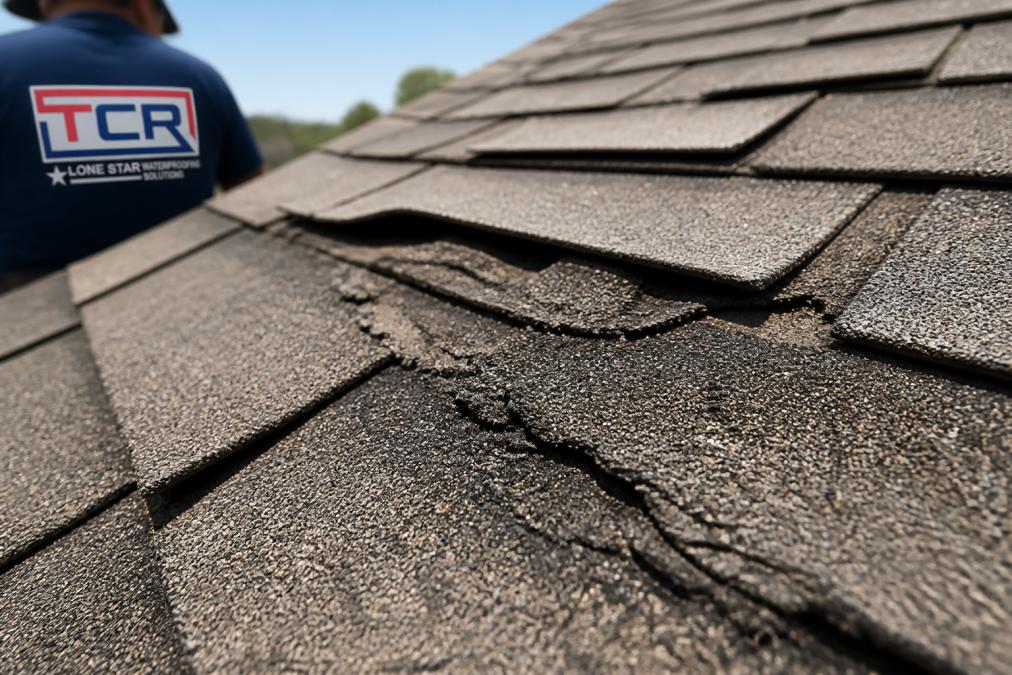
Thermal movement is the primary culprit. Metal roofing heated to 150°F or higher expands; nighttime cooling causes contraction. This constant cycling stresses fasteners, seams, and substrate, eventually causing fasteners to loosen, seams to separate, and leaks to develop.
Asphalt shingles face a different problem. The binder holding granules becomes plastic-like in extreme heat, causing granule loss that exposes asphalt to UV radiation. This degradation accelerates rapidly, what takes 15 years in moderate climates can occur in 8-10 years under constant heat stress.
Reflective properties matter significantly. A dark roof surface reaches 180°F at 95°F ambient temperature, while reflective materials stay 20-30°F cooler. This reduces thermal movement, slows sealant and membrane degradation, and extends service life. Material choice during refurbishment determines whether service life goals are realistic.
Moisture barriers and waterproofing membranes degrade under sustained heat above 140°F. Seam adhesives become brittle, causing seals that work in moderate climates to fail prematurely in extreme conditions.
The real measure of whether roof refurbishment can survive extreme heat isn’t the material’s rated lifespan, it’s the actual degradation rate in your specific climate. A 20-year roof rated for moderate climates may deliver only 12-14 years under constant heat stress, even if properly refurbished.
Asphalt Shingles vs. Metal Roofing Performance Under Heat
Asphalt shingles are cheaper to install but degrade faster in heat. Metal roofing costs more upfront but performs significantly better thermally over time, requiring different refurbishment strategies.
Asphalt shingles soften above 120°F, losing adhesive effectiveness and allowing wind to lift them. Granule loss accelerates, exposing asphalt to UV and creating cascading failure. Refurbishment through coating provides only temporary relief, the underlying material is already compromised.
Metal roofing expands and contracts predictably without softening. With properly installed fasteners allowing thermal movement, metal roofs tolerate extreme heat for 30+ years. Metal roof restoration allows re-sealing seams, replacing fasteners, and restoring performance without replacing the substrate.
Thermal expansion is quantifiable: a 100-foot metal panel expands 0.6 inches from 70°F to 150°F. Rigid fasteners fail under this movement. Proper refurbishment assesses fastener condition, replaces corroded fasteners, and seals seams with flexible, heat-resistant sealants.
Asphalt roofs cost 40-50% less initially but require replacement every 12-15 years in extreme heat, while metal lasts 25-30 years. Over 30 years, total cost of ownership often favors metal despite higher upfront cost.
| Roofing Type | Heat Tolerance | Granule/Coating Durability | Thermal Expansion | Refurbishment Viability | Expected Lifespan After Refurbishment |
|---|---|---|---|---|---|
| Asphalt Shingles | Moderate (softens above 120°F) | 8-12 years in extreme heat | Minimal | Limited (5-8 years extension) | 12-15 years |
| Metal Roofing | High (stable to 150°F+) | 15-25 years with proper coating | Significant but manageable | Strong (10-15 years extension) | 25-30 years |
Refurbishing asphalt shingles in extreme heat climates often feels like extending a deadline rather than solving the problem. The material itself is already stressed. Coatings and sealants buy time but don’t reverse the underlying degradation. Budget for replacement within 10 years regardless.
Metal Roof Restoration Benefits in High-Heat Climates
Metal roof restoration extends the life of the existing metal substrate through targeted repairs, re-sealing, and protective coatings rather than full replacement.
Restoration costs 30-50% less than replacement. For a 40,000-square-foot facility, this translates to tens of thousands of dollars and justifies refurbishment even with 8-10 year service life extension.
Restoration work is completed in phases, allowing operations to continue, unlike full replacement which requires extensive scaffolding and weeks of work. For manufacturing and distribution facilities, this minimizes operational disruption.
Metal substrates remain structurally sound for decades. Failure points are typically fasteners, sealants, and coatings, not the metal itself. Restoration replaces these wear items without disturbing the underlying structure.
Reflective coatings reduce surface temperatures 20-30°F, reducing thermal movement and extending fastener and sealant life. Many facilities recover 30-40% of restoration costs through reduced cooling expenses over 5-7 years.
Restoration allows selective component upgrades, replacing fasteners in high-stress areas and re-sealing compromised seams while leaving intact areas untouched. This targeted approach is more cost-effective than wholesale replacement.
Reflective Roof Coatings for Heat Reduction
Reflective roof coatings are highly effective for extending roof life in extreme heat. Acrylic or silicone-based coatings reflect 65-85% of solar radiation rather than allowing absorption by the roof surface.
An uncoated dark metal roof reaches 160-180°F at 95°F ambient temperature; with reflective coating it stays at 120-140°F. This 40-50°F reduction directly reduces thermal stress on fasteners, seams, and substrate.
Reflective coatings incorporate aluminum oxide or ceramic microspheres that scatter solar radiation and provide moisture barriers protecting against humidity and UV exposure.
Application requires cleaning the roof, repairing damaged areas, and applying two coats. Total coverage is critical, professional application ensures uniform coverage and proper film thickness.
Acrylic coatings last 5-7 years; silicone lasts 10-15 years. Silicone costs 30-40% more upfront but requires less frequent recoating, making it the better choice for extreme heat climates.
Buildings report 10-20% cooling cost reductions with reflective coatings. A 40,000-square-foot facility might save $8,000-15,000 annually, representing genuine return on investment over the coating’s life.
Reflective roof coatings don’t replace a failing roof, but they do extend the life of a refurbished roof by 5-10 years while reducing energy costs. For facilities managing multiple properties, this is often the most cost-effective single intervention.
Cost of Metal Roof Refurbishment vs. Replacement
The financial comparison between metal roof refurbishment and full replacement is where the decision framework becomes concrete. Refurbishment typically costs 40-60% less than replacement, but the actual numbers depend on the roof’s current condition and what specific work is required.
Refurbishment includes inspection, fastener replacement, seam re-sealing, coating application, and localized repairs. For a 40,000-square-foot metal roof in good condition, costs run $1.50-3.00 per square foot ($60,000-120,000 total) over 3-6 weeks.
Full replacement costs $4.50-7.00 per square foot ($180,000-280,000 for 40,000 square feet) over 6-10 weeks with extensive site preparation and operational disruption.
The decision hinges on service life extension. If refurbishment extends life 10 years, annual cost is $6,000-12,000. If replacement lasts 25 years, annual cost is $7,200-11,200. The numbers are close, making the decision about risk tolerance and facility planning, not just cost.
Full replacement may require equipment relocation, operation suspension, or additional staff, adding $20,000-50,000 in hidden costs. Refurbishment minimizes these disruptions.
We help facilities model both scenarios. We conduct detailed roof inspections to assess remaining substrate condition, identify problem areas, and estimate realistic service life extension from refurbishment. This data allows you to make a decision based on your specific facility’s condition, not industry averages.
Can Roof Refurbishment Survive Extreme Heat? Decision Framework
Whether roof refurbishment heat can survive depends on three factors: the current material condition, the specific climate stress your facility experiences, and your risk tolerance for future failure.
Start with a professional inspection. This isn’t a visual walk-around, it’s a detailed assessment of fastener condition, seam integrity, coating degradation, and substrate damage. Start with a professional inspection. This isn’t a visual walk-around, it’s a detailed assessment of fastener condition, seam integrity, coating degradation, and substrate damage. This data tells you whether refurbishment is viable or whether the roof is too far degraded.
Second, assess your climate stress realistically. Extreme heat isn’t just temperature, it’s the combination of temperature, UV exposure, humidity, and thermal cycling.
| Decision Factor | Favors Refurbishment | Favors Replacement |
|---|---|---|
| Roof Age | 10-20 years, substrate sound | 20+ years, widespread damage |
| Budget Constraints | Limited capital available | Adequate budget, long-term planning |
| Operational Disruption Tolerance | Low tolerance for downtime | Can accommodate extended work |
| Maintenance Capacity | Strong inspection/maintenance program | Limited maintenance resources |
| Service Life Need | 5-10 years acceptable | 20+ years required |
| Material Type | Metal roofing | Asphalt shingles in extreme heat |
Preventative Maintenance for Heat-Damaged Roofs
Once you’ve decided that roof refurbishment can survive extreme heat and you’ve completed the work, preventative maintenance becomes critical. The difference between a 10-year and 15-year service life extension often comes down to maintenance discipline.
Frequently Asked Questions
Can roof refurbishment actually survive extreme heat in climates like Texas?
Roof refurbishment can survive extreme heat when the right materials and techniques are used. Metal roofing systems with proper thermal expansion joints, reflective coatings, and adequate attic ventilation handle thermal stress far better than aging asphalt. The key is assessing existing structural integrity first, if the substrate is sound, refurbishment extends service life significantly. However, if the roof deck is compromised, full replacement becomes the better choice. A professional building investigation determines which path makes sense for your specific conditions.
How does thermal expansion impact metal roof refurbishment?
Metal roofs expand and contract dramatically in extreme heat, sometimes moving several inches across a large roof. Thermal movement can stress fasteners, seams, and connections if they’re not designed to accommodate it. Quality metal roof refurbishment includes installing proper thermal expansion joints, using flexible fastening systems, and ensuring adequate clearance at panel edges. Without accounting for thermal movement, refurbished metal roofs fail prematurely. This is why professional assessment and specification matter, European roofing standards address thermal movement explicitly, which is critical in extreme climates.
What’s the actual price difference between roof refurbishment and full replacement?
Refurbishment typically costs less than full replacement, but the exact difference depends on roof condition, size, material type, and scope of work. A refurbishment might involve cleaning, coating, minor repairs, and ventilation improvements. A full replacement removes and disposes of the old system and installs new materials. The real decision isn’t just upfront cost, it’s service life extension and energy savings. Reflective coatings and improved ventilation reduce cooling costs, which compounds savings over years. Contact Total Cladding and Roofing for a detailed site assessment and comparison quote for your specific situation.
Are reflective roof coatings effective at reducing building temperatures?
Reflective coatings reduce roof surface temperature by 30-50 degrees Fahrenheit compared to standard dark roofing, which directly lowers cooling loads and energy costs. They work by reflecting solar radiation rather than absorbing it. However, effectiveness depends on application quality, coating type, and maintenance. Coatings degrade over time and require periodic reapplication. They’re most effective as part of a complete heat management strategy that includes attic ventilation, insulation, and thermal barriers. For industrial facilities, reflective coatings are often a cost-effective first step before committing to full replacement.
To upload drawings, specs and plans please go to the form on our contact page.
Get in Touch