Last Updated: October 24, 2026
Quick Summary
Sustainable roofing solutions for manufacturing include metal roof restoration, cool reflective coatings, recycled-content systems, and solar-integrated designs that extend service life, reduce energy costs, and minimize operational disruption. Metal roofs last 40-50 years with proper maintenance, while cool roof coatings cut cooling loads during peak demand and reflective systems reduce grid electricity consumption.
- Metal roof restoration extends service life 15-20 years through cleaning, coating, and sealing without full replacement disruption.
- Cool roof coatings reduce solar heat absorption and lower peak-summer cooling costs through reflective surfaces.
- Lifecycle cost analysis reveals true economic value by accounting for material, labor, service life, maintenance, and operational disruption across the full ownership span.
- Recycled-content roofing diverts waste from landfills while delivering durability comparable to traditional materials.
- Phased project approaches prioritize high-impact roof sections to spread costs across budget cycles while maintaining continuous protection.
Table of Contents
- Why Sustainable Roofing Solutions Matter for Manufacturing Facilities
- Metal Roof Restoration: Durability and Long-Term Value
- Industrial Roof Restoration vs. Full Replacement: A Cost and Performance Comparison
- Cool Roofs and Reflective Coatings for Energy Efficiency
- Understanding Industrial Roof Replacement Cost and Lifecycle Economics
- Green Roofs, Recycled Materials, and Solar-Integrated Systems
- Planning Your Sustainable Roofing Project with Minimal Operational Disruption
- Frequently Asked Questions
Why Sustainable Roofing Solutions Matter for Manufacturing Facilities
Manufacturing facilities face relentless budget pressure: energy costs eat into overhead, and roof failures cause catastrophic downtime. That’s why sustainable roofing solutions for manufacturing are strategic assets, not nice-to-have upgrades.
A plant’s roof does more than shed water: it controls heat transfer, manages structural loads, and drives year-round efficiency. Traditional roofing treats the roof as a consumable, install, maintain minimally, replace on failure. Sustainable roofing solutions flip that logic, extending service life, cutting energy use, and delivering measurable savings over the facility’s operational horizon.
At Total Cladding and Roofing LLC, we work with Texas facility managers and asset teams under constant scrutiny. They ask the same question: how do we protect our buildings without breaking the budget or disrupting operations? The answer is knowing which sustainable roofing solutions actually work for manufacturing, and which are oversold.
This guide covers sustainable roofing options that deliver real performance for industrial facilities, metal roof restoration, cool roofs, recycled-content systems, and integrated approaches, and how to evaluate them against your facility constraints, climate challenges, and financial requirements.
Metal Roof Restoration: Durability and Long-Term Value
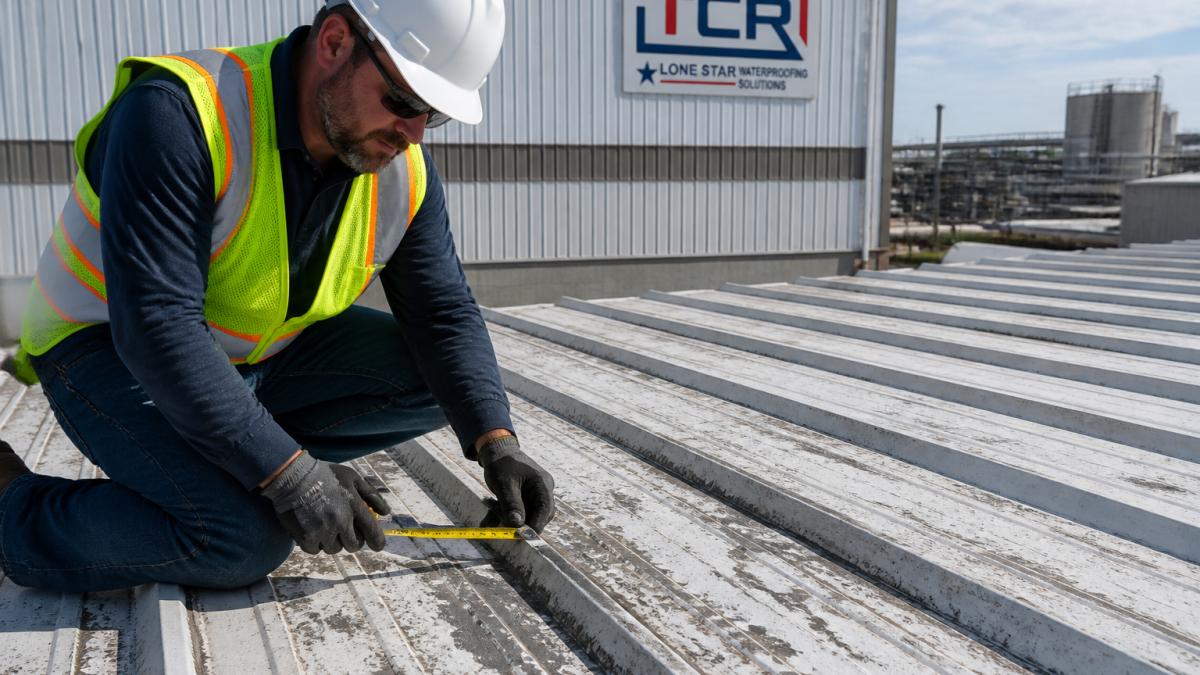
Metal roofing delivers durability few materials match. Steel and aluminum roofs withstand extreme weather, resist corrosion with proper maintenance, and hold structural integrity for decades, genuine long-term value for Texas facilities where heat and humidity drive aggressive corrosion.
Metal roof restoration extends service life through strategic interventions: cleaning, coating, and sealing the existing system rather than replacing it. Acrylic coatings and elastomeric sealants create a barrier that reflects solar heat and prevents water intrusion, renewing performance without the cost and disruption of full replacement.
The durability advantage compounds: a well-maintained metal roof lasts 40-50 years or more, so per-year ownership cost drops significantly versus asphalt or single-ply systems replaced every 15-20 years. For asset managers overseeing multiple facilities, that means predictable maintenance and fewer emergency repairs that disrupt production.
Metal roofing’s reflective properties also boost energy efficiency. Bare metal reflects some solar radiation, and reflective coatings strengthen the effect. Facilities with metal roofs consistently report lower peak-summer cooling costs; savings vary by size, equipment load, and insulation, but the trend holds across climate zones.
One consideration: metal roofing requires proper installation and maintenance. Fasteners must be sealed to prevent water intrusion at penetrations, and drainage must handle runoff volume and velocity. Total Cladding and Roofing LLC draws on refurbishment experience developed in the UK to specify systems that perform in demanding industrial environments, assessing conditions and addressing failure points before they become problems.
Industrial Roof Restoration vs. Full Replacement: A Cost and Performance Comparison
The choice between restoration and replacement defines your long-term roofing strategy. Both have merit depending on facility condition, timeline, and operational constraints; understanding the trade-offs informs a choice aligned with your asset management goals.
Restoration preserves the existing structure and extends its life, ideal when the deck and framing are sound but the surface has degraded. It involves cleaning, repairing isolated damage, applying protective coatings, and sealing vulnerable areas. Crews work in smaller sections, so facilities with tight production schedules can often keep operating with minimal interruption.
Full replacement removes the entire system and installs new materials from the deck up, allowing upgrades to newer materials, better insulation, and fixes for structural issues restoration can’t address.
Cost depends on roof condition, facility size, and materials. Restoration generally costs less upfront, avoiding full-replacement material and labor. But if the deck needs repair or thermal performance must improve, restoration may only delay replacement a few years. A thorough building investigation reveals which delivers the service life you need.
For manufacturing facilities, we recommend detailed cost and ROI analysis specific to your decision, comparing total cost of ownership, materials, labor, operational disruption, and expected service life, across both approaches. The numbers often surprise facility managers: restoration that extends service life by 15 years may beat replacement economically even when upfront cost appears higher.
Cool Roofs and Reflective Coatings for Energy Efficiency
Cool roofs reduce solar heat absorbed by the building envelope. The impact on manufacturing facilities is substantial: buildings with high internal heat loads from equipment, processing, or occupancy benefit disproportionately from reflective roofing systems.
Cool roofs work through two mechanisms: solar reflectance (how much incoming radiation bounces back rather than being absorbed) and thermal emittance (how effectively the surface radiates absorbed heat skyward). Together they determine the roof’s solar reflectance value (SRV); higher SRV means less heat enters the building.
Reflective coatings on existing metal or flat roofs deliver cool roof performance without full replacement. Acrylic, polyurethane, and silicone elastomer systems all work; the choice depends on roof surface, climate exposure, and maintenance needs. In Texas’s hot, humid climate, they cut cooling loads during peak summer demand, and facilities with significant AC requirements often see measurable utility savings.
The sustainability benefit extends beyond energy savings. Lower cooling demand means less grid electricity consumption, so cool roofs contribute to carbon footprint reduction, aligning roofing decisions with sustainability reporting requirements and corporate environmental targets.
Reflective coatings need periodic maintenance: dust, debris, and environmental deposits reduce reflectivity over time, so scheduled cleaning preserves performance and extends service life. Total Cladding and Roofing LLC designs preventative maintenance programs that keep reflective systems at design specifications while minimizing operational disruption.
Understanding Industrial Roof Replacement Cost and Lifecycle Economics
Replacement cost matters, but lifecycle cost matters more. A roofing system’s true economic value emerges only when you account for the full span of ownership, from installation to end of service life.
Lifecycle economics hinge on material costs, installation labor, expected service life, maintenance, and operational disruption.
Installation labor depends on roof complexity, facility constraints, and timeline. A straightforward restoration on simple geometry costs less per square foot than a complex replacement with drainage redesign, insulation upgrades, and operational coordination.
Service life projections determine how long the investment protects your asset. Metal roofing with proper maintenance delivers 40-50 years; cool roof coatings last 10-15 years before recoating; recycled-content systems perform reliably for 20-30 years depending on composition and climate.
Maintenance costs accumulate: metal needs periodic inspection and fastener sealing, reflective coatings need cleaning, and flat roofs need drainage maintenance to prevent ponding. Understanding these recurring costs reveals true total cost of ownership, a low-upfront system with high maintenance may cost more than a pricier one needing minimal intervention.
For detailed cost analysis and lifecycle economics specific to your facility, work with a provider who can assess current condition, project maintenance requirements, and model total cost across your planning horizon, turning roofing from a cost center into a strategic asset management decision.
| Approach | Upfront Cost | Service Life | Annual Maintenance | Best For |
|---|---|---|---|---|
| Metal Restoration | Lower | 15-20 years | Minimal | Sound structures needing surface renewal |
| Cool Roof Coating | Lower | 10-15 years | Periodic cleaning | Energy efficiency priority |
| Full Replacement | Higher | 40-50 years | Moderate | Structural issues or major upgrades |
| Hybrid (Restoration + Coating) | Moderate | 20-25 years | Minimal | Extended life with energy benefits |
Green Roofs, Recycled Materials, and Solar-Integrated Systems
Sustainable roofing extends beyond traditional materials. Green roofs, recycled-content systems, and solar-integrated designs offer distinct environmental and performance benefits when properly specified for manufacturing facilities.
Green roofs, vegetated systems with growing media and drainage layers, provide insulation, stormwater management, and heat island mitigation, and can reduce cooling loads on large industrial roofs (the EPA). But they add significant structural load and ongoing maintenance.
Recycled-content roofing materials recover resources from waste streams and reduce virgin material consumption. Recycled rubber roofing, made from reclaimed tire material, delivers durability and flexibility comparable to traditional rubber systems. Recycled asphalt shingles incorporate reclaimed asphalt pavement into new products. These materials perform reliably when specified correctly for the climate and application.
Solar-integrated roofing systems combine structural roofing with photovoltaic capacity. For manufacturing facilities with high daytime electricity consumption, rooftop solar generation can offset a meaningful portion of grid demand. Solar-ready roof systems prepare the structural and electrical infrastructure for future solar integration without requiring immediate panel installation, allowing facilities to phase in solar capacity as budget and technology mature.
The sustainability argument for solar-integrated roofing is compelling: the roof generates clean electricity while providing weather protection. However, the technology is still maturing, and performance data from industrial installations remains limited. Facilities considering solar integration should work with providers experienced in industrial applications to verify that the system will perform reliably under your specific conditions.
Planning Your Sustainable Roofing Project with Minimal Operational Disruption
Manufacturing facilities operate on tight schedules. Production downtime costs money, and schedule delays create cascading impacts across supply chains. Sustainable roofing projects must be planned with operational continuity as a core requirement, not an afterthought.
Effective project planning begins with a comprehensive building investigation. Total Cladding and Roofing LLC conducts detailed assessments that identify roof condition, structural capacity, drainage performance, and integration points with other building systems. This investigation informs realistic project scope, timeline, and budget.
Phased project approaches minimize disruption while achieving long-term sustainability goals. Rather than replacing an entire roof in one project, facilities can prioritize sections based on condition and operational impact. A restoration approach applied to the highest-priority areas can be followed by coating applications to extend life in secondary areas.
Coordination with ongoing operations requires clear communication and flexible scheduling. Projects should be planned during lower-production periods when possible. Temporary protective measures, such as tarping and drainage management, prevent water intrusion during work phases.
For facilities managing multiple properties, coordinated planning across the portfolio can reduce per-project costs through economies of scale. Bundling similar work across several locations allows providers to schedule crews more efficiently and negotiate material costs more favorably.
Sustainable roofing solutions for manufacturing require balancing environmental responsibility, operational reliability, and economic performance. The right choice depends on your facility’s condition, climate exposure, and long-term asset management strategy. Whether you prioritize energy efficiency, extended service life, or waste reduction, a thorough assessment reveals which approach delivers the greatest value.
Frequently Asked Questions
What is the most sustainable roofing option for a manufacturing facility?
The best choice depends on your facility’s climate, energy goals, and budget. Metal roofing offers durability and recyclability; cool roofs with reflective coatings reduce heat absorption and energy costs; green roofs provide insulation and stormwater management; and solar-integrated systems generate power. For manufacturing in hot climates, cool roofs or metal roofing with reflective coatings typically deliver the fastest return on investment through reduced cooling costs.
Is restoring a metal roof more sustainable than replacing it entirely?
Yes, in most cases. Metal roof restoration extends the roof’s lifespan by 10-15 years while avoiding the waste and energy cost of removing and disposing of the old system. Restoration also minimizes operational disruption to your facility. Full replacement becomes necessary only when structural damage is severe or the roof has reached the end of its service life. A professional inspection determines which approach makes sense for your specific situation.
How do you decide whether to restore or replace an industrial roof?
Compare the cost of restoration against full replacement, the remaining lifespan of the current roof, and the extent of damage. If damage is extensive or structural failure is present, replacement is usually more cost-effective long-term. If damage is localized or the roof is mid-life, restoration with upgraded insulation or coatings often extends service life affordably. A detailed building investigation reveals which option protects your investment and minimizes disruption.
What are the lifecycle costs of industrial roof restoration versus replacement?
Restoration typically costs less upfront than replacement and can extend roof life. Replacement has higher initial cost but may offer better long-term performance if the existing roof is near end-of-life. Lifecycle cost includes materials, labor, maintenance, energy savings (especially with cool roofs or insulation), and downtime. A full lifecycle comparison accounts for your facility’s climate, operational constraints, and expected building use over the next 20-30 years.

To upload drawings, specs and plans please go to the form on our contact page.
Get in Touch