lunara
- Manufacturer
- EQUITONE
- Product
- lunara
- Status
- Current
- Market
- United States
- Last verified
- September 23, 2026
Product overview
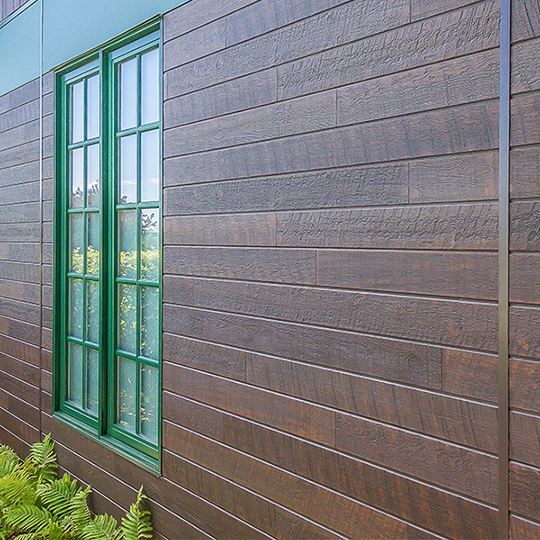
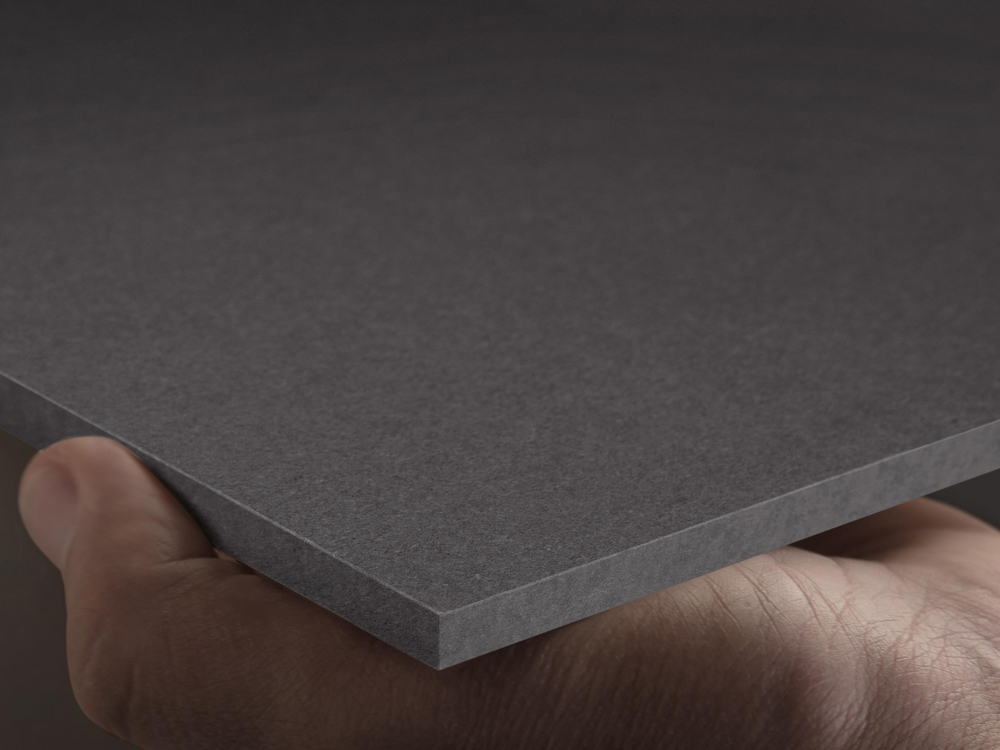
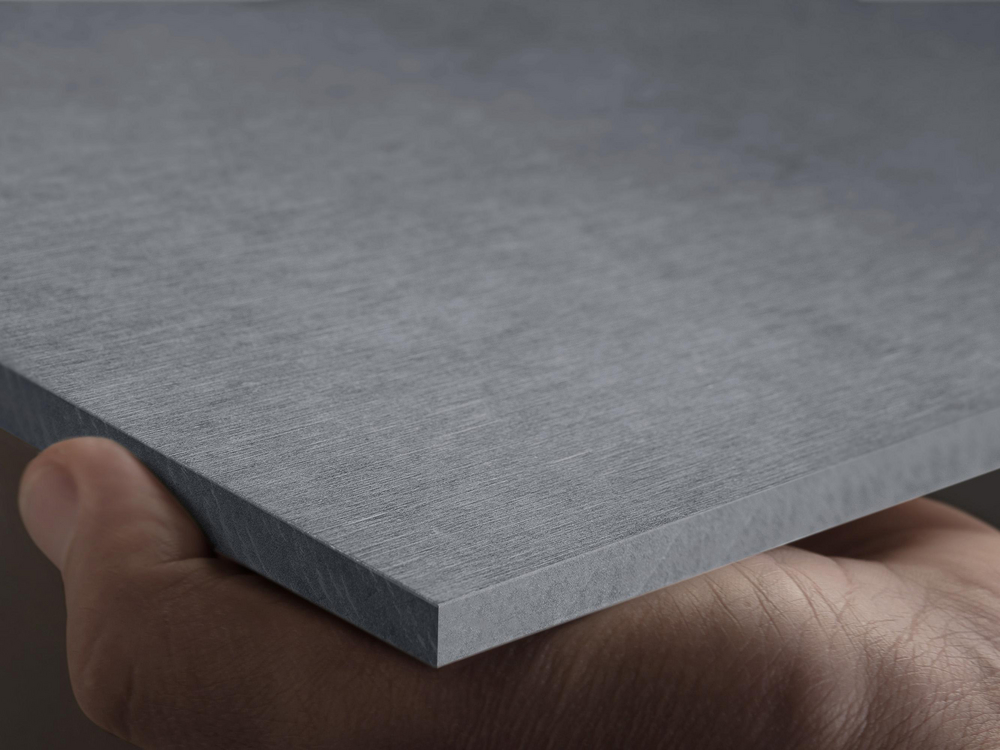
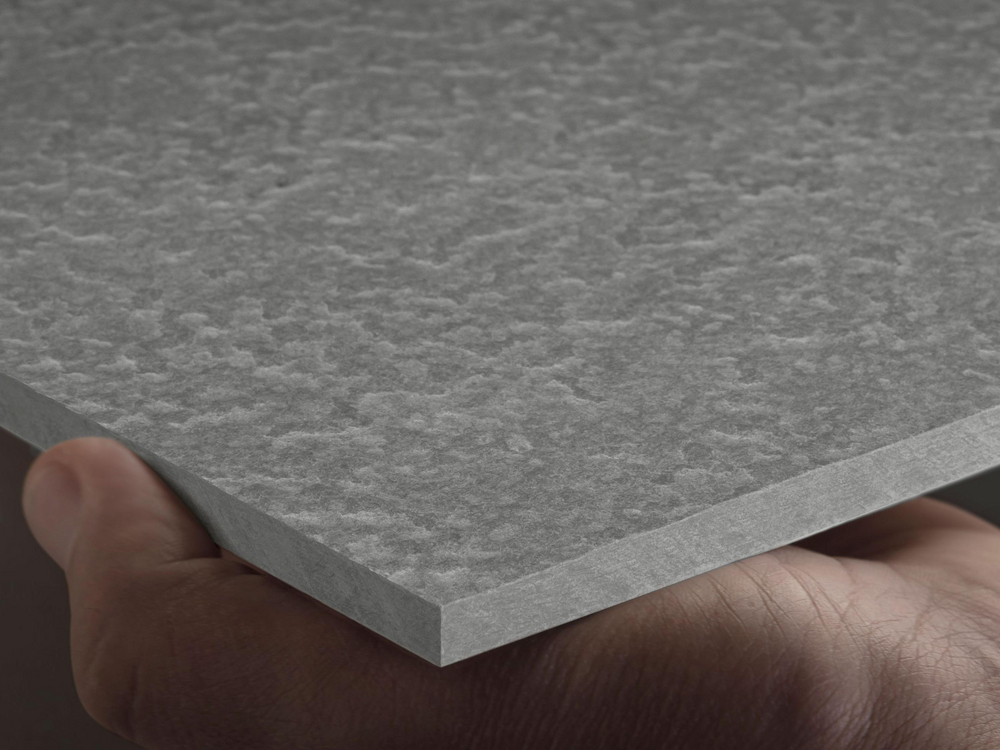
EQUITONE lunara is a high-density, through-colored fiber cement panel with no coating. Its face has a random-looking, non-repeating texture covered with tiny irregular elevations and depressions.
Because of the production process, each panel has its own unique character and no two panels are alike. Color-deviating inclusions add to the natural look of the surface. The color runs through the panel, and the panel is water-repellent through hydrophobation.
The orientation of the panel, the viewing angle, light and moisture strengthen the natural variation of a lunara facade. The panel is used as rainscreen cladding on ventilated facades and in the other applications listed below. It can be combined with tectiva and linea in the same color.
Color
Colors are chosen from samples because literature cannot show them realistically. Random hues are part of the lunara material.
The color difference is measured with a simplified CIELAB model that follows lightness only. The tolerated difference on a dry facade is ΔL* = ±2.5, measured on dry surfaces.
Data sheets and technical documents
Current files
Archived files
No older reviewed revisions are archived for this product yet.
Composition and production
lunara panels consist of cement, quartz sand, cellulose, natural calcium silicate, inorganic color pigments, water and additives. The material is highly compressed, autoclaved fiber cement made in Belgium.
Thin films of fiber cement form on rotating sieves in the Hatschek process, pass by felt belt to a forming drum, and build up to the required thickness. An automatic knife cuts the sheet, and the stacked sheets are highly compressed. The panels cure in an autoclave under high temperature and pressure.
After curing, the surface is mechanically processed to create the lunara texture. A final hydrophobation makes the panel water-repellent.
Thickness, sizes and weights
lunara has a base-sheet thickness of 3/8 inch (10 mm). The nominal thickness for static bending strength calculation is 5/16 inch (8 mm). Panels are supplied trimmed (maximum usable size) or untrimmed (production dimension).
- Trimmed width is 48 inches (1220 mm), and untrimmed width is 48 3/4 inches (1240 mm).
- Trimmed lengths are 98 and 120 inches (2500 and 3050 mm). Untrimmed lengths are 99 and 121 inches (2520 and 3070 mm).
- Panels weigh 125 and 153 pounds trimmed and 128 and 156 pounds untrimmed (56.7, 69.2, 58.1 and 70.8 kg).
- Nominal weight per area is 3.8 pounds per square foot (18.6 kg/m²).
- A pallet holds 30 panels. Usable surface is 984.9 square feet for the 98 inch length and 1201.25 square feet for the 120 inch length (91.5 and 111.6 m²).
lunara must not be installed with untrimmed edges, and about 3/8 inch (10 mm) is trimmed from each raw edge.
The lunara surface is textured, so thickness is toleranced at the crest and in the valley. At the crest it is 3/8 inch ±1/16 inch (10 mm ±1.0 mm). In the valley it is 5/16 inch, -1/32 inch to +1/16 inch (8 mm, -0.2 mm to +1.0 mm). Trimmed panels hold ±1/8 inch (±3 mm) on width and length and ±1/16 inch per foot (±1.0 mm/m) on squareness. Untrimmed panels hold ±3/16 inch (±5 mm) and ±2.0 mm/m in metric. The factory tolerances outperform EN 12467 Level I and Level II and all criteria in ASTM C1185.
ASTM properties and fire data
lunara is an ASTM E84 Class A material with a flame spread index of 0 and a smoke development index of 5. It achieves a 1 hour assembly fire resistance rating under ASTM E119, passes the hose stream test, and passes ASTM E136 as non-combustible.
- Grade IV flexural strength classification under ASTM C1186; trimmed-panel tolerances pass.
- Dry mean density of 101.0 pounds per cubic foot.
- Moisture movement of 0.02 percent from 30 to 90 percent humidity.
- Ultimate flexural strength of 4,475 psi dry and 3,886 psi wet.
- Passes in the water tightness, freeze-thaw and warm water tests for lunara.
- Moisture content of 5.9 percent and water absorption of 19 percent.
- Thermal movement of 5.5e-6 in/in°F and thermal conductivity of 0.226 BTU/h ft°F.
Panels are evaluated to ICC acceptance criteria AC90 and meet the minimum requirements of the International Building Code. The autoclaved EQUITONE products are covered by ESR 3910.
EN 12467 properties
lunara conforms to EN 12467:2012+A1:2018 and complies with ISO 8336:2017.
- Type NT, durability Category A, strength Class 4, and Level I and Level II dimensional tolerances.
- Dry mean density of 1630 kg/m³ and dead load of 0.16 kN/m² at 8 mm and 0.20 kN/m² at 10 mm.
- Moisture movement below 0.08 percent.
- Bending strength of 30.0 MPa perpendicular and 20.0 MPa parallel to production direction.
- A partial safety factor of 2.0 and a modulus of elasticity of 14,000 MPa.
- No drops in the lunara water impermeability test, and passes in freeze-thaw, heat-rain, warm water and soak-dry tests.
- A2-s1,d0 under EN 13501-1, ULC S102 flame spread 0 and smoke development 5, and non-combustible under ULC S114.
- Thermal movement of 0.01 mm/mK, conductivity of 0.39 W/mK, moisture content of 6 percent at 23°C and 80 percent humidity, and Poisson's ratio of 0.2.
Working with the material
Cut edges of lunara do not need sealing. Adhesive, tape and sealant are kept off the finished surface, and cleaning follows the EQUITONE Cleaning Information guide.
Dust from machining can irritate the airways and eyes. Dust extraction, ventilation or both is used, because respirable quartz-containing dust can lead to lung disease and an increased risk of lung cancer.
Applications and limits
lunara is used in ventilated applications, including but not limited to:
- Ventilated facade or rainscreen cladding.
- Window and door reveals.
- Exterior ceilings, as decorative ceiling cladding.
- Soffits, eaves and verge boards.
- Interior wall and ceiling lining.
Fixing is on the face or concealed, with Etex proprietary or recommended solutions. Restrictions are in the specific application guidelines.
lunara is not used in roof applications, in interior areas exposed to direct moisture, in contact with standing snow or ice, or at long-term temperatures above 80°C (176°F).
Certification
The manufacturer presents a Declaration of Performance for lunara under European Regulation 305/2011, confirming CE marking. lunara has an Environmental Product Declaration under ISO 14025 or EN 15804. EQUITONE fiber cement facade materials hold a cradle-to-cradle bronze rating under C2CPII version 3.1, and the factory holds ISO 9001, ISO 14001 and ISO 45001 certificates.