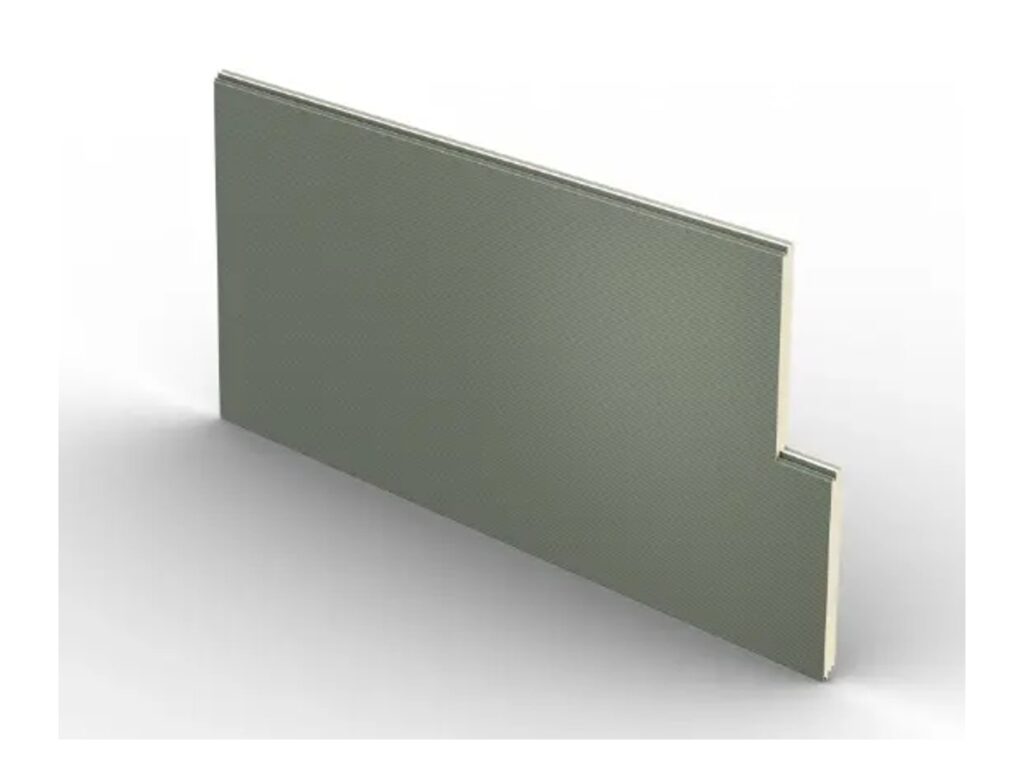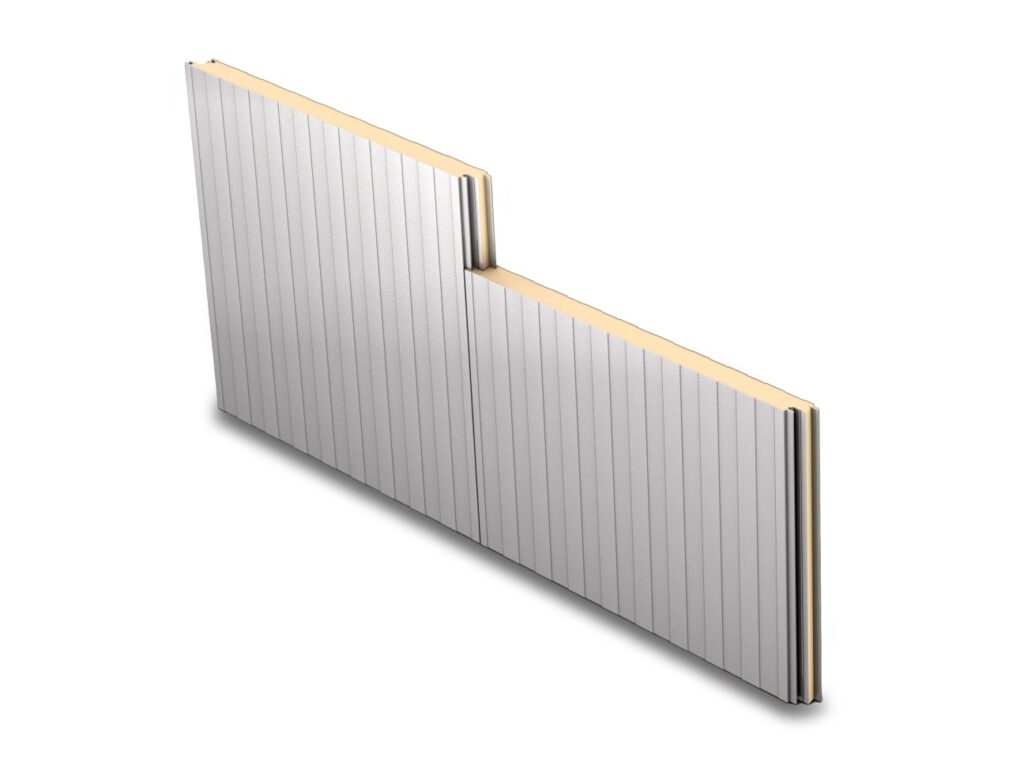
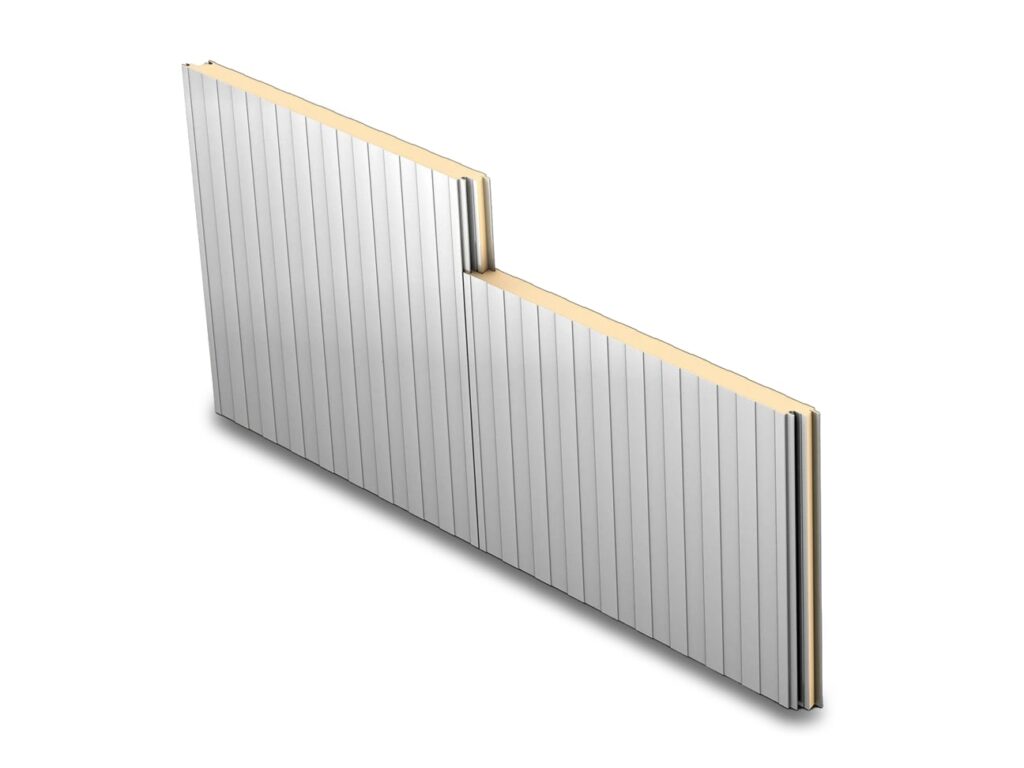
MesaLine Insulated Wall Panel
- Manufacturer
- Green Span Profiles
- Product
- MesaLine Insulated Wall Panel
- Status
- Current
- Market
- United States
- Latest revision
- R2
- Latest file date
- May 2, 2023
- Last verified
- October 15, 2026
What MesaLine is and where it is used
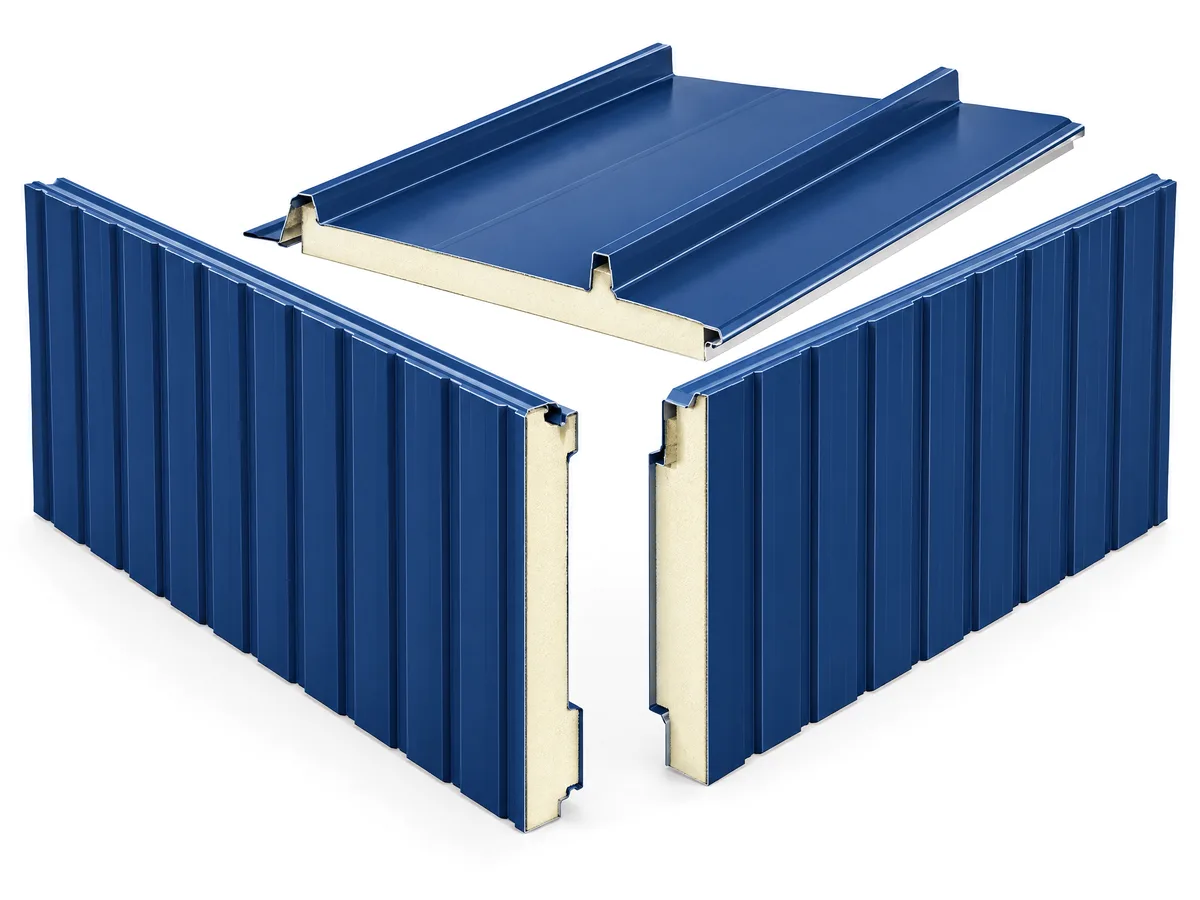
MesaLine is an insulated metal panel from Green Span Profiles. It is used in both cold-storage and commercial/industrial applications. The panel suits insulated metal panel roofs and walls on those building types.
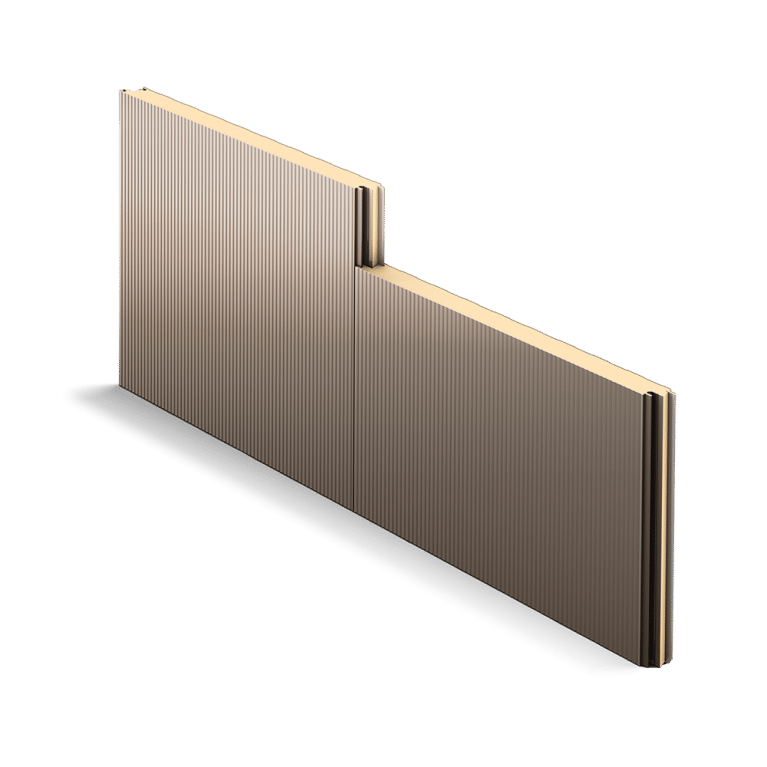
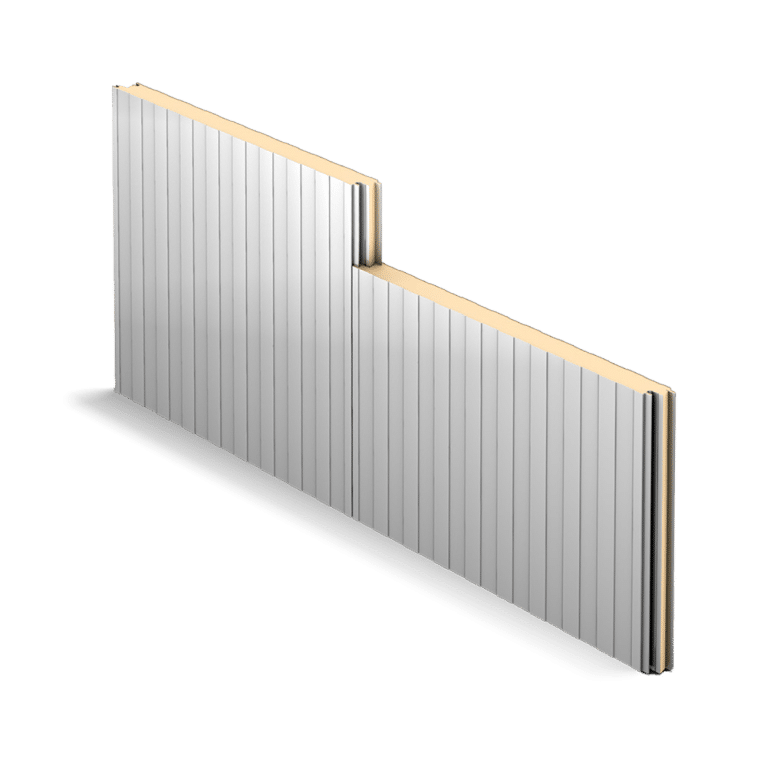
The lined profile provides strength, facilitates foam adhesion and helps minimize natural imperfections in the steel faces. The shallow Mesa rib and the Green-Lock side-joint help ensure a high-performance vapor seal.
Panel uses are exterior wall, partition wall, liner wall and ceiling. The coverage width is 42-inch. The panel thickness runs from 2-inch to 8-inch.
Sizes and versions
MesaLine comes in seven thicknesses and three exterior gauges. The interior gauge is 26 on every version.
- Coverage width: 42-inch
- Thickness: 2, 2.5, 3, 4, 5, 6 and 8-inch
- Length: 8'-0" to 75'-0"
- Exterior gauge: 26, 24 and 22
- Interior gauge: 26
Panels are made with embossed or smooth textures. Both the exterior and the interior face can take either texture.
Data sheets and technical documents
Current files
Archived files
No older reviewed revisions are archived for this product yet.
Steel faces and finishes
The exterior substrate is Galvalume or stainless steel. The interior substrate is also Galvalume or stainless steel.
Exterior finishes are polyester, siliconized polyester, low-gloss PVDF and plastisol (PVC). Interior finishes are polyester, siliconized polyester and plastisol (PVC).
The facer and liner of the panel are 26-gauge minimum. Finish is embossed or smooth.
Foam core and joint
The core is continuously poured-in-place polyisocyanurate insulating foam. The foam adheres to the lined faces, and open-cell content testing returned at least 90% closed cells.
- Shear strength: 16-psi
- Compressive strength: 18-psi
- Apparent density: 2.25-pcf
- Tensile strength: 21-psi
The side joint is Green-Lock, an offset double tongue-and-groove. The joint carries the vapor seal between adjacent 42-inch panels.
Foam core tests follow ASTM C273 for shear, ASTM D1621 for compressive strength, ASTM D1622 for apparent density, ASTM D1623 for tensile strength and ASTM D6226 for open cell content.
Thermal, air and water performance
Heat flow meter testing to ASTM C518 gave a K-factor of 0.139 BTU-in/hr-ft2-F° at 75° mean and 0.129 at 35° mean.
R-values by thickness, at 75° mean and at 35° mean:
- 2.00-inch: 15.25 and 16.35
- 2.50-inch: 18.85 and 20.23
- 3.00-inch: 22.45 and 24.10
- 4.00-inch: 29.65 and 31.85
- 5.00-inch: 36.85 and 39.60
- 6.00-inch: 44.05 and 47.35
- 8.00-inch: 51.25 and 55.10
These R-values include air-films on each side of the panel and were derived from ASTM C518 results.
Air leakage under ASTM E283 measured 0.0011-cfm/sf at 20-psf. Water penetration under ASTM E331 was zero at 20-psf.
Fire, impact and durability testing
Surface burning under ASTM E84 gave a flame spread under 25 and smoke developed under 450. The panel passed NFPA 285. It is Class 1 fire rated under FM 4880 and Class 1 approved under FM 4881.
Impact testing follows TAS 201, the Florida Building Code impact test procedure. Structural performance was tested to ASTM E1592 and ASTM E72, with results in load tables.
Bond strength tests showed no failure of the panel bond:
- Fatigue endurance: 2,000,000 alternating cycles of L/180 deflection, with no facer or liner delamination, foam core fracture or permanent set.
- Freeze/heat cycle: twenty-one eight-hour cycles from –20° F to 180° F, with no delamination, blistering or permanent set.
- Humidity endurance: 1,200 hours of 93% humidity at 158° F, with no delamination, blistering or interface corrosion.
- Autoclave: exposure to 218° F and a pressure of 2-psig for 2½ hours, with no facer or liner delamination.
Approvals
MesaLine holds a Miami-Dade County Notice of Acceptance, a Florida Product Approval and a Department of Insurance product evaluation. It is also FM Class 1 approved as an exterior wall system.
Weights across gauge combinations
Panel weight depends on thickness and on the steel gauge of the facer and liner. The figures below are psf for 42-inch wide panels, listed as facer/liner gauge.
- 2-inch: 26/26 is 2.10, 24/26 is 2.32, 22/26 is 2.63, 26/24 is 2.31, 24/24 is 2.52, 22/24 is 2.84, 26/22 is 2.62, 24/22 is 2.83 and 22/22 is 3.15.
- 4-inch: 26/26 is 2.52, 24/26 is 2.73, 22/26 is 3.05, 26/24 is 2.72, 24/24 is 2.94, 22/24 is 3.26, 26/22 is 3.03, 24/22 is 3.25 and 22/22 is 3.57.
- 8-inch: 26/26 is 3.36, 24/26 is 3.57, 22/26 is 3.89, 26/24 is 3.56, 24/24 is 3.76, 22/24 is 4.08, 26/22 is 3.87, 24/22 is 4.07 and 22/22 is 4.39.
The lightest 42-inch combination is the 2-inch panel with 26-gauge facer and liner at 2.10 psf. The heaviest is the 8-inch panel with 22-gauge facer and liner at 4.39 psf.
The 2-inch 26/26 panel weighs 2.14 psf at 36-inch width and 2.18 psf at 30-inch width.
Panel weights and what each version is for
Weights for 42-inch wide panels with 26-gauge facer and liner, in psf:
- 2-inch: 2.10
- 2.5-inch: 2.21
- 3-inch: 2.31
- 4-inch: 2.52
- 5-inch: 2.73
- 6-inch: 2.94
- 8-inch: 3.36
A 22-gauge exterior with a 26-gauge interior at 2-inch thickness weighs 2.63 psf. At 8-inch thickness the same gauges weigh 3.89 psf. The heaviest 42-inch combination, 22-gauge facer and liner at 8-inch thickness, weighs 4.39 psf.
Exterior wall panels face the weather side of a building. Liner wall and ceiling panels line interiors. Partition wall panels divide interior spaces. Stainless steel substrates and the PVC plastisol finish are available on both faces.