WaveLine Insulated Wall Panel
- Manufacturer
- Green Span Profiles
- Product
- WaveLine Insulated Wall Panel
- Status
- Current
- Market
- United States
- Latest revision
- R2
- Latest file date
- May 1, 2023
- Last verified
- October 15, 2026
What WaveLine is and where it is used
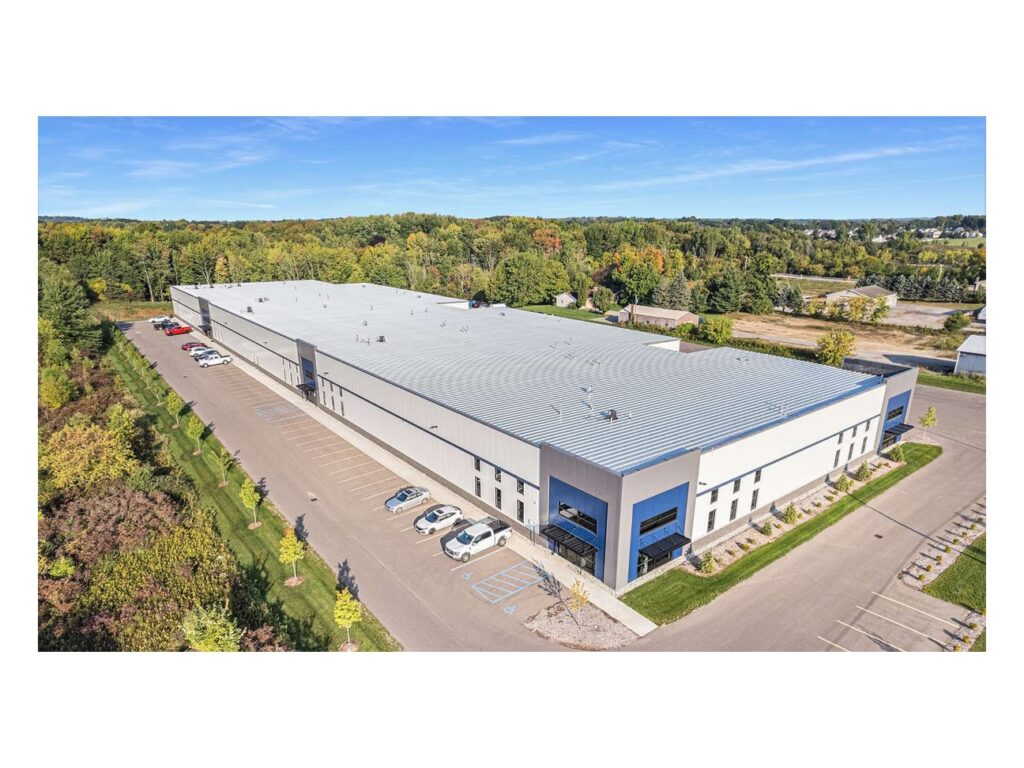
WaveLine is an insulated metal panel from Green Span Profiles. Its panel use is exterior wall. It is one of the profiles in the manufacturer's IWP Series of insulated metal wall panels, and it suits insulated metal panel roofs and walls on commercial and industrial buildings.
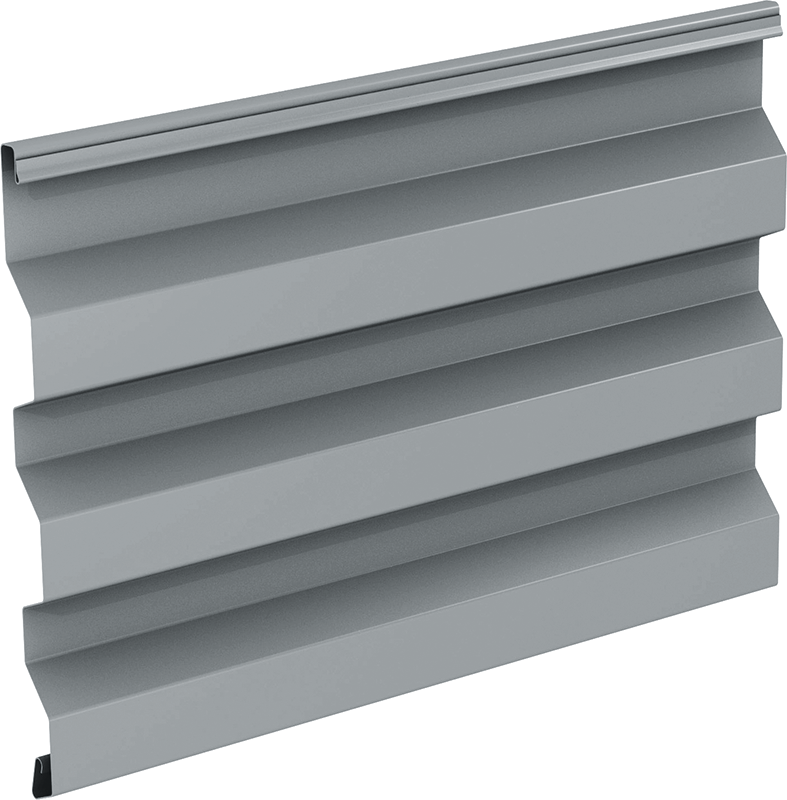
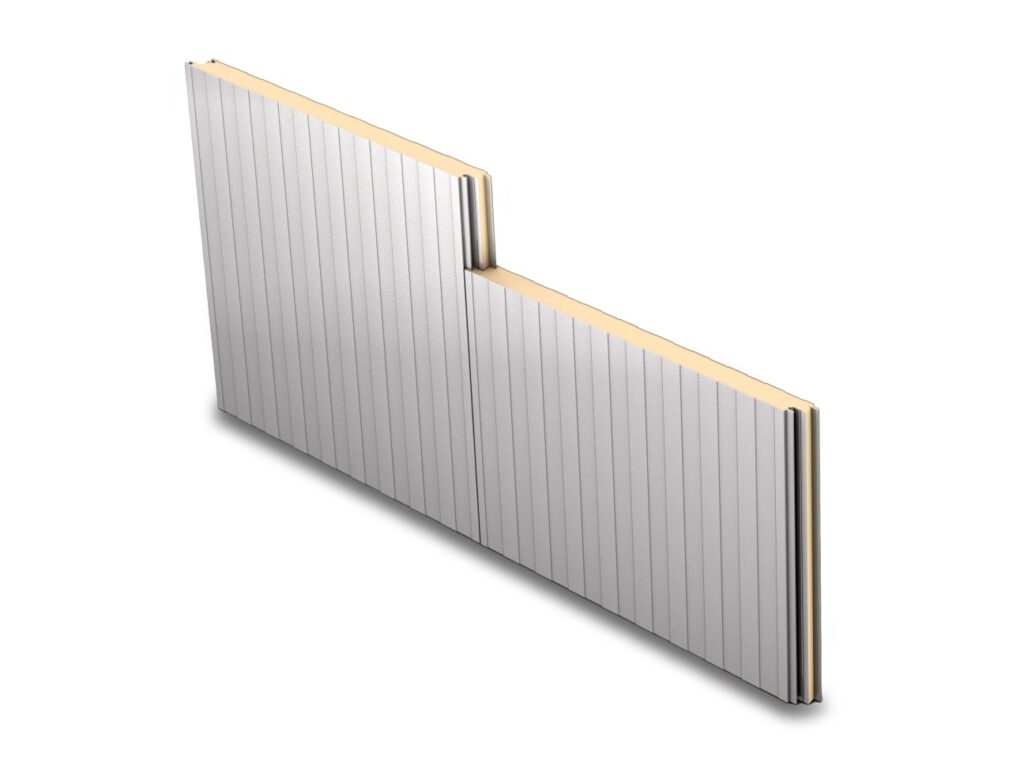
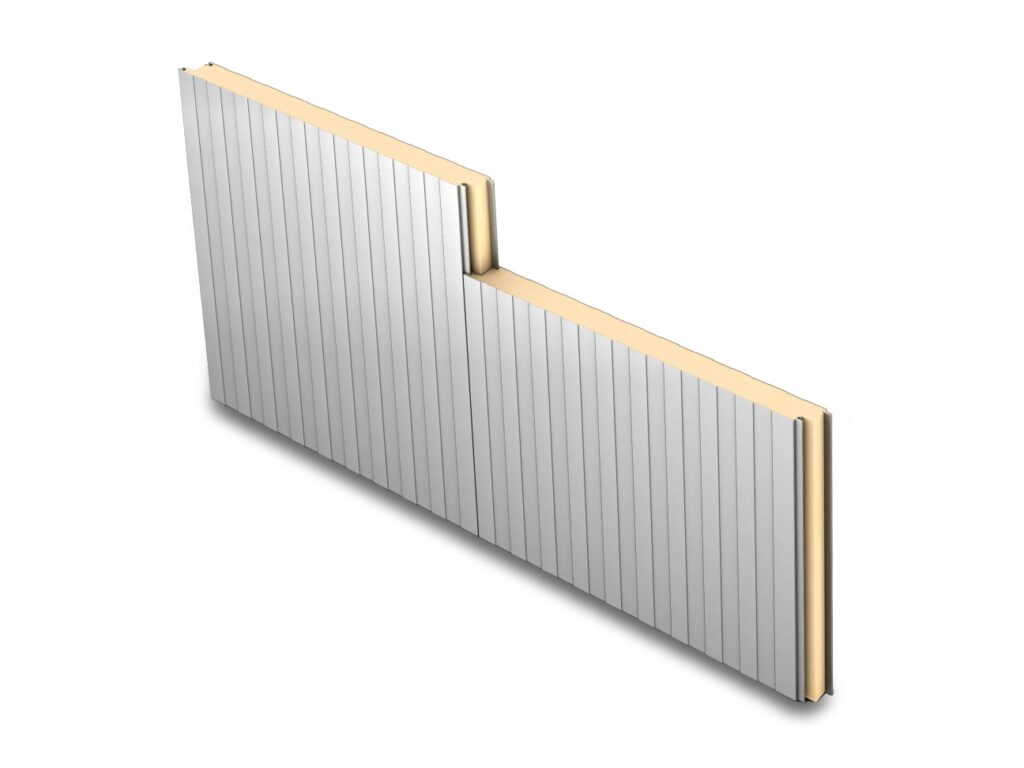
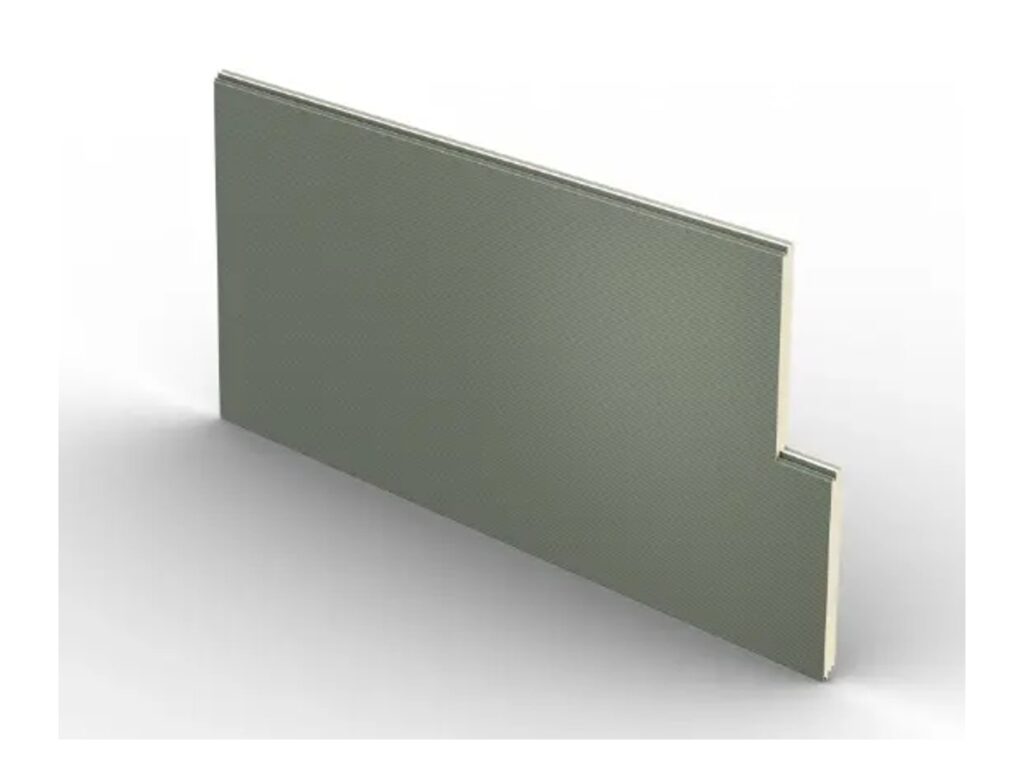
The face of the profile is micro-corrugated. That gives a more architectural look for designers who want a distinctive wall. The panel runs in vertical as well as horizontal applications. The Green-Lock side joint gives a high-performance vapor seal in both directions.
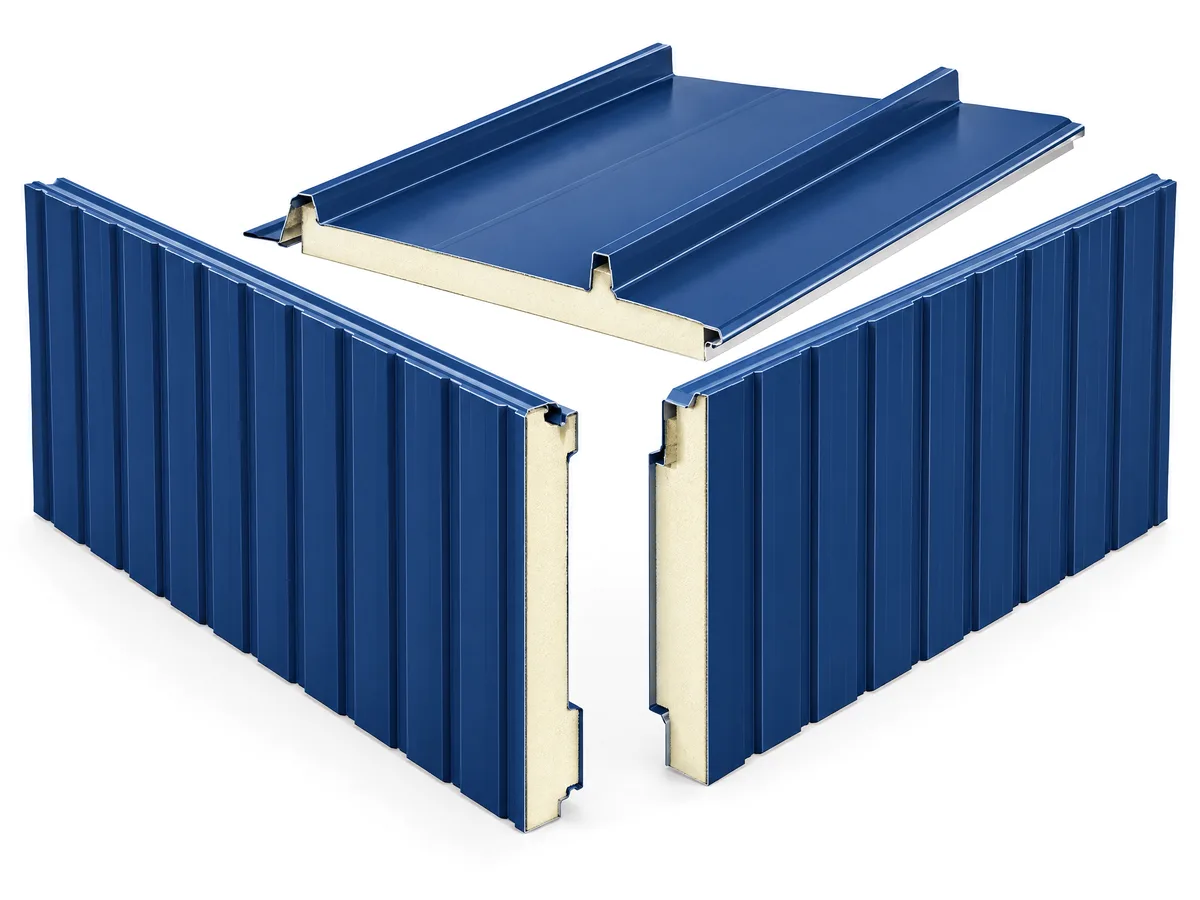
Each panel is a factory-made sandwich. A metal exterior facer and a metal interior liner enclose a continuously poured-in-place polyisocyanurate insulating foam core. The panel is made in Waller, TX by Green Span Profiles.
Sizes and versions
Every WaveLine panel covers 42 inches of wall width. Thickness, length and metal gauge change from one version to the next.
- Coverage width: 42-inch
- Thickness: 2, 2.5, 3 or 4-inch
- Length: 8'-0" to 40'-0"
- Exterior gauge: 24 or 22
- Interior gauge: 26
The section drawing labels the panel face with its 42-inch coverage, with the exterior on one side and the interior on the other. The section drawing marks the thickness range as 2 inches to 4 inches. The interior liner stays at 26 gauge in every version.
Data sheets and technical documents
Current files
Archived files
No older reviewed revisions are archived for this product yet.
Materials, finishes and textures
Both facers are Galvalume steel. The exterior substrate and the interior substrate use the same material.
- Exterior finish: siliconized polyester or low-gloss PVDF
- Interior finish: polyester or siliconized polyester
- Exterior texture: embossed or smooth
- Interior texture: embossed or smooth
The exterior face can be ordered with a conventional siliconized polyester coat or with a low-gloss PVDF coat. Embossed and smooth textures are available on both the exterior and the interior face, so the two faces do not have to match.
Joint and core
The side joint is the Green-Lock, an offset double tongue-and-groove. The joint carries the vapor seal in vertical and horizontal runs.
The core is polyisocyanurate foam, poured in place in one continuous operation between the two metal faces. The nominal R-value is R-8 per inch of thickness. Heat-flow-meter tests under ASTM C518 give a K-factor of 0.139 BTU-in/hr-ft2-F° at 75° mean and 0.129 BTU-in/hr-ft2-F° at 35° mean.
Foam core characteristics were tested to five ASTM methods. The results are listed below.
- Shear strength: 16-psi (ASTM C273)
- Compressive strength: 18-psi (ASTM D1621)
- Apparent density: 2.25-pcf (ASTM D1622)
- Tensile strength: 21-psi (ASTM D1623)
- Open cell content: at least 90% closed cells (ASTM D6226)
Air, water and fire performance
Air leakage measures 0.0011-cfm/sf at 20-psf under ASTM E283, the test for air leakage through exterior windows, curtain walls and doors under specified pressure differences. Water penetration under ASTM E331, which applies a uniform static air pressure difference, is zero at 20-psf.
Surface burning characteristics under ASTM E84 are flame spread below 25 and smoke developed below 450. The panel passed NFPA 285, the fire test for exterior non-load-bearing wall assemblies containing combustible components. It is Class 1 fire rated under FM 4880, the standard for insulated wall and wall and roof/ceiling panels.
Load performance was tested to ASTM E1592, the structural performance test for sheet metal roof and siding systems by uniform static air pressure difference, and to ASTM E72, the strength test for panels for building construction. The results are published in load tables.
Approvals and impact resistance
The panel is tested to FM 4881, the Class 1 exterior wall systems standard, and is Class 1 approved under it. Impact resistance was tested to TAS 201, the Florida Building Code impact test procedure.
- Miami-Dade County Product Control Section Notice of Acceptance
- Florida Product Approval from the State of Florida
- Department of Insurance product evaluation
- FM Approval as a Class 1 exterior wall system
Bond strength and durability
Four bond strength tests cover fatigue, temperature cycling, humidity and autoclave exposure. Each one is listed here with its result.
- Fatigue endurance: 2,000,000 alternating cycles of L/180 deflection. No evidence of facer or liner delamination, fracture of foam core or permanent set.
- Freeze/heat cycle: twenty-one (21) eight-hour temperature cycles from -20° F to 180° F. No evidence of delamination, blistering or permanent set.
- Humidity endurance: 1,200 hours of 93% humidity at a temperature of 158° F. No evidence of delamination, blistering or interface corrosion.
- Autoclave: exposure to 218° F and a pressure of 2-psig for 2½ hours. No evidence of facer or liner delamination.
What each version is for
All versions are exterior wall panels with the same 42-inch coverage, the same Green-Lock joint and the same polyisocyanurate core. Thickness sets the insulation depth, since the nominal R-value is R-8 per inch. A 2-inch panel is nominally R-16 and a 4-inch panel is nominally R-32.
Gauge sets the exterior metal thickness, with 24 and 22 offered against a 26-gauge interior. Length runs from 8'-0" to 40'-0".
Finish and texture set the look. The exterior takes a siliconized polyester or low-gloss PVDF finish in an embossed or smooth texture. The interior takes a polyester or siliconized polyester finish in an embossed or smooth texture. The micro-corrugated profile stays the same in every version.