
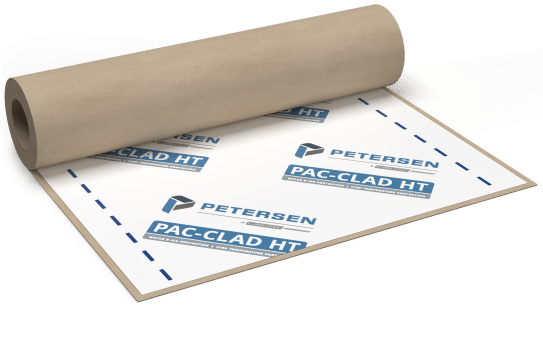
PAC-CLAD HT Underlayment
- Manufacturer
- PAC-CLAD | Petersen
- Product
- PAC-CLAD HT Underlayment
- Status
- Current
- Market
- United States
- Last verified
- September 7, 2026
Overview
PAC-CLAD HT is a self-adhering, high-temperature roofing underlayment from Petersen. It is a rubberized asphalt membrane applied beneath the roof covering. It is made in black or white. The membrane has a skid-resistant surface and high tensile strength.
A split-release film is used for installation, and an exposed rubberized asphalt bead along the membrane edge seals lap seams.
Temperature performance
The adhesive resists temperatures up to 250 degrees F without degradation. Storage temperatures are 40 to 100 degrees F (4.4 to 38 degrees C).
Air, roof deck and membrane temperatures at or above 40 degrees F (4.4 degrees C) are required at installation. Below 40 degrees F, the membrane is nailed or primed to hold it while adhesion develops, and priming is required on all substrates.
Data sheets and technical documents
Current product files and retained historical revisions.
Current files
No current reviewed file has been matched to this product yet.
Archived files
No older reviewed revisions are archived for this product yet.
Sun exposure and storage
The black membrane may be exposed to sunlight for no more than 60 days. The white membrane may be exposed for up to 180 days. Pallets are not double-stacked, and rolls are stored on their side under cover.
Substrates and adhesives
Priming is not required on clean, dry wood, metal or most polyisocyanurate surfaces. Polyisocyanurate with a paper facer requires priming. Masonry and exterior gypsum boards such as DensDeck should be primed, and some porous or dusty rigid insulation may need priming. Approved adhesives are CCW-702, CCW-702WB, CAV-GRIP and CCW-AWP.
Uses
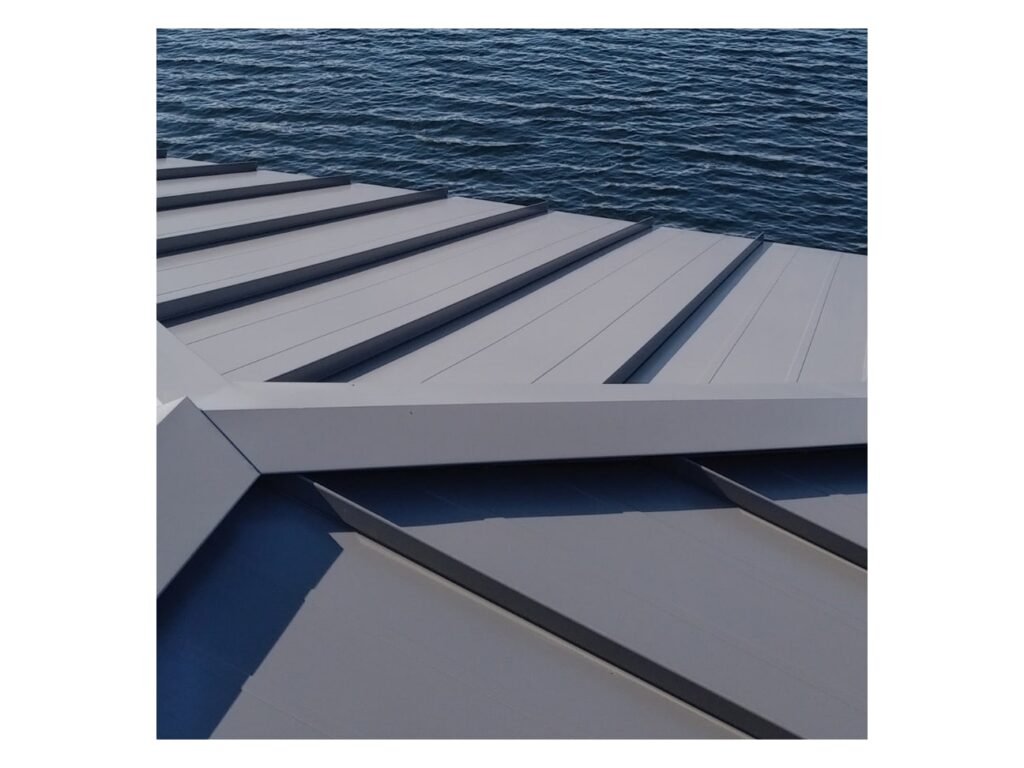
The membrane protects against water infiltration from ice dams and wind-driven rain and seals around roofing fasteners. It can be applied to critical areas or to the entire roof. It is concealed waterproofing that does not affect the appearance of the primary roofing, including standing seam metal roofing.
Installation conditions
The roof deck must be dry and free of moisture, with loose objects, dirt, dust and debris removed. On re-roofing, old materials are removed in the covered area, water-damaged sheathing is replaced and the deck is swept.
Limitations
- It must not be used in contact with PVC material.
- It is not approved for foam-set applications.
- It is not designed for wall assemblies.
- The membrane is not folded over the roof edge unless protected by a gutter or other flashing.
- The primary roof system must be ventilated.
- The membrane can be slippery when wet or frosted.
Approvals and technical bulletins
Listings include ICC-ES Evaluation Report ESR-2206, a Florida Product Approval for underlayment and Miami-Dade Notices of Acceptance. The defect warranty covers material stored properly and used within one year of the manufacture date. Material installed more than one year after manufacture is not covered by the defect warranty.
Five technical bulletins are published:
- Installation over OSB sheathing
- Minimum roof slope requirements
- Use as a roofing underlayment air and vapor barrier
- Repair procedures
- Priming, titled "When in Doubt Prime It"
Detail drawings
PDF drawings are published for these details:
- Chimney flashing
- Covered fixed valley
- Exposed fixed valley
- Floating valley
- Valleys
- Dormers
- Metal eave
- Rake and eave
- Pipe penetration
- Roof to wall transition
- Inside and outside corners
Installing this in San Antonio or Austin?
We install R-panel roofs and wall cladding on commercial and industrial buildings from our Bulverde office.
Related products
Contribution history
Published changes remain in this permanent record. Corrections create a new entry instead of deleting earlier history.
- September 7, 2026 at 2:41 pmLibrary Record
Technical Library first verified catalogue capture
First verified capture of the current official product page. Website record update only; not evidence of product launch or manufacturer change.
By TCR editorial team · Verified Primary Source