Closure-Foam
- Manufacturer
- Marco Industries
- Product
- Closure-Foam
- Status
- Current
- Market
- United States
- Last verified
- October 15, 2026
What Closure-Foam is
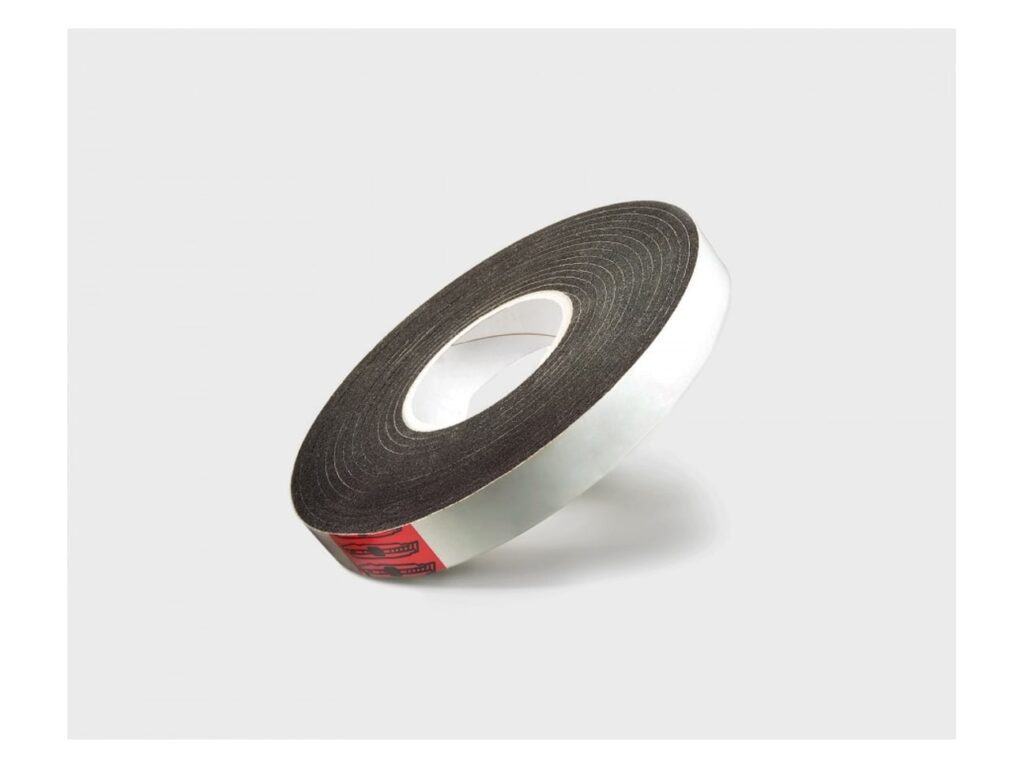
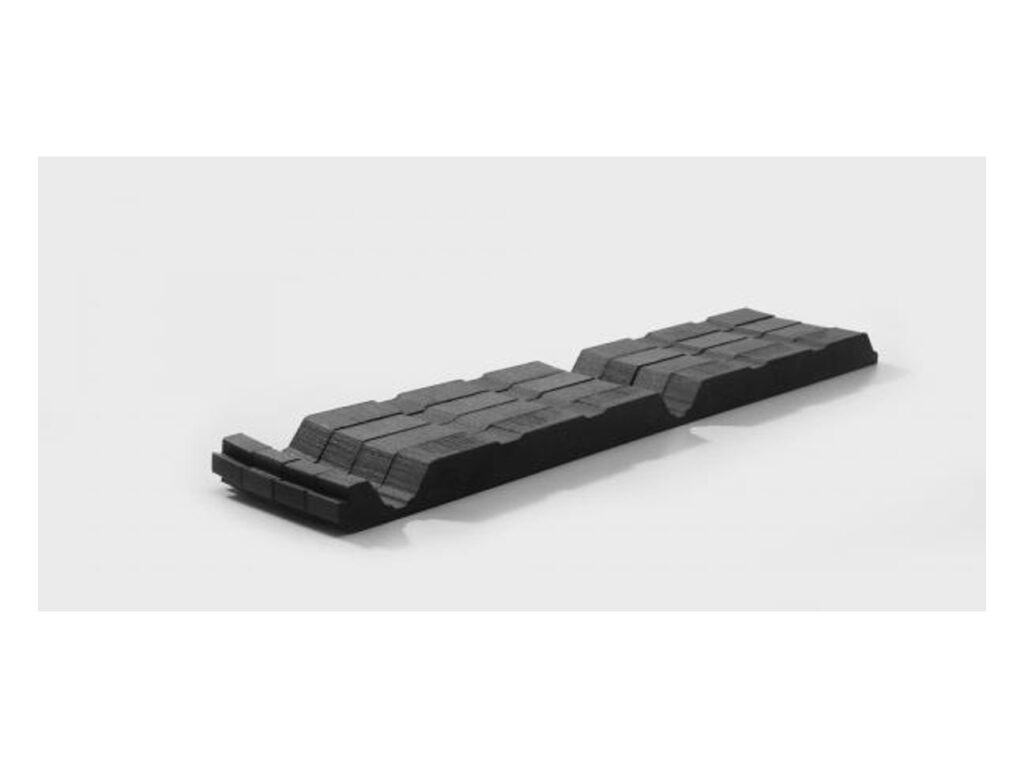
Closure-Foam is a custom-fit foam closure system from Marco Industries. Each piece is cut to the profile of a metal roof panel and fits the underside of the panel. It is part of the Marco Weather-Tite System, which also includes fasteners, flashing, sealants, underlayment, ventilation and other closures.
The strips are used with exposed-fastener panels, the type installed in a metal roof replacement project. The panel is screwed down through the closure, so the foam is compressed between the panel and the surface below. Marco lists Closure-Foam as an inside and outside closure with adhesive. It is made in North America.
The product is a crosslink polyethylene foam with a protective coating. It carries a 40-year limited warranty.
Profiles and versions
Closure-Foam comes in more than 450 standard profiles and in custom sizes. The profiles cover every application, and the foam is offered in a variety of thicknesses. Because each strip follows the shape of the panel rib, one profile is matched to one roof panel.
- Standard profiles: more than 450.
- Custom sizes: available for panels that no standard profile fits.
- Without dovetails: the most common version.
- With interlocking dovetails: available with or without adhesive.
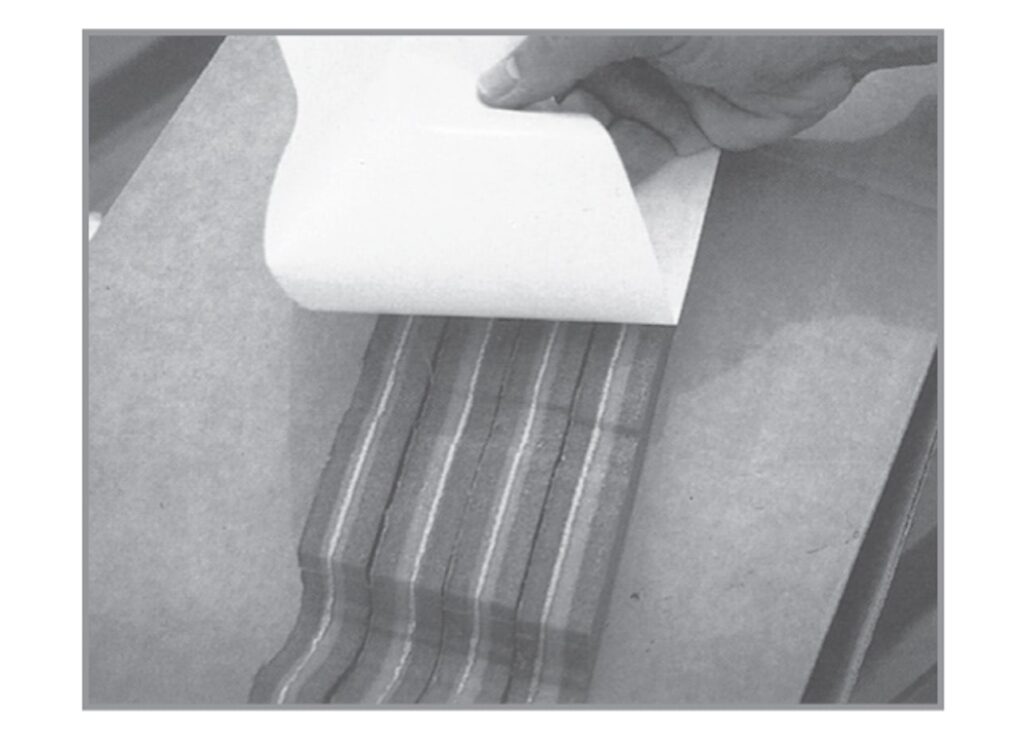
- Adhesive bead: applied to either the flat side or the ribbed side.
Closure-Foam ships pre-scrapped. No excess scrap is left to clear, so cleanup is lighter.
Data sheets and technical documents
Current files
Archived files
No older reviewed revisions are archived for this product yet.
Adhesive and dovetails
Marco M63 industrial adhesive holds the strip in place. The adhesive is meant to stop blow-away problems during installation. The bead is a generous 1/4 inch bead, and a full bead is applied once the strip is installed.
The bead can go on the flat side or on the ribbed side of the foam. The adhesive adheres in subfreezing temperatures and on wet surfaces.
Interlocking dovetails are cut into the ends of the strips in the dovetail version. They eliminate gaps and give a snug end-to-end fit where one strip meets the next. The dovetail version is offered both with adhesive and without it. Most Closure-Foam is used without dovetails.
Material and UV coating
Closure-Foam is made from crosslink polyethylene foam with a coating, formed under pressure during manufacturing, that protects it from UV rays.
The strip is manufactured as a skin-on foam. Its nominal density, skin to skin, is 24 kg/m3, and the typical cell diameter is 0.3 mm. The values below are the LD24 values.
Physical properties
The foam is soft and compresses under load, then recovers. These are the printed values for the LD24 foam.
- Shore hardness, 00 scale, 10 mm cell/cell thickness (ISO 868 1985): 50 00. Durometer (50): Shore 00.
- Compression stress-strain (BS ISO 7214 1998), 10% compression: 34 kPa.
- 25% compression: 53 kPa.
- 40% compression: 85 kPa.
- 50% compression: 118 kPa.
- Compression set, 25% comp, 22 hr, 23° C/73° F: 27% set after a 1/2 hr recovery and 19% set after a 24 hr recovery, both at 25 mm cell-cell.
- Tensile strength (ISO 7214 1998): 320 kPa.
- Tensile elongation: 130%.
- Tear strength (BS EN ISO 8067 1995): 495 N/m.
- Water: 5% lbs/ft3.
Stress rises from 34 kPa at 10% compression to 118 kPa at 50% compression. After a 22 hour hold at 25% compression, the foam recovers from 27% set at one half hour to 19% set at 24 hours.
Temperature, thermal and fire values
The recommended operating temperature range is +100° C/-70° C (+212° F/-97° F). Thermal conductivity at a mean temperature of 10° C/50° F is 0.0392 W/m.K (ISO 8302 1991).
Two flammability results are printed for the foam.
- Automotive flammability (FMVSS.302 burn rate): pass at 12 mm and thicker, with a burn rate under 100 mm/min.
- Horizontal burn rate (ISO 7214 1998): 2.1 mm/sec at 5 mm thick and 1.5 mm/sec at 13 mm thick.
The thicker foam burns more slowly in the horizontal test, which gives 1.5 mm/sec at 13 mm against 2.1 mm/sec at 5 mm.
How Closure-Foam is installed
One person can install Closure-Foam in three steps. The strips are self-adhesive and pre-cut to the panel configuration, so no field cutting of the profile is part of the sequence.
- Make sure the self-adhesive closure configuration fits the roof panel used.
- The inside closure fits the underside of the panel.
- Place the roof panel over the pre-cut closure configuration for a snug fit. Attach the panel over the closure with Marco QuikGrip or QuikDrill fasteners.
QuikGrip is the Marco metal-to-wood fastener. QuikDrill is the Marco metal-to-metal fastener. Both are part of the Weather-Tite System, so the closure and the fastener come from one product line.
What each version is for
The standard profile with an adhesive bead is the working version for most panel runs. The bead can go on the flat side or the ribbed side, and it holds the strip against wind and wet surfaces until the panel is set and fastened.
The dovetail version is for runs where end-to-end gaps are a concern. The interlocking ends close the joint between strips. It is offered with adhesive for the same blow-away protection, or without adhesive.
Custom sizes are for panels that fall outside the more than 450 standard profiles. The variety of thicknesses lets the strip match the open area under the panel.
For a valley or hip, where a standard 90-degree closure does not fit, Marco makes Anglekut. Anglekut beveled closures are made from the same crosslink polyethylene foam, can be cut at any angle, and replace materials such as polyurethane strips or caulking.