LP2 Ridge Vent
- Manufacturer
- Marco Industries
- Product
- LP2 Ridge Vent
- Status
- Current
- Market
- United States
- Last verified
- October 15, 2026
What LP2 Ridge Vent is
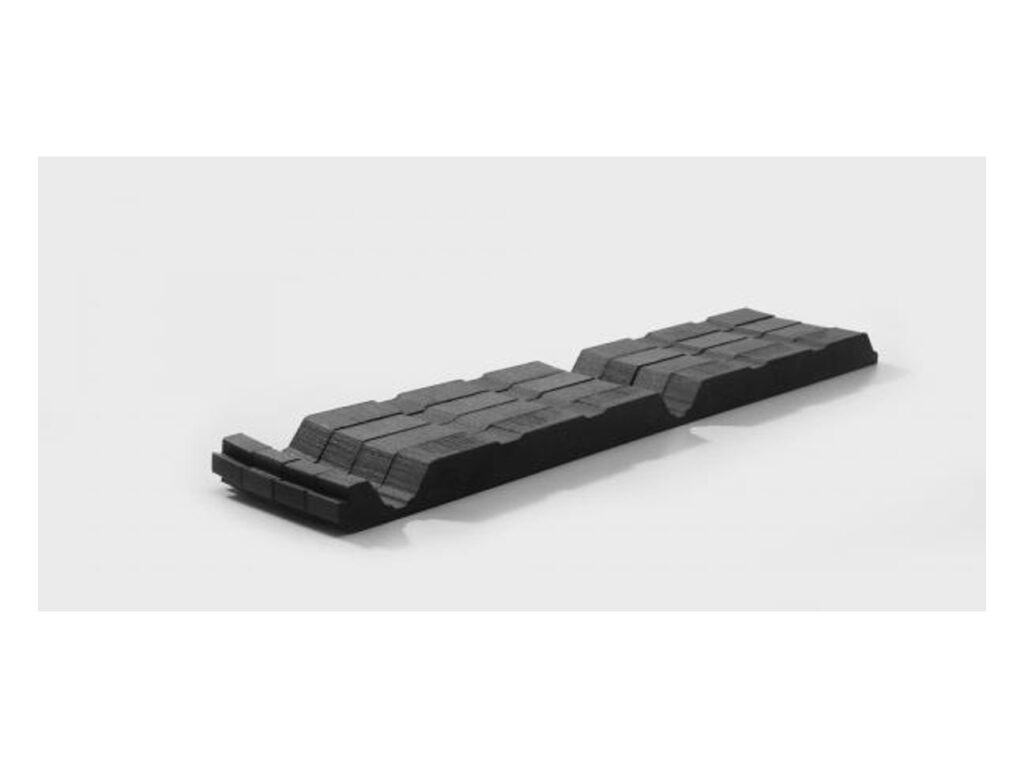
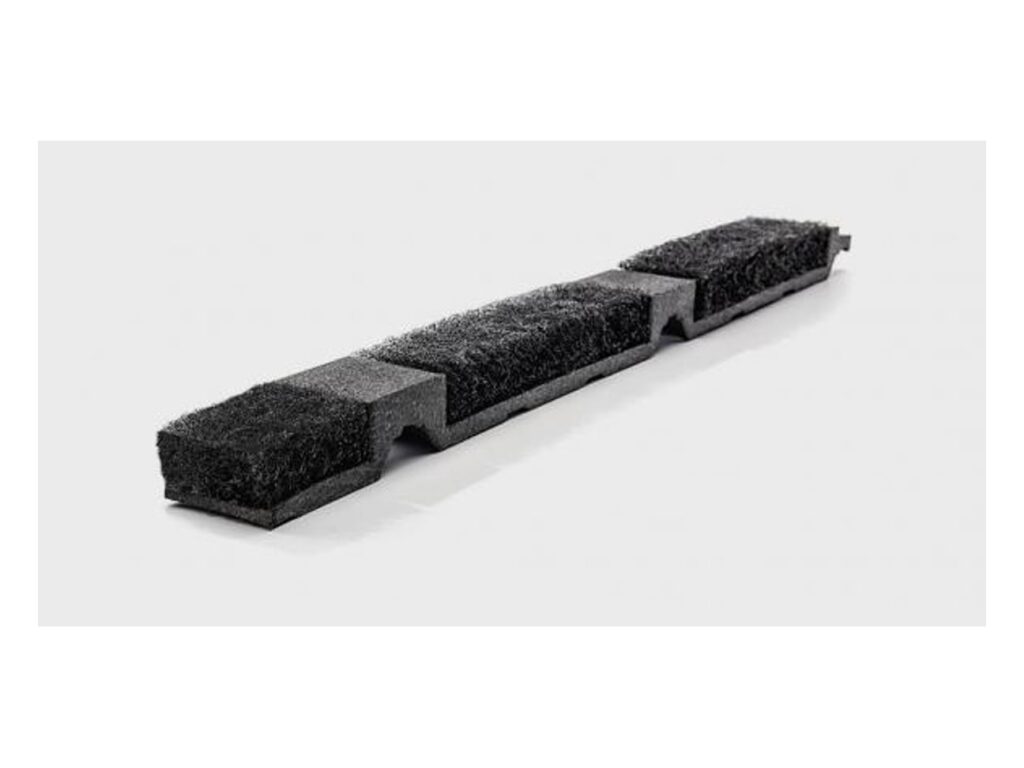
LP2 Ridge Vent is a custom-cut vent strip for the ridge of a metal roof. It is part of the Marco Weather-Tite System and is made from non-fabric-covered Python vent material. The material is a modified polyester, a non-woven, non-wicking, fiber-based matting. It is a low profile ridge vent that sits under the ridge cap and fits almost all major metal roofing pitches and profiles because of its shape.
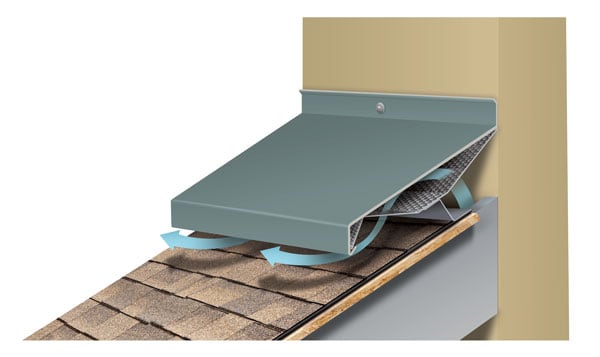
The strip is used on metal roof replacement with exposed-fastener panels, where a 2" slot is left at the ridge and the vent closes the gap beneath the ridge cap. Specially cut contours give a custom, low-profile fit for any pitch and most major metal roof profiles. The vent keeps out moisture, pests and dust while air moves through the slot.
LP2 improves ventilation and eliminates condensation. It also reduces utility costs, and its appearance is non-obtrusive.
Versions and sizes
LP2 is the top tier of three Marco ventilation products. Flex-O-Vent, FlexPro and LP2 Ridge Vent rank as good, better and top in the Marco line. LP2 is the custom-cut vent strip with Python polyester vent material inserts.
- Supply: 75 feet to a box.
- Pieces: 25 three-foot sections per box.
- Dimensions: vary with profile.
- Net free area: varies with profile, based on 17 square inches per linear foot of ventilation material.
- Warranty: 40-year limited.
Each section is cut to match a metal roof profile, so the dimensions follow the profile. The net free area of any section follows the same basis of 17 square inches per linear foot of ventilation material. The effective net free area is determined by profile, and the product was tested in an unassembled state.
Data sheets and technical documents
Current files
Archived files
No older reviewed revisions are archived for this product yet.
Materials and construction
The vent insert is Python material, a modified polyester that is non-woven, non-wicking and fiber-based. The vent is not fabric covered. The polyester is made with recycled materials, and the product carries a Made with Recycled Material mark. It is proudly made in North America.
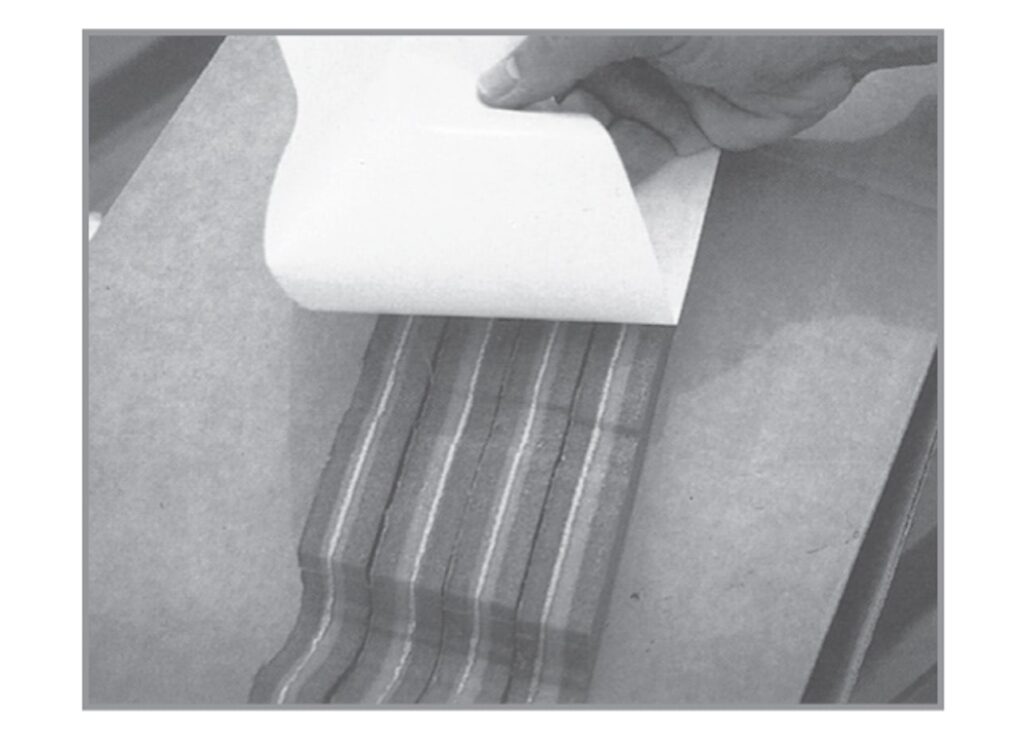
Each LP2 has a screw bed and industrial strength peel-and-stick adhesive pre-applied. The adhesive is Marco's proprietary M63 adhesive, applied as a double bead. The closure material does not bleed, dry out or dissolve with weather and UV exposure.
The screw bed is the part of the strip that takes the fasteners. Fasteners go through the screw bed locations, which keeps them out of the insert material.
Ventilation and material properties
The overall properties and the Python material properties share the same figures for several tests.
- Net free area: varies with profile, based on 17 square inches per linear foot of ventilation material.
- Cold cracking: -25 degrees F.
- Tear and tensile strength: machine 25 ppi, counter 25 ppi.
- Compressive strength: 1.8 psi at 75%.
- Rain: no leakage.
- Self-ignition temperature of the Python material (ASTM D1929): 963 degrees F.
Tear strength follows ASTM D1294-86. Tensile strength follows ASTM D2261-83. The vent material is rated for no leakage in the rain test and for cold cracking at -25 degrees F.
Closure material properties
The closure material of the strip has its own test figures. The nominal density, skin to skin, is 24 kg/m3 (BS ISO 7214 1998).
- Compression stress-strain at 10% compression: 34 kPa.
- At 25% compression: 53 kPa.
- At 40% compression: 85 kPa.
- At 50% compression: 118 kPa.
- Shore hardness, 00 scale, 10 mm cell thickness (ISO 868 1985): 50 00.
- Thermal conductivity at a mean temperature of 10 degrees C (ISO 8302 1991): 0.0392 W/m.K.
Flammability is tested two ways. The automotive test (FMVSS.302 burn rate) is passed at 12 mm and thicker, with a burn rate under 100 mm/min. The horizontal burn rate (ISO 7214 1998) is 2.1 mm/sec at 5 mm thick and 1.5 mm/sec at 13 mm thick.
How LP2 is installed
One person can install LP2 in three steps. The installer removes the peel-and-stick strips to apply the vent to the metal roof, then secures the ridge cap over it with fasteners.
- Allow a 2" slot at the ridge of the metal roof for ventilation. Apply the LP2 Ridge Vent to the metal roof by removing the backing paper.
- Align LP2 1/2"-1" up-slope from the edge of the ridge cap. Place it onto the metal roof with the adhesive side down. The adhesive makes the vent hard to move, so it has to be in place the first time.
- To attach consecutive LP2 vents, butt fit the pieces together, sealing with Marco's Weather-Tite Metal Roof Sealant. Place the ridge cap over LP2. Secure with Marco QuickGrip/QuickDrill fasteners through the metal roof ridge locations, using the screw bed locations to avoid penetrating the LP2 insert material.
What each version is for
Marco sells three ridge and profile ventilation products, and each has a defined role.
- Flex-O-Vent is the original and lowest-cost polyester-based ventilation product. It is a universal venting material made from recycled material, and it prevents moisture absorption.
- FlexPro is a profile-cut strip or roll designed to fit most roof panels. It combines features of LP2 and Flex-O-Vent, uses two beads of M63 adhesive, and is available in box or roll quantities.
- LP2 Ridge Vent is the custom-cut vent strip with Python polyester vent material inserts for optimum fit and ventilation.
LP2 is chosen where the vent has to match a specific metal roof profile at the ridge. It is cut to the profile and fits almost all major metal roofing pitches. The strip is supplied in 75 foot boxes of 25 three-foot sections and is installed by one person under the ridge cap.