One Drip Edge
- Manufacturer
- Metal-Era
- Product
- One Drip Edge
- Status
- Current
- Market
- United States
- Latest revision
- D
- Latest file date
- December 12, 2019
- Last verified
- October 14, 2026
Overview
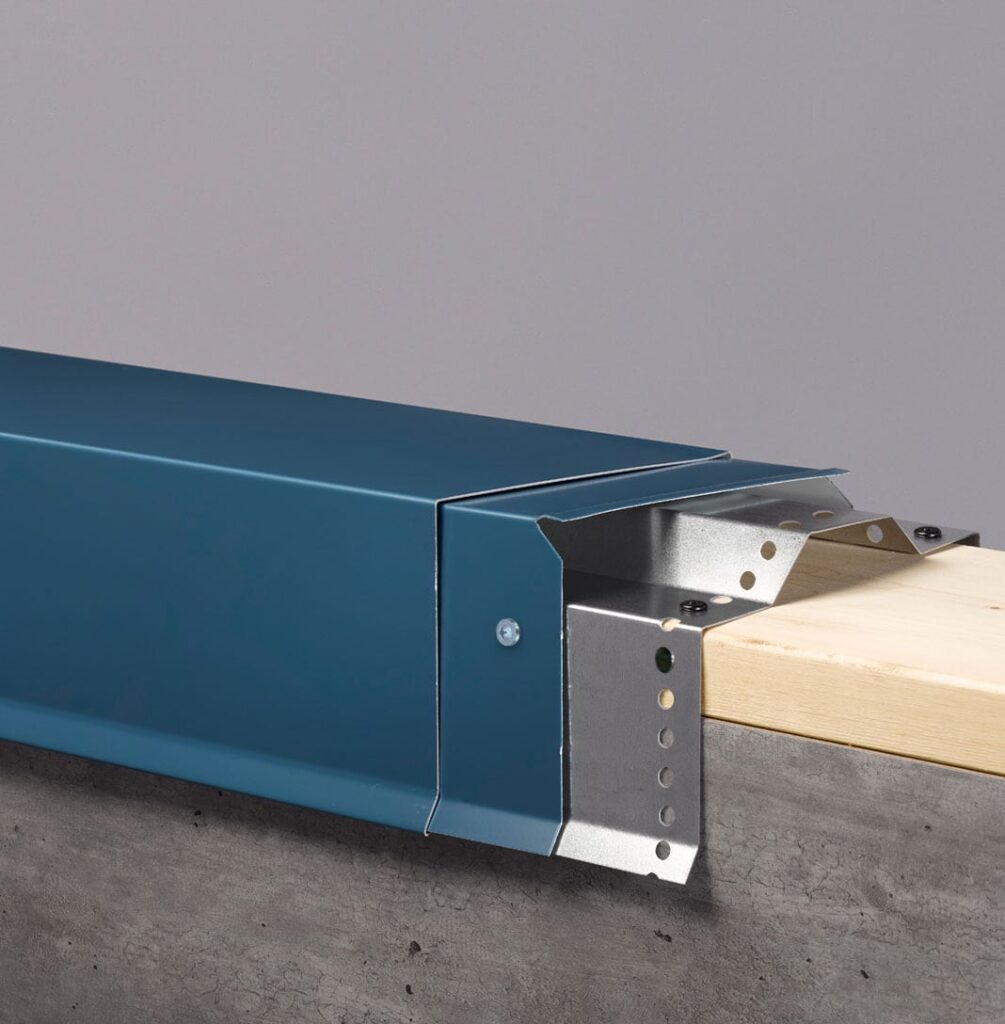
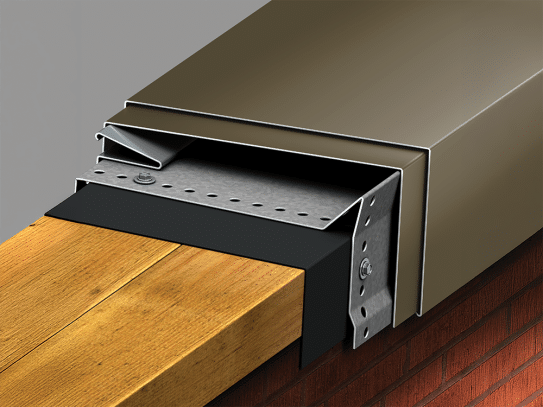
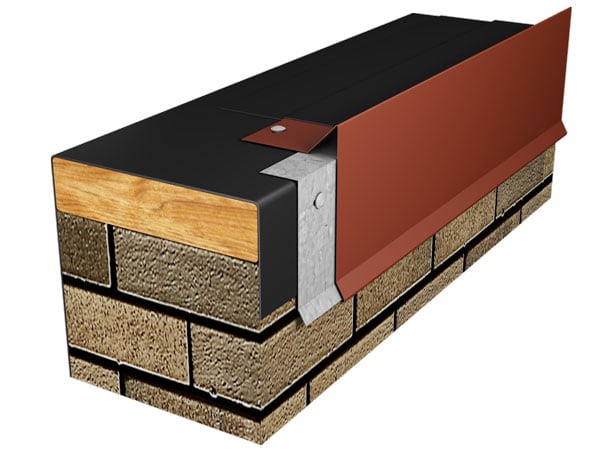
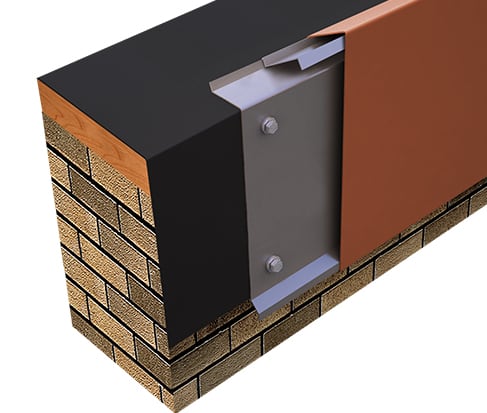
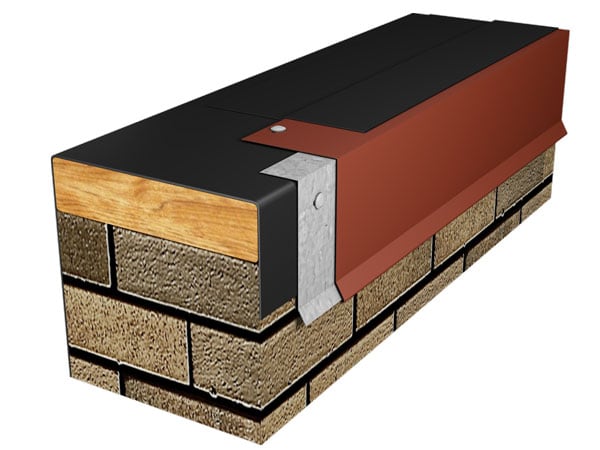
One Drip Edge is a metal roof-edge profile from Metal-Era's Edge Systems One family. It is a drip edge, also called a gravel stop, that finishes the perimeter of a low-slope roof. The face drops down over the edge of the roof, and the membrane runs out over the top flange. The profile is formed from galvanized steel or aluminum and is supplied with a 22-gauge galvanized continuous cleat that holds the lower edge of the face.
This page covers two versions of the same product. The Kynar Version is a painted metal cover supplied in 12-foot lengths. The PVC or TPO Coated Version carries a membrane-matched coating and is supplied in 10-foot or 12-foot lengths, depending on the membrane manufacturer. Both versions are listed under the Metal-Era Gravel Stop / Drip Edge product type.
Metal-Era offers the system with a 10-year, 90 MPH wind warranty, and it is tested to ANSI/SPRI/FM 4435/ES-1, FM approved for wind uplift and Miami-Dade approved. Drip edge of this kind is one of the perimeter metal components used to finish low-slope roof assemblies, where the roof membrane terminates at the building edge.
Versions and face heights
The standard versions listed for the family are Kynar, Flash-Thru, and PVC- and TPO-coated, with the coated versions made in skirted and non-skirted forms. Face height is the vertical dimension of the cover.
- Kynar version: face heights from 1 1/4 in. to 10 in.
- Flash-Thru version: face heights from 2 in. to 6 in.
- PVC- and TPO-coated versions: face heights of 2 1/2 in. without cleat, and 3 in., 4 in. and 6 in. with cleat.
Metal-Era issues separate print approvals by face height. The 1 1/4-in. to 6-in. version with continuous cleat is rated to an ANSI/SPRI/FM 4435/ES-1 design pressure of 282 psf. The version over 6 in. and up to 10 in. with continuous cleat is rated to 177 psf. Each carries the FM Approved mark.
The coated versions follow the same 1 1/4-in. to 6-in. face range on the TPO print approval with continuous cleat. The TPO version is made in 24-gauge galvanized steel.
Data sheets and technical documents
Current files
Archived files
No older reviewed revisions are archived for this product yet.
How the Kynar and coated versions differ
The Kynar version offers a choice of cover materials and finishes, and the coated version is built around a membrane match.
- Kynar version: covers in 24-gauge galvanized steel, 22-gauge galvanized steel, .040-in., .050-in. or .063-in. aluminum, in 12-ft. lengths, with all splice plates and 22-gauge galvanized continuous cleats included.
- PVC or TPO coated version: 24-gauge drip edge made with major membrane brands, in 10-ft. or 12-ft. lengths, with 22-gauge galvanized continuous cleats included.
The 12-ft. TPO version is 24-gauge galvanized steel coated with GAF TPO, Johns Manville TPO or Carlisle/Versico TPO, in white. The 10-ft. TPO version is 24-gauge galvanized steel coated with Firestone TPO, in white. A separate PVC print approval, with continuous cleat, covers the PVC-coated version.
The TPO prints state that no lap notches and no splice plates are provided and that all fasteners are provided. The Kynar prints state that 6-in.-wide concealed splice plates are included.
Materials and finishes
Kynar covers are manufactured in these materials:
- 24-gauge galvanized steel
- 22-gauge galvanized steel
- .040-in. aluminum
- .050-in. aluminum
- .063-in. aluminum
The finish options and warranties are as follows:
- Coil-coated standard colors carry a 30-year Kynar 500 finish warranty.
- Custom post-coated Kynar 500 colors include a 10-year Kynar 500 finish warranty, and a 20-year warranty is available on request.
- Anodized finishes carry a 5-year warranty. Coil-anodized finishing has no warranty. Post-coat Class 1 batch anodized finishing has a 5-year warranty, with an option to increase it to 10 years for an upcharge.
Pricing for anodized finishes is handled through Metal-Era Technical Services.
Cleat, fasteners and splice plates
The continuous cleat is 22-gauge galvanized steel and is supplied in 12-ft. lengths with slotted holes. The cover hooks onto the cleat along the lower edge of the face. Fastening holes are pre-punched and slotted so that fastener spacing is set and the metal can move with temperature changes.
- Top flange: slotted holes at 6 in. on center.
- Face and cleat: slotted holes at 12 in. on center.
- Fasteners: 1 1/4-in. ring shank roofing nails are provided for all slotted holes.
- Splice plates: 6 in. wide and concealed, and they must be field caulked to prevent water entry on the Kynar versions.
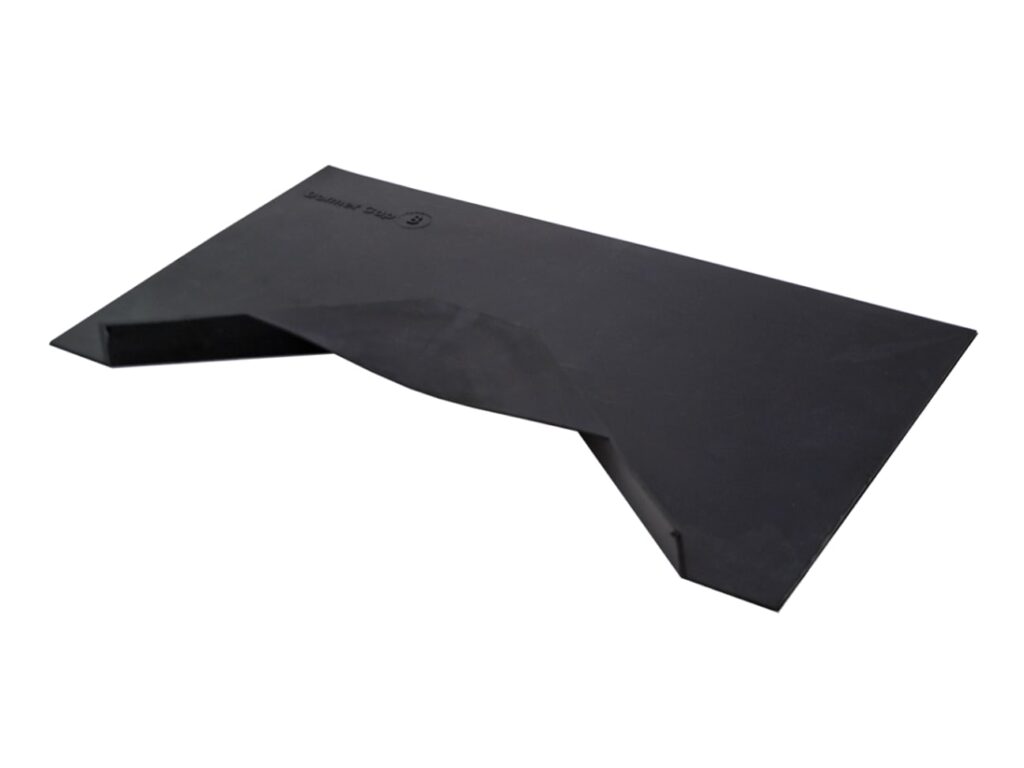
Miters and accessories are furnished with a non-penetrating quicklock joint that is factory sealed watertight, unless noted otherwise. Factory-fabricated miters take the place of field fabrication. Welded miters and accessories are a surcharge option.
Angles, radius work and special shapes
Standard miters are 90 degrees. Non-90-degree corners are covered by separate print approvals: an obtuse-angle version (24010-16683) and an acute-angle version (24010-16684), with a general non-90-degree miter print approval under 11010-1103. The obtuse print shows two styles, one for a flat roof and one for a pitched roof. Metal-Era also publishes a non-90-degree angle measurement worksheet.
Radius work is offered in two constructions:
- Non-welded radius with continuous cleat, in 24-gauge galvanized steel or .040-in., .050-in. or .063-in. aluminum, in 12-ft. lengths. The radius is given as a known radius or taken from field measurements, and areas of the cover are slit as needed to follow the curve.
- Welded radius with continuous cleat, with a .080-in. aluminum flange and a .063-in. aluminum face, in 4-ft. lengths.
Both radius prints use a 36-in. straight edge, measured at its 18-in. midpoint, for field measurements, and both call for measurements to be checked along the entire radius. Fascia extenders, with and without an offset, are listed as related products with their own print approvals and installation instructions.
Testing, approvals and warranty
The system is tested per ANSI/SPRI/FM 4435/ES-1, the roof-edge wind standard referenced by the International Building Code. It is Factory Mutual approved for wind uplift protection and carries Miami-Dade approval 23-0912.08 (12/11/28), which covers One Drip Edge in the High Velocity Hurricane Zone of the Florida Building Code. The TPO versions are ANSI/SPRI ES-1 Tested and Florida Building Code Approved.
The 10-year, 90 MPH Wind Warranty is available on orders that meet a project's specification. For One Drip Edge, the warranty provides a maximum of 10 years and 90 MPH of coverage for repair or replacement of any portion of the roof edge system that has failed because of a defect in Metal-Era supplied materials. The finish warranties described above are separate.
Installation sequence
Metal-Era's instructions for the version with continuous cleat begin with the note to install miters first. The steps run in this order:
- Install the drip edge miters first. Insert one splice plate under each end of the miter, apply high-grade architectural sealant (by others) to the top of each splice plate, and fasten with the provided nails.
- Position 12-ft. continuous cleat sections under the splice plate and miter, and fasten them 12 in. on center with the provided nails. Lap the continuous cleat 1 in. at joints.
- Insert one splice plate under the left end of each 12-ft. drip edge section, with sealant applied to the top of each splice plate.
- Install the 12-ft. drip edge sections by hooking each one onto the continuous cleat, rotating it into place, and fastening it 6 in. on center with the provided nails.
- Continue with the remaining sections, leaving a 3/8-in. space between sections at each joint. Field cut as necessary.
The protective film is removed immediately after installation, and protective eyewear is worn to prevent injury.
TPO pinking
TPO-coated pieces and samples can show a pink, red or orangish coloration called pinking. It is a temporary surface reaction between antioxidants in the TPO and air pollutants, mostly nitrous oxides and sulfur oxides, that occurs over time on unweathered TPO exposed to polluted air, particularly without light. The coloration goes away within 24 hours of installation once the product is exposed to UV light, and the product is not stained or permanently discolored. The product must be installed and exposed completely for the UV light to reach all of it.