CleanLine
- Manufacturer
- Green Span Profiles
- Product
- CleanLine
- Status
- Current
- Market
- United States
- Latest revision
- R2
- Latest file date
- May 2, 2023
- Last verified
- October 15, 2026
What CleanLine is and where it is used
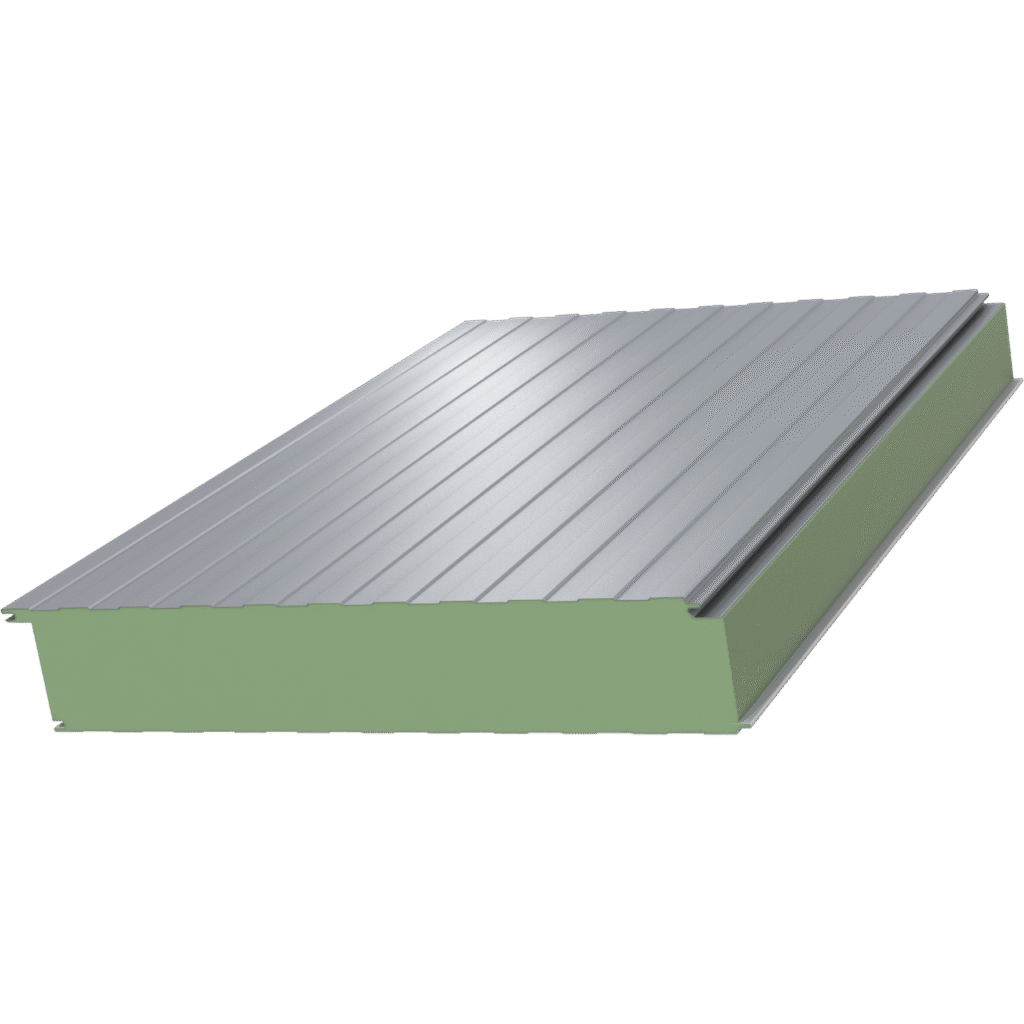
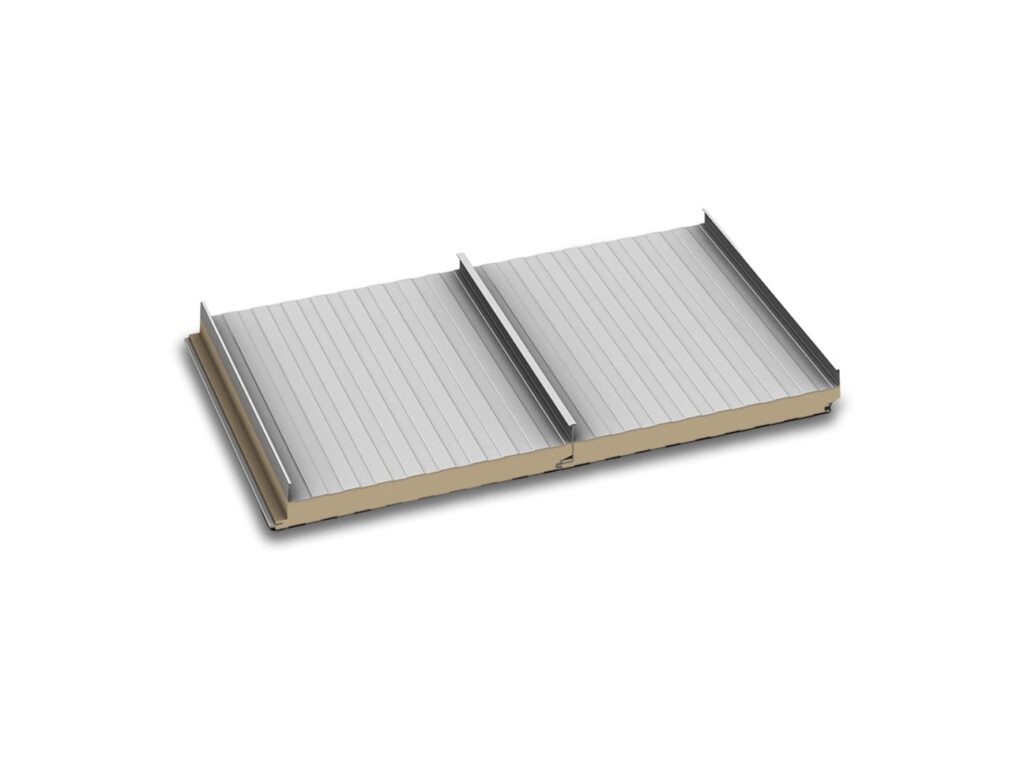
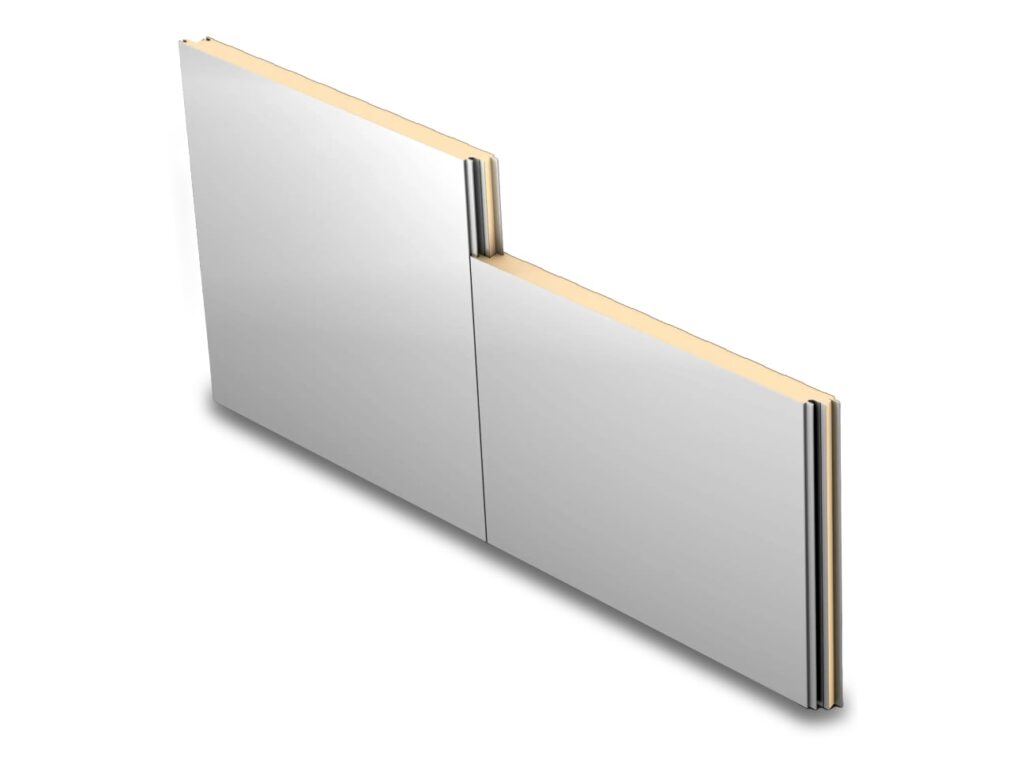
CleanLine is an insulated metal panel from Green Span Profiles, built for dust-free environments. Its exterior face is free of all embossing and profiling. The face is smooth.
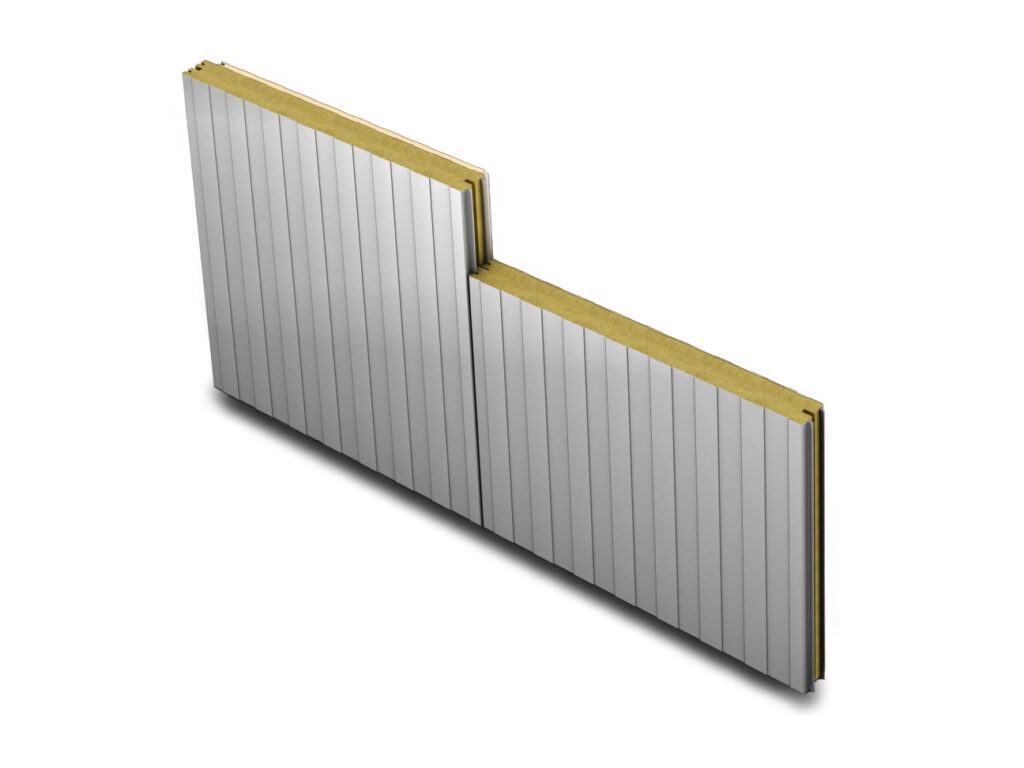
The panels are manufactured specifically for interior use. They serve as partition walls, liner walls and ceilings. Buildings that need a clean interior surface are the typical setting, and insulated metal panel roofs and walls in the same family cover the exterior envelope.
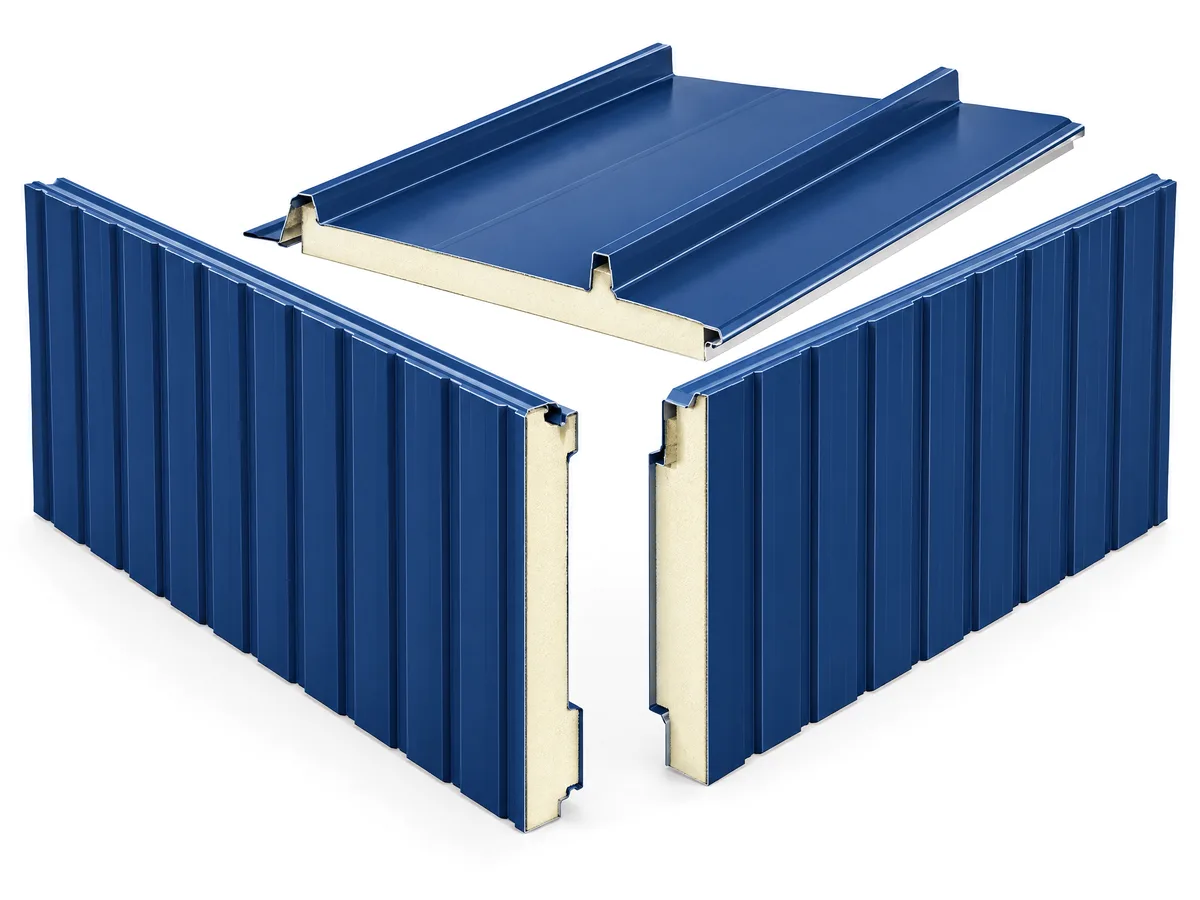
Each panel is a sandwich. Two steel skins, an exterior face and an interior face, enclose a continuously poured-in-place polyisocyanurate insulating foam core. The panels join along a Green-Lock side joint, an offset double tongue-and-groove.
Versions and sizes
CleanLine comes in one coverage width and a range of thicknesses, lengths and gauges.
- Coverage width: 42-inch
- Thickness: 2, 2.5, 3, 4, 5 and 6-inch
- Length: 8'-0" to 40'-0"
- Exterior gauge: 26, 24 and 22
- Interior gauge: 26
- Panel use: partition wall, liner wall, ceiling
The 42-inch coverage is measured across the face from joint to joint. Thickness runs from 2 inches to 6 inches. The exterior face is available in three gauges, while the interior face is always 26 gauge.
Data sheets and technical documents
Current files
Archived files
No older reviewed revisions are archived for this product yet.
Materials and finishes
Both skins are Galvalume steel. The exterior substrate and the interior substrate use the same material.
Three finishes are offered on each face, and the exterior and interior lists are identical.
- Polyester
- Siliconized polyester
- Plastisol (PVC)
The exterior texture is smooth. The interior texture is either embossed or smooth. This lets the room-side face carry a texture while the exterior face stays flat and unprofiled.
The core is polyisocyanurate foam. It is poured in place continuously, so the foam bonds to both skins as it cures. The result is a single bonded panel rather than skins fixed to a loose board.
The Green-Lock side joint
The Green-Lock joint is an offset double tongue-and-groove. One panel edge carries a tongue, and the neighboring edge carries a matching groove. The two tongues and grooves are offset from each other.
The joint is designed to place sealant accurately. Accurate sealant placement supports a vapor seal along every panel edge, which matters in a room that must stay dust-free. The face of each panel stays smooth across the joint line, with only a fine seam between neighboring panels.
Panels are 42 inches wide at coverage, so a wall run is laid out in 42-inch modules. Lengths from 8'-0" to 40'-0" allow a full wall height or ceiling span in one piece in many layouts.
Thermal, air and water performance
Nominal insulation value is R-8 per inch of thickness. A thicker panel carries more foam and more insulation value.
Heat flow was tested under ASTM C518. The K-factor is 0.139 BTU-in/hr-ft2-F° at 75° mean temperature and 0.129 BTU-in/hr-ft2-F° at 35° mean temperature.
- Air leakage (ASTM E283): 0.0011-cfm/sf at 20-psf
- Water penetration (ASTM E331): zero penetration at 20-psf
The low air leakage figure and the zero water penetration result describe the panel assembly under a pressure difference of 20 psf.
Foam core and bond strength
The core was tested for physical properties.
- Shear strength (ASTM C273): 16-psi
- Compressive strength (ASTM D1621): 18-psi
- Apparent density (ASTM D1622): 2.25-pcf
- Tensile strength (ASTM D1623): 21-psi
- Closed cells (ASTM D6226): 90% or more
Four bond strength tests checked whether the skins stay attached to the core.
- Fatigue endurance: 2,000,000 alternating cycles of L/180 deflection. No evidence of facer or liner delamination, fracture of foam core or permanent set.
- Freeze/heat cycle: twenty-one 8-hour temperature cycles from –20° F to 180° F. No evidence of delamination, blistering or permanent set.
- Humidity endurance: 1,200 hours of 93% humidity at 158° F. No evidence of delamination, blistering or interface corrosion.
- Autoclave: exposure to 218° F and a pressure of 2-psig for 2½ hours. No evidence of facer or liner delamination.
Fire, impact and approvals
ASTM E84 surface burning results are flame spread under 25 and smoke developed under 450.
The panel passed NFPA 285, the fire test method for exterior non-load-bearing wall assemblies containing combustible components. It is Class 1 fire rated under FM 4880, and Class 1 approved under FM 4881 for exterior wall systems.
Impact resistance was tested to TAS 201, the Florida Building Code impact test procedure. Approvals issued for the panel are listed here.
- Miami-Dade County Notice of Acceptance
- Florida Product Approval
- State insurance department product evaluation
Structural performance was tested under ASTM E1592 and ASTM E72. Results are given in load tables.
Panel weights and what each version is for
Weight depends on thickness and on the facer and liner gauge. The 42-inch width weighs as follows, in pounds per square foot, with a 26-gauge liner.
- 2-inch: 2.10 with a 26-gauge facer, 2.32 with 24, 2.63 with 22
- 2.5-inch: 2.21, 2.42, 2.74
- 3-inch: 2.31, 2.52, 2.84
- 4-inch: 2.52, 2.73, 3.05
- 5-inch: 2.73, 2.94, 3.26
- 6-inch: 2.94, 3.15, 3.47
The lightest version is the 2-inch panel with 26-gauge skins, at 2.10 psf. The heaviest 42-inch version with a 26-gauge liner is the 6-inch panel with a 22-gauge facer, at 3.47 psf.
As partition walls, the panels divide spaces while keeping a smooth, cleanable face. As liner walls, they line the inside of a building envelope. As ceilings, they close the room from above. In each use, the unembossed face and the sealed Green-Lock joint serve the dust-free goal.